Staying safe from online scams

HaqCheck published in June 2021 an alert about a scam that was circulating on email, social media, and messaging apps about a Coca-Cola welfare fund. The link invites you to provide your own personal details on a survey to ‘win’ a prize. 

Phishing is a cybercrime in which a target or targets are contacted by email, telephone, or text message by someone posing as a legitimate institution to lure individuals into providing sensitive data such as personally identifiable information, banking, and credit card details and passwords.

HaqCheck has now observed similar links using different well-known corporations to claim prizes. Given that this tactic is on the increase we analyzed how the public can protect themself from these kinds of scams.

Most of the time, scammers use online surveys to scrape sensitive personal or financial information. This data can be used to commit identity theft or to be sold to a third party. Either way, they’re making money. 

They use malicious links which are created to promote scams, attacks, and fraud. 

By clicking on an infected URL, malware can be downloaded such as a Trojan or virus which can then take control of your devices. You also might be persuaded to part with sensitive information on a fake website. Phishing, the fraudulent practice of sending emails purporting to be from reputable companies in order to induce individuals to reveal personal information, has been mentioned above and another popular tactic to get you to give up passwords or personal information about yourself.

Hiskias Dingeto, a cybersecurity expert and P.H.D candidate at Dongguk University in South Korea, defines phishing as “making a website to deceive a user or to get the users personal information”. 

As Hiskias explains, the phishers usually copy the whole website of a legitimate body with a different URL (Uniform Resource Locator, which incorporates the domain name, along with other detailed information), to create a complete web address. “After you give your credentials (email and password) they use it for their own benefit,” he added, “it is the easiest way to attack people”.

How to spot a potential scam?

Phishing emails and text messages may look like or pretend to be from a company you know or trust.
They seem too good to be true, with eye-catching or attention-grabbing statements.
They often say there’s a problem or a prize to trick you into clicking on a link or opening an attachment.
They have a sense of urgency, pressuring you to act immediately and sometimes giving you a time limit or a deadline. 
They might claim that you use their services (such as a bank or postal service) but you have never used them before.

How to avoid such scams?

Check the web address (URL) and domains.
Stay alert and be skeptical, know who your providers are, and cross-check from the impersonated organization.
Don’t give your personal or financial information in response to a request that you didn’t expect.
Resist the pressure to act immediately, take your time to check and cross-check the entity of the sender.
Do not click on links or open any attachments or pop-up screens from sources you are not familiar with.
Read the site’s privacy policies because most scammers do not have any privacy policy on what they are going to with your information.
Most organizations realize the potential for scamming and now don’t request confidential data online. So don’t offer up anything about yourself, even your mother’s maiden name. You can also contact the organization independently if you have any doubts. 

Besides checking and cross-checking the URL and the domain of the sender, Hiskias also recommends you check whether the website uses HTTP or HTTPS. 

HTTP has been the standard protocol for transferring hypertext documents on the Web but HTTPS is a more secure version – a combination of the HTTP with the Secure Socket Layer (SSL). Most trustworthy companies use this now so beware if you see an HTTP link. 

He emphasizes “when using your browser notice if there is a locked key sign on the address bar: which means the website is secured or it uses HTTPS”. 

Do the Images Show the Ethiopian Army Bombing Tigray with White Phosphorus?

Recently images showing military aircraft and an airforce operation have been circulating across social media platforms, particularly on Facebook. On 13 June 2021, a Facebook post by Mekseb Tewahdo (an account with 1,558 friends) shared two images with a note that says Ethiopian and Eritrean armies were dropping white phosphorus against civilians in Abi Adi, Tenben on June 13, 2021. The post also claims that so far two children and a mother have died due to the attack. Over 430 accounts have shared this post. 

On the same day, another Facebook page dubbed Tigrai Online, which has over 122,293 followers, shared these two images to support a claim that the Ethiopian and Eritrean armies were bombing Abi Adi, Tenben using cluster bombs and white phosphorus and killed two and injured one person. An hour later, the post was edited, adding that the images used are old. But it had already misled many, as the post was shared more than 1500 times.

HaqCheck has investigated the images and the posts, confirming that the pictures do not show either Ethiopian or Eritrean armies bombing Tigray using white phosphorus or cluster bombs. HaqCheck has rated the post as FALSE due to the usage of inaccurate and old images.

Since 4 November 2020, there has been armed fighting between TPLF-led regional and Federal government-led forces in Tigray. The federal army has controlled major areas in Tigray, but there have been reports of armed conflicts and guerilla attacks in the region. On May 23, 2021, The Daily Telegraph, a London-based newspaper came out with a story that it found exclusive footage and accounts of witnesses and victims that suggest the Ethiopian and Eritrean armies may have used powerful incendiary weapons including white phosphorus in civilian areas. On the same day, the Ethiopian Ministry of Affairs (MoFA) issued a statement denying the use of chemical weapons in Tigray. It said, “Ethiopia has not employed and will never use such banned munitions because it takes its international obligations under the chemical weapons convention extremely seriously.”

Against this backdrop, the Facebook posts claimed that the Ethiopian and Eritrean armies are bombing Abi Adi, Tigray using white phosphorus and cluster bombs. 

However, a Google reverse image search shows that the images don’t back the claim. The first image shows white phosphorus rained from a weapon on August 3, 2013, during a live-fire exercise in Australia. Here is the link to the original image. The second image shows an aircraft that belongs to the Uzbekistan Airforce during operation. The image was first published on Facebook on January 18, 2020. The original post related to the image can be accessed with the following link.

Granted, there have been unconfirmed allegations that the Ethiopian army may use chemical weapons including white phosphorus in Tigray. However, HaqCheck has interrogated the post and the images and confirmed that the images don’t confirm the claim. HaqCheck has therefore rated the post as FALSE due to inaccurate usage of the images.

Fact Checked by: Hagos Gebreamlak

Edited by: Fasika Tadesse

The following article is part of HaqCheck, Addis Zeybe’s multilingual fact checking initiative, which is run by its R&D Department.

Does this Image Show an Eritrean Soldier?

Recently an image that shows a man in military wear has been circulating across social media platforms, particularly on Facebook. On 09 June 2021 a Facebook post by the name Dade Desta (an account with 24,616 followers) shared an image claiming that the man is an Eritrean soldier. It was shared by over 45 accounts. On 10 June 2021 a Facebook page by the name Qeerroo Intelligence Group (with 7,818 followers) posted the image with Afaan Oromo text that reads “the man is Sisay Tesfabirhan, one of the hundreds of thousands of Eritrean [Shabia] soldiers that are captured in Oromia by the Oromo Liberation Army (WBO)”. The Facebook post was shared by over 102 accounts. 

HaqCheck has investigated the image and the posts, confirming that the picture is not of an Eritrean soldier captured in Oromia. HaqCheck has rated the posts as FALSE due to the usage of an inaccurate image.


Since 4 November 2020 there has been armed fighting between TPLF-led regional forces and Federal government-led forces in Tigray. There is also conflict in western parts of Oromia with  unproven reports that the government is fighting the Oromo Liberation Army in Wellega. Amidst such reports, allegations have surfaced that  the Eritrean army has dispatched its troops to Oromia and are fighting armed groups in the regional state.

It is against this backdrop that the Facebook posts emerged claiming that the man is one of the hundreds of thousands of Eritrean troops captured by the Oromo Liberation Army in Oromia. 

However, a Google reverse image search shows that the image is actually a Somali blogger named Muuse Muudey. The image was cropped from a picture that shows him and a woman who people claim is his ex-wife. It was first published on Somali Post, an online information site on 15 April 2020. Here is also one of his videos on YouTube criticising Mohamed Abdullahi Mohamed (Farmaajo), President of Somalia. The original post related to the image can be accessed with the following link.

Cropped Image

Original Image

Granted, there have been unconfirmed allegations that Eritrean troops are deployed in Oromia and fighting armed groups in Wollega. However, HaqCheck has interrogated the posts and the image and confirmed that it doesn’t show an Eritrean soldier captured by the Oromo Liberation Army. HaqCheck has therefore rated the post FALSE due to inaccurate usage of the image.

Fact Checked by: Hagos Gebreamlak

Edited by: Fasika Tadesse

The following article is part of HaqCheck, Addis Zeybe’s multilingual fact checking initiative, which is run by its R&D Department.

Why Did the Deputy Mayor of Addis Ababa Delete a Tweet about Property 2000?

On June 02, 2021, the Addis Ababa City Administration inked a Memorandum of Understanding (MoU) with Property 2000, a South African firm that claims to be a real estate agent, to construct 500,000 houses in Addis Ababa in five years period. They agreed that the company would construct half a million housing units in the city with 4.2 billion US dollars. It was announced that the full cost of the construction of the houses will be covered by Property 2000 and the city administration will provide the company with construction sites along with the necessary infrastructures and grant the company a duty-free privilege to import inputs.

Is it 4.2 Billion Birr or US Dollars?

Different media outlets reported the budget differently. Some said it is 4.2 billion US dollars and some of them stated that it is 4.2 billion Birr. Fana Broadcasting Corporate and Borkena reported that it is Ethiopian Birr while the Ethiopian News Agency says it is US dollars. Adanech Abiebie, Deputy Mayor of Addis Ababa announced that it is 4.2 billion US dollars.

The budget seems exaggerated. The budget, 4.2 billion US dollars is almost equal to the initial project value of the Great Ethiopian Renaissance Dam (GERD).

The MoU was signed by Adanech Abeibei, Deputy Mayor of Addis Ababa, and Napo Eddie Modise, Chairperson of the company. The company chairman promised to hand over 100,000 houses within a year. During the ceremony, the deputy mayor said that the houses will be handed over to low and middle-income residents with loans at a one percent interest rate to be paid in 30 years.

The Deputy Mayor tweeted, announcing she signed the MoU with the South African company for the construction of half a million houses. However, the tweet by the Deputy Mayor Adanech Abiebie was deleted from Twitter for unknown reasons. The news still remained published on other media outlets.

Who is Property 2000?

Property 2000 claims it has secured several major lucrative developing projects with funding supplied by International and local funders. But only very little is known of the company’s background and track record. According to the South African Companies and Intellectual Property Commission (CIPC) portal, Property 2000 was registered in 2018.

Last year the Lesotho Ministry of Finance canceled a loan deal with Property 2000. The Ministry and Property 2000 signed a deal that the latter would lend 2.45 billion South African Rand to finance the construction of sports facilities. It was reported that Property 2000 didn’t have the money but to source the loans from Grissag AG, an investment company based in South Africa.

The Lesotho Ministry of Finance broke the loan agreement due to suspicious linkage of Property 2000 to Grissag AG which has a contagious credit history. Grissag AG has been involved in many shady contracts.

The Public Debt Management Directorate of Lesotho hasn’t given detailed information about its previous projects to prove the capacity to fulfill the contract.  The Directorate concluded that the company has no credible previous projects. Khotso Moleleki, Lesotho Public Debt Management Director said that the company talked about projects in Malawi, DRC, and Ethiopia, but all the information was sketchy and no successfully funded projects could be traced. 

The director of Property 2000 Modise responded to the allegation, refusing the claim by the directorate.

The website of Property 2000 is incomplete and seems made in a rush. It doesn’t have detailed information about the background and track record of the company.

On June 8, 2021, the Addis Ababa Housing Development and Administration Bureau gave a press briefing about the framework agreement with the South African company. The Bureau said that the allegations regarding Property 2000 are unfounded and the agreement was signed after it proved the track record of the company. It stated that the company has over 31 years of experience in the sector.

The housing shortage has been a major problem in the city for a long time. In the capital alone, over 650,000 residents have been registered so far and are waiting for condo houses. The government has been projecting many schemes in a bid to solve the shortage of houses by constructing condo houses, including the 20/80 condominium project launched in 2013.

Three years ago the Addis Ababa City Administration and Prime Minister Abiy Ahmed (Ph.D.) inaugurated a 56 billion Birr housing project to be built in the Leghare area. The construction was given to a Dubai-based company, Eagle Hills.

The ambitious project, which is to be laid on 36 hectares of land, was said, it would create 25,000 jobs.

It was announced that the project was expected to be completed in two years. But not much about the status and progress of the housing project is known even three years later.

Deputy Mayor Adanech Abiebie in a long article posted on Facebook on June 9, 2021, criticized the allegations and backlash against the project. She announced that the government has got evidence that reveals the company has many years of experience in the real estate development sector in South Africa, Zimbabwe, Ghana, Nigeria, and many other countries and has opened a new company, called ‘Property 2000 Ethiopia’ in Ethiopia.

Representatives from the Addis Ababa City Administration did not respond to an inquiry from Haqcheck until this analysis was published. 

Is Coca-Cola giving away prizes?

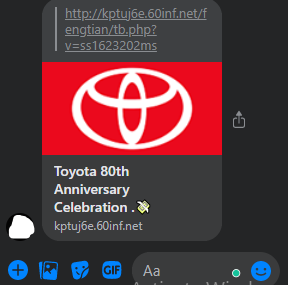
A website link, by the name “Coca Cola Welfare Fund”, has been circulating on emails, social media, and messaging apps. The links, which started to gain traction on June 6, invite you to fill a survey to get a prize. One of the purported prizes is an iPhone 12 mobile phone. HaqCheck has become aware of the content and interrogated it, confirming it is a scam.

HaqCheck has observed that when you try to open the link with your computer, you mostly get an alert message saying “the link may be malicious”.

But when it opens on a mobile phone browser the reader is sent to the home page in Amharic that reads: “Congratulations! 20th anniversary of Coca-Cola!”. As shown below, there are different links with a different date in the picture but with the same content. The home button and the logo on the site also don’t work. when pressed
 

The comments are written in Amharic in order to push the Ethiopian reader into believing the scam. Most of the posts claim you won the prize. It is also apparent that the names of the people who are commenting are not consistent, most of them written in Amharic but using Western names.

Coca-Cola was first bottled in Ethiopia’s capital Addis Ababa in 1959 by the Ethiopian Bottling Share Company, which later opened a second branch in Dire Dawa in 1965. 

The two plants were nationalized in 1975 and ran as public companies until 1996 when they were bought by private investors. Just prior to that, in 1995, the Coco-Cola South African Beverage Company (Coca-Cola SABCO) bought shares in the business and in 1999 signed a joint venture agreement with the plants. 

In 2001, Coca-Cola SABCO increased its shares to 61 percent and the company changed its name to the East African Bottling Share Company.

Scammers use online surveys to scrape sensitive personal or financial information. This data can be used to commit identity theft or to be sold to a third party. Either way, they’re making money. 

Most of the time they use malicious links which are created to promote scams, attacks, and frauds. By clicking on an infected URL, malware can be downloaded such as a Trojan or virus which can then take control of your devices. You also might be persuaded to part with sensitive information on a fake website. Phishing, the fraudulent practice of sending emails purporting to be from reputable companies in order to induce individuals to reveal personal information, is another popular tactic to get you to give up passwords or personal information about yourself.

The Coca-Cola scam has been tried multiple times in different countries and occasions. HaqCheck has contacted Coca-Cola Ethiopia, via phone, and asked about the viral link claiming to be a Coca-cola welfare fund. 

We have confirmed that the link circulating on email, social media, and messaging apps is a scam and has not been promoted by Coca-Cola.

US Visa Restriction on Involving Parties in Tigray Armed Conflict: Analysis

On 24 May 2021 the US Department of State announced a visa restriction policy on four parties stated to have allegedly conducted wrongful violence and abuses and hindered access to humanitarian assistance to the Tigray region. The sanction levies restrictions on visa issuance for any current or former Ethiopian or Eritrean government officials, members of the security forces, Amhara regional forces and members of the Tigray People’s Liberation Front (TPLF). The statement issued by the state department indicated that the visa restriction will also be applied to immediate family members.

The state department warned those parties that the US may take further actions and called for other countries to follow the same suit to stop the parties from aggravating the humanitarian crisis in Tigray.

The US government demands from the government of Ethiopia and other parties holding accountable to those who committed violations and atrocities, ensure unfettered humanitarian access, protect civilians, and end hostilities and pursue peaceful resolutions. It also urged the Eritrean government to immediately withdraw its forces from the regional state.

Citing the reluctance of all parties to respond to the call, the state department said that the US government has imposed wide-ranging restrictions on economic and security assistance to Ethiopia. However, the US government did not announce the details of the economic sanctions and the list of individuals who will fall under the visa restriction. 

The statement also asserted that the US government would impose defense trade control policy and will continue its existing restrictions.

War broke out in Ethiopia’s Tigray regional state seven months ago between the federal government and the Tigray People’s Liberation Front (TPLF)-led armed forces. The federal government controlled major areas of the Tigray region and killed and arrested senior civil and military leaders of TPLF and its forces. However, crises loomed in the regional state.

The sanctions came after a series of pressures and cessation of hostilities calls from the international community and the US government regarding the Tigray armed conflict and following crises.

The United Nations Security Council (UNSC) held four sessions regarding the armed conflict that is followed by humanitarian crises and human rights abuses crisis in Ethiopia’s Tigray region. It has been issuing ‘statements of deep concerns about the humanitarian and security crisis. On April 22, 2021 the UNSC called for a scaled-up humanitarian response and unfettered humanitarian access and for a continuation of the international relief effort and investigations into allegations of violence.

The US government has been issuing statements regarding humanitarian and security concerns in the Tigray region. The United States State Department has been calling for the ‘immediate withdrawal of Eritrean forces and Amhara regional forces’ from Tigray and cessation of hostilities by all parties to the conflict, and a commitment to permit unhindered humanitarian access. But Ethiopia refused the call saying the acts of ethnic cleansing and involvement of foreign forces in the ongoing military operation are ungrounded allegations.

On 18 March 2021, the US State Department issued a press statement by Antony Blinken, US state secretary. It provided an additional 52 million US dollars in assistance to respond to the humanitarian crisis in Tigray. The state secretary also called for the cessation of hostilities, withdrawal of Eritrean and deployed Amhara regional forces, and the need for accountability for human rights abuses and atrocities by all parties such as Ethiopian National Defense Forces, Tigray People’s Liberation Front forces, Eritrea Defense Forces, and Amhara regional special forces.

On 19 May 2021, the US Senate endorsed a resolution that calls on the Ethiopian government, the TPLF, and other involved parties in the conflict in Tigray to cease all hostilities, protect human rights, allow unfettered humanitarian access, and cooperate with independent investigations of credible atrocity allegations.

The US government stopped aid to Ethiopia due to differences over the water filling of the Great Ethiopian Renaissance Dam (GERD) during the Trump administration last year. The security and development aid halt imposed last August was about 272 million dollars.

The new Biden administration reversed the decision and delinked the suspension from the GERD issue. However, the US government didn’t completely pause the previous sanction and stated last February that it has attached it to the crisis in Tigray. The US State Department notified that the resumption of the assistance will be assessed on a number of factors and development regarding humanitarian improvements in Ethiopia’s Tigray regional state.

On 24 May 2021, the Ethiopian Ministry of Foreign Affairs (MoFA) issued a statement expressing its disappointment by the US State Department decision to impose a visa restriction.

The MoFA threatened that if the US government continues the interference and meddling in Ethiopia’s internal affairs, Ethiopia will be obliged to reassess its relations with the US which might have implications beyond the two countries’ bilateral relationship.

On May 26, 2021, US president Biden urged in a press statement that belligerents of the Tigray armed conflict should wage and adhere to a ceasefire.

Following the visa restrictions, rallies across Ethiopia and abroad such as in Norway, Italy, and Canada have been held opposing the decision of the US government. The demonstrators showed their support to China and Russia by coming with pictures of Chinese President Xi Jinping and Russian President Vladimir Putin. Asked if the visa restrictions and diplomatic pressure from the US could push Ethiopia toward the East, Dina Mufti stated that the Ethiopian government wants to improve and have a good relationship with any country.

John Inhofe, Oklahoma senator who has opposed the visa restrictions, arrived in Ethiopia early this week for a visit and met and held discussions with Prime Minister Abiy Ahmed (PhD), Foreign Affairs and Deputy Prime minister Demeke Mekonnen, and Tagese Chafo, House of People’s Representatives speaker.

On June 02, 2021, Dina Mufti, MoFA spokesperson said in a weekly press brief that efforts are being made to improve the deterioration of relations with the US. “We hope it [the deteriorating relationship] will change,” he said.

Note: Our effort to get comments and further clarifications from the US Embassy in Addis Ababa bore no fruit. 

Fact Checked by: Hagos Gebreamlak

Edited by: Fasika Tadesse

Is the audio of Prime Minister Abiy Ahmed at a Prosperity Party meeting real?

A YouTube link is circulating on social media which purports to be leaked audio of the Prime Minister addressing a Prosperity Party executive committee meeting on May 27. Kello Media released the audio with English subtitles on May 31. The audio has gone viral gaining traction in particular on Facebook and YouTube.

HaqCheck is urgently investigating this content since it started to spread on social media.

Kello Media is an online media outlet based in Washington, D.C. in the US and is known for being a trenchant critic of Prime Minister Abiy Ahmed’s administration. It has 310,247 followers on Facebook.

Following the released video on May 31, the Prime Minister’s Office issued a strong rebuttal on Facebook describing the segment as a “fake audio compilation”. The statement said that the file had “been put together by drawing on different remarks made by the Prime Minister and editing it into one compilation”. 

It went on: “In this era of disinformation and as the elections draw nearer, we urge citizens to be vigilant about such types of disinformation campaigns aimed at creating discord.” 

The Prosperity Party also issued a statement on Facebook on June 1 stating that the leaked audio file was not real and had been fabricated to mislead the public. The Party, which is campaigning ahead of a planned general election on June 21,  also claimed that the audio file had been spliced together from different speeches Prime Minister Abiy had made at different times.

 The following paragraphs on the YouTube video were given as English subtitles to the purported leaked audio clip of the Prime Minister.

“On our part we will do whatever is possible to make sure that there are no irregularities in the upcoming election. As you know the Prosperity Party was the main party that for a variety of reasons favored postponing the scheduled national election last year. Overall it is hard to imagine what would have happened if the coronavirus did not occur and the election had proceeded as scheduled.

This time, we consider holding the election as the most favorable option for us to avert a situation worse than last year. It must be stressed that the so-called politicians including activists are striving to take overpower. Because of this our political operatives must take extra precautions in whatever they do.

We must constantly evaluate and quickly correct even a small gaffe or a minor misstep. Even a single foul play is dangerous. What alarms me is the fact that there are more politicians, more political forces media outlets than you can imagine who are contesting the elections to wrest power.

They are everywhere, near and far. No one will be able to form a government in the coming ten years. I would rather die than hand over power to them. We will take action. The taskforce we established has already commenced the work. As a result, there will be a high level of death and bloodshed. Regardless, I can tell you this with certainty and there is no doubt or mystery about it: we have won the election, we have won it easily. 

We now have great responsibility to prevent an election [that may produce a different result] and make sure that our competitors also lose hope in it. Compared to the challenges we have come through thus far, it should not be difficult to succeed in this endeavor. I believe we must redouble our efforts to prevent our only resource to success from slipping away.”

Haqcheck’s mission

HaqCheck has highlighted how manipulated content is a significant weapon in disseminating disinformation, particularly during election campaigns. Our mission is to educate the public on how manipulated and fabricated files and content can be identified from real ones.

Manipulated videos, audio and images have been around for years, but the rise of artificial intelligence and advanced editing software has made them much harder to recognize. 

Audio manipulation is like using Photoshop on people’s voices. This kind of manipulation can be executed in two main ways:

Cheapfakes: These are audio-visuals that are altered using classical video editing tools like editing dubbing, speeding up or slowing down, cutting or splicing together different scenes to change context. They do not use AI-enabled tools. 

Deepfakes: These are altered or generated audio-visuals using artificial intelligence, neural networks and machine learning. This type of content-synthesis technology enables media representations of non-existent subjects as well as subjects doing or saying things they’ve never done or said. Digital cloning also allows one to manipulate existing media to be hyper-realistic. 

According to a publication by the DeepTrust Alliance, cheapfakes are by far the largest threat in the current digital world.

When it comes to verifying whether audio is real or fake there is a lack of tools. But, even though it is a bit hard to recognize manipulated audios with just the ears, it’s not impossible. 

Some tools are being developed to fill the gap. Poynter, a leading journalism institute and owner of the International Fact-Checking Network, has written about a piece of software called Forensia. 

Developed in Argentina in 2019, Forensia helps to debunk fake WhatsApp audio files, but it is applicable only for WhatsApp and it works in limited languages. It also charges to be used.

In general, when one is listening for a potentially manipulated audio, here’s what to take note of. The first, crucial step is to pay attention to tell-tale details and clues. 

Listen carefully to the timing (the gap between each word), a frequent voice-tone change, unfinished words and unvoiced letters (mostly consonant), unnecessary whine, and background voices. 

The next step is then to look for the original source of the audio ( using traditional ways like tracing back previous speeches on related topics or events); especially when it is a suspected cheap fake. It helps to cross-check the words and even understand the original context of the media. Therefore, as mentioned above, since there is a shortage of tools to verify the authenticity of audio files, a verdict couldn’t be given on the matter. 

The audio clip released by Kello Media contains many words and phrases from a previous speech by PM Abiy Ahmed (PhD) during a Prosperity Party Executive Committee meeting held on April 22. 

The disputed Amharic audio has 174 words in total. This file comprises 66 words, eight phrases, and three sentences from the video clip of the Prime Minister’s April 22 meeting which was first published on Fana Television’s YouTube channel.

Due to the shortage of instant fact-checking and verification tools and technologies for videos and audios, HaqCheck cannot conclude whether the claimed-leaked audio clip is fabricated or authentic. HaqCheck has cross-checked the possible audio compilation and recommends the public be extremely cautious of this kind of disputed content. Haqcheck, which has been investigating these claims since they emerged in the last 24 hours, will continue to probe.

Gaining the upper hand: should you use alcohol-based or alcohol-free hand sanitizer for COVID-19?

COVID-19 was declared a pandemic on March 11, 2020, by the World Health Organization (WHO). It has been recommended that you should wear a mask, keep a safe distance and wash your hands regularly. 

According to WHO’s recommendations to improve hand hygiene practices, washing hands with water and soap frequently is one of the best ways to keep the hands clean and the other is using alcohol-based hand sanitizers (composed of ethanol or isopropanol, glycerol, and hydrogen peroxide).

Hand sanitizers are cleansing agents applied to the hands to kill viruses, bacteria, and microorganisms (disease-causing organisms). It can be found in a liquid, gel, or foam form. Depending on the active ingredient used, hand sanitizers can be classified as alcohol-based (which contain ethanol or isopropyl alcohol/ isopropanol) or alcohol-free (which contain Hydrochloric acid or benzalkonium chloride). Both types of sanitizers might also have ingredients such as Hydrogen peroxide, glycerol, water, and/or some fragrances.  

Likewise, the US Centers for Disease Control and Prevention (CDC) and the Food and Drug Administration (FDA) says sanitizers used for COVID-19 prevention should contain at least 60% alcohol. The Ethiopian Ministry of Health and Public Health Institute also recommends using alcohol-based sanitizer when water and soap are not available.

However, Addis Zeybe observed some alcohol-free sanitizers and disinfectants being sold in Ethiopia which claim to kill 99.99% of harmful viruses and bacterias, including the coronavirus. 

Addis Zeybe has analyzed what the recommended standard of hand sanitizers for COVID prevention is, talked with experts, and contacted stakeholders in Ethiopia. 

Addis Zeybe spoke with Mengistu Endalew, the deputy director of medicine facility inspection in the Ethiopian Food and Drug Authority. When asked about the efficacy of alcohol-free sanitizers which claim to be effective on COVID-19, Mengistu responded: “We give authorization based on the requirements and standards set by the Ethiopian Standard Agency, and we gave authorization for three alcohol-free sanitizers and many more alcohol-based alcohol-based sanitizer manufacturers.” He also added that the standard was authorized by different stakeholders like the Ministry of Health (MoH) and the Ethiopian Public Health Institute (EPHI). 

Looking into the standard, Haqcheck found that it doesn’t specify whether the products are for COVID-19 or not. 

Yilma Mengistu, director of standard developments at the Ethiopian Standard Agency, explained: “The way the standards are given is general and it doesn’t have specification for each product. 

“In this case, it doesn’t specify which product is effective for COVID-19. But there is an obligation to include the purpose of the product, spectrum of activity, the recommended method of application, application procedure, and other claims and uses of recommendation in the labelling. It is the way every standard is given.” 

 Addis Zeybe spoke with Dr. Kirubel Tesfaye (MD), a postgraduate student at the University of Barcelona. The health expert said: “Our society is living in a resource-limited country. I believe alcohol-based sanitizers are much cheaper to buy and have a superior action over their counterpart. 

Pointing to a research paper in the American Journal of Infection Control, Dr. Kirubel added: “If one cannot afford to buy an alcohol-based sanitizer there are videos showing how to prepare sanitizer. If someone has better access to non-alcohol-based sanitizers, they are as effective but they have to apply larger volumes.” 

Asked, “why does WHO still recommend the alcohol-based one?” Dr. Kirubel went on: “The WHO is waiting until more peer-reviewed publications on alcohol-free sanitizers come out, but both alcohol- and alcohol-free sanitizers are being marketed in Europe and the US as tackling COVID-19. Besides, the virus can effectively be prevented from spreading by hand by using soap and water. That may be the reason most products have comparable results”

With that being said, Saharele Abdulahi, state minister of health, said “It is known that the most effective and recommended hand sanitizer is alcohol-based, but due to the shortage of supply of alcohol (from the National Alcohol and Liquor Factory and the Ethiopian Sugar Corporation), we had to find another option to tackle the challenge. 

“We had a long debate with professional bodies and experts about the choices we had and decided to adopt what other countries are using, which was using alcohol-free sanitizers. And since there was a demand from manufacturers we took the only choice we had at the time.” 

Saharele emphasizes that the recommended hand sanitizer remains an alcohol-based one. But if it is not available, one can also use alcohol-free sanitizers. “It is at least better than nothing,” she said. Saharele added that ongoing research was still being conducted on coronavirus and there are always new discoveries. 

As most health experts and professional bodies agreed, using the alcohol-free sanitizer is an option if only one can’t get access to the alcohol-based one. Otherwise, washing hands with soap and water frequently and using alcohol-based sanitizer is the most effective and recommended to prevent the spread of COVID-19. 

Do the images show Benishangul Gumuz rebels that killed Ethiopian soldiers?

There was a Facebook post made on 19 May 2021 by a Facebook page named Ogaadenia Media (a page with more than 77,000 followers). The first picture posted showed people armed wearing civilian clothes while the second showed armed people with Ethiopian military uniforms. The text is written in Somali reads “BREAKING NEWS, The Benishangul Gumuz rebels have killed 32 Ethiopian soldiers in the village of Al Mahala in the Guba district, which borders the Nile River. It is also said that the fighting “claimed the lives of 10 civilians” and that there were many casualties, although no official figures were available.” The post also reminds us that in Benishangul, hundreds of civilians and soldiers have been killed in recent months. Accordingly, it suggests following the page for more updates and to share the content with friends. The post has been shared more than 215 times by the time this article was written. HaqCheck has interrogated the post and concluded the post is FALSE due to the inaccuracy of the images to support the claim.

Of course, there has been a long-standing insurgency in the Benishangul-Gumuz region. Nonetheless,  in recent years the insurgency has intensified and resulted in the loss of lives and displacement of many innocent people. Recently, on May 18, it was reported that more than 20 government security forces were killed in Metekel, Guba woreda. 

In this context, the image was shared in the areas where several claims have already been made. The post claimed that rebels attacked a military base in Mehala, Benishangul Gumuz, killing 32 Ethiopian defense personnel and 10 civilians while wounding scores of civilians. However, a reverse image search of the Facebook pictures doesn’t prove the claim. The first image was posted by a website named Pachodo.org on 30 October 2017. The picture was taken on August 25, 2017, the day before South Sudanese rebels attacked government forces, on the border with Uganda, South Sudan. 

The second picture can be found along with other pictures on the official Facebook page of the FDRE Defense Force and it was posted in November 2020. The picture was posted with an Amharic poem.

The first image

The second image

Granted, there have been armed conflicts along the Benishangul region, between government forces and Benishangul rebels. However, HaqCheck has interrogated the post and confirmed that the images don’t show the Benishangul rebels that killed Ethiopian soldiers. Therefore, it has rendered the post-FALSE due to the usage of an inaccurate image to support the claim.

Fact checked by: Endalkachew Teka

Edited by: Rehobot Ayalew

This article is part of HaqCheck, Addis Zeybe’s multilingual fact-checking initiative, run by its R&D Department.

Does the image show Debretsion G/Michael being taken into custody?

A Facebook post appeared on May 11, 2021, by a Facebook page named Tigray Today ❷❹ – a page which was created on October 24, 2020, by the name Gurage press 24. The page later on May 1, 2021, changed its name to Tigray today 24. It has more than 5,300 followers.- The Facebook post shows a man with a handcuff getting out of a helicopter, guarded by the military. The Amharic text written in the post reads “Breaking news… the TPLF’s chairman Debretsion G/Michael surrendered Kola Tembien after his guards were killed in a fierce battle…” after a few lines of text it adds “I wish I hear this news, so I can get overjoyed ”. As of the time, this article was written, the Facebook post was shared 160 times. HaqCheck has looked into the post and found the picture Altered and the whole post, Satirically Misleading. 

Since 4 November 2020, there has been armed fighting between the TPLF-led regional forces and Federal government-led forces in Tigray. The federal government has controlled the regional capital city, Mekelle, on 28 November 2020. It has also recently announced that it was rapidly capturing senior civil and military officers of the TPLF. Some of the senior civil and military leaders of the TPLF-led force have also been arrested. Some of them include influential members of the TPLF, Sebhat Nega, former President Abay Woldu, Deputy President of the Tigray Regional State Abraham Tekeste (Ph.D.), and others. On 14 January 2021, ENDF gave a statement saying three TPLF officials, Abay Tsehaye- TPLF political leader, Seyoum Mesfin- former foreign minister, and Asmelash Woldeselassie- a member of the executive committee of the TPLF, and other former military members were killed. There were also reports of social media appearances by Debretsion G/Michael.

However, a reverse image search of the images found in Microsoft Bing shows that the original picture was taken from a video that shows the former Chief Executive Officer of MetEC (now called Ethio Engineering Group) Brigadier General Kinfe Dagnew, being flown to Addis Ababa after his arrest on November 13, 2018. The Facebook post replaced the face in the original image with the image of Debretsion’s face.

The original picture

In addition, when looking into the content, the headline “Breaking News” and the actual content at the end of the text  “I wish I heard this news, so I can get overjoyed ” are not the same. Which makes the post, Satirical. 

The page also has a history of posting false information, with a similar nature. One of the former claims by the page was checked by other fact-checking outlets which can be found here.

Despite other TPLF leaders being captured and killed, there is still no public information about the conditions of the senior TPLF leader Debretsion G/Michael. HaqCheck has found the post Satirically Misleading. Also, it has confirmed that the picture does not show Debretsion being arrested therefore, rated it as ALTERED.

Fact Checked by: Rehobot Ayalew

The following article is part of HaqCheck, Addis Zeybe’s multilingual fact-checking running in five languages (Affan Oromo, Amharic, Somali, Tigrinya, and English)

Exit mobile version