The closure of Jimma Airport and other misinformative issues

In the following summary, we cover major disinformation trends observed in the fourth week of September along with important recommendations.

The closure of Jimma airport

One of the major viral posts that were circulating on Facebook was a false claim reporting Jimma Abajifar Airport had a bomb attack and stopped giving service. It also adds that several were injured and one person has died.

However, Jimma Zone Communication Bureau later announced on its Facebook page that the information was false and that flights were not compromised. There were also pictures of the airport workers, attached with the statement, confirming the airport was operating as usual.

Controversies over the resignation of the Minister

The other controversial issue that was circulating on social media was about the reason behind the resignation of Filsen Abdulahi, the former Minister of Women, Children and Youth. In the letter of resignation submitted to the prime minister and posted on her official Facebook account, she stated her reason saying “Any situation that compromises my ethics is contrary to my convictions and values, and betraying these beliefs is a breach of trust to myself and our citizens.” She explained the reason for her immediate resignation is concerned with her personal nature and conditions that weigh heavily on her conscience. 

However, there had been different speculations, on social media, about her decision. On one hand, some argue that she is leaving because of language problems and that the Ministry would be closed after the new formation of government. On the other hand, some say that she is leaving because she is affiliated with the Ogaden national liberation front, which dropped out from the Election conducted in the Somali Regional State.


The highest and lowest points in Africa

One of the misinformative claims that grabbed our attention this week was a post shared on Facebook and Telegram, informing its followers that the highest and lowest points in Africa are found in Ethiopia. 

The post asserts that the Simien Mountains of Ethiopia are the peak or the highest point in Africa and the Danakil Depression is the lowest point in Africa.

Nevertheless, Haqcheck looked into the post and confirmed that the highest peak in Africa is Mount Kilimanjaro found in Tanzania while Lake Assal found in Djibouti is the lowest place in Africa. Both places are not found in Ethiopia making Haqcheck rate the post as False.

Recommendation

HaqCheck urges the public and social media users to look for information from credible and original sources, official statements, updates, and clarifications from authorities regarding current issues, controversial matters, and social media claims. And should refrain from disseminating conspiracies and unconfirmed rumors.  

The general public should be provided with sufficient information and updates regarding ongoing issues in the country and media organizations and concerned authorities have the professional obligation to do so. 

Government officials should have to be more transparent and state their ideas clearly for the general public. 

Social media activists, pages, and bloggers should be careful about what they share. Especially when quoting another source, they have to make sure they use the right information and context.

—————————————————————————————————————————————————

HaqCheck is a local multilingual fact-checking project based in Ethiopia, formed inside Addis Zeybe’s newsroom, now Inform Africa’s Counter Disinformation Project – a board-led Civil Society Organization (CSO) – dedicated to verifying media contents from social to the mainstream. HaqCheck works in collaboration with media outlets to monitor media contents in English and four local languages (Amharic, Afaan Oromo, Tigrigna, and Somali).

This report is produced with the support of UNESCO under the #CoronavirusFacts: Addressing the ‘Disinfodemic’ on COVID-19 in conflict-prone Environments that the UNESCO Addis Ababa Office is implementing in Ethiopia with financial support from the European Union (EU). The designations employed and the presentation of material throughout this publication do not imply the expression of any opinion whatsoever on the part of UNESCO or the EU concerning the legal status of any country, territory, city, or area or of its authorities, or concerning the delimitation of its frontiers or boundaries. The ideas and opinions expressed in this publication are those of the authors and do not necessarily reflect the views of UNESCO or The European Union and do not commit these organizations in any way.

The major misinformative contents in September

False information can come in the form of news, stories, or hoaxes. They are mostly created to deliberately misinform or deceive readers. Most of the time these stories are designed to either influence people’s views, push a political agenda, or cause confusion. They can often be a profitable business for online publishers. False information can deceive people by looking like a trusted website or using similar names and web addresses of reputable news outlets or organizations. As usual, during the month of September, different claims including pictures, videos, and scams have been spotted.

Using false images to support claims

As previously observed, social media posts have been using false images to support claims. Many false claims have been made utilizing images that don’t fit the description, even though false image claims decreased in the later days of the month.

Fake or manipulated images through social media platforms have the capacity to deceive, cause emotional distress, and influence public actions and opinions. Nowadays the misinformation trend in Ethiopia, especially using false images, is increasing rapidly.

Before, social media users used to employ false images that are so easy to recognize and find in previous publications. These days they have started to use manipulated, edited, or complex images that are tough to easily recognize and find. This trend has been observed recently.

Most of the false images HaqCheck has spotted are related to the current situation in the northern part of Ethiopia.

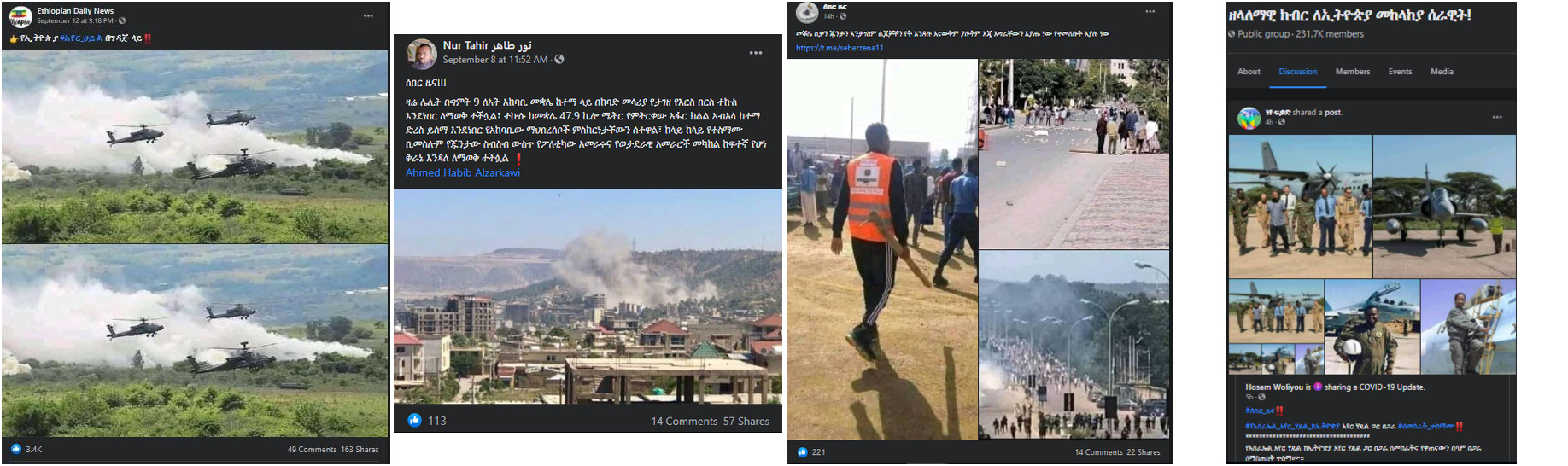
In the first week of September captioning “Ethiopia and Israeli forces have agreed to work together” even though the caption is mentioning Israel, one of the images shows Ethiopian and French air forces.

Such claims manipulate contexts or twist events to distort facts. During the time when the claim that the Ethiopian and Israeli air forces agreed to work together, Prime Minister Abiy Ahmed (Ph.D.) went to Turkey and paid a two-day work visit. The Prime Minister and the Turkish President Erdogan inked a military cooperation agreement. The claim follows the event and such posts have a greater potential to misinform and make people believe, rather than claims which emerge out of nowhere with no background event or context.

In the second week of September, an image showing heavy artillery shelling in Mekelle claiming that gunshots and heavy artillery were heard 47 km away from the capital city of Tigray.

The claim followed a fresh wave of fighting between belligerents in adjacent areas bordering Afar, Amhara and Tigray regions.

Even though the image is in Mekelle, that image was taken and reported on a Voice of America (VOA) news network reporting “during an airstrike attack one person has died and houses are burnt down”.

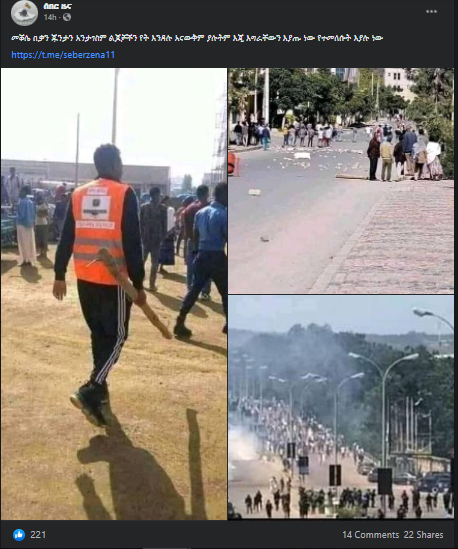
As the armed conflict has continued, reports of a worsening humanitarian crisis have been coming out of Tigray. These reports were followed by claims that used false pictures. Social media posts claimed that a public protest was held in Mekelle against the Tigray People’s Liberation Movement (TPLF), saying that they could no longer tolerate the rule of the TPLF. The claim used three false videos to support the claim.

The other image which has been circulating on social media in connection to the current situation in the northern part of Ethiopia includes a ‘woman crying’. The caption used for this image was starvation in the Amhara region of Wollo. But the image shows a woman crying because of a disastrous fire incident that happened around a marketplace in the Wolaita Zone of the South Nation, Nationalities, and Peoples Region. A child affected by malnutrition in Somalia was also used to show the starvation in the Amhara region of Wollo.

In the third week of September, a false image was posted on Facebook to show Ethiopian air forces in operation.

Scams 

Nowadays, people are increasingly reporting social media messages that offer grant money and other giveaways. As people seek more ways to earn money, scammers use these weaknesses on social media to get money out of people. In the second week of September, many scams appeared in the name of globally known companies.

False video clip

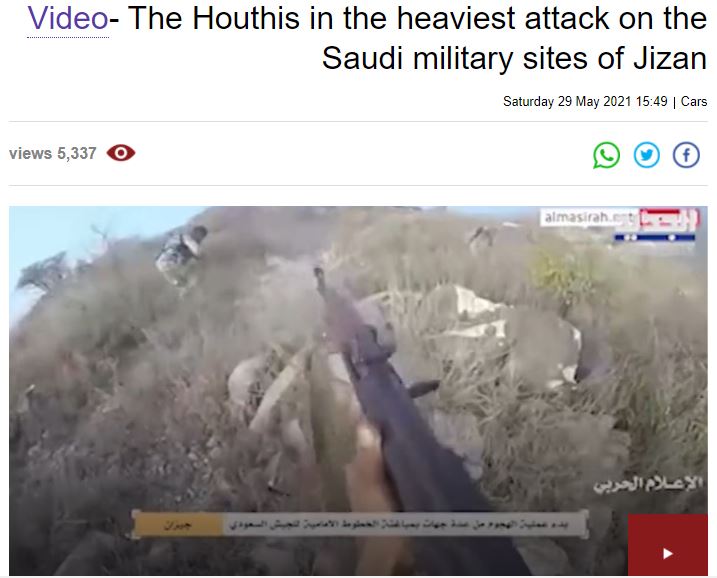
A fake news trend in Ethiopia is widely expanding on social media platforms, especially Facebook. A video claiming to show a military operation showing afar heroes and EPRDF soldiers killing TPLF forces was posted on the third week of September. But later a reverse image search revealed that the video was taken from a war between Saudi-led soldiers and Yemen forces in the Jizan axis at the border of Saudi Arabia.

False advertisements

Along with fake news and scams, false advertisements are also used on social media platforms even if they are advertised on Facebook. One of the fake advertisements we had noticed in the third week of September is a false claim impersonating a reputed organization such as Ethio-telecom on a post offering a gift prize including a free 100 GB and i-phones.

HaqCheck’s general observation is that even though there are a lot of social media posts using false images, recently video clips are also coming out increasingly to support their claims.

The social media claims that surfaced in the social media landscape in the past were highly related to the armed conflict in the northern part of the country and other related issues. Recently the armed conflict seems to have somewhat reduced its horizons on social media. Consequently, social media claims have since then been reduced along with the armed conflict.

Recommendations

Deeply manipulated and fabricated images and video clips are appearing at a rate that is difficult to verify – even for fact checkers. We recommend social media users to approach outlandish claims backed by images and video clips with caution.

We urge the public in general and social media users in particular that they should be conscious of the social media landscape. This includes disinformation trends and consumers should identify the right pages and sources to understand the intention and credibility of the message they are reading or sharing.

Regarding scams, as we always recommend, when social media users receive random messages and with automatic links, they should refrain from giving their private information because it can be used for potential scams. They should reach out to the mentioned entity or fact-checking organization to verify the message or information they receive.

HaqCheck believes that multinational social media networking sites, such as Facebook, should work with local fact-checking organizations to mitigate disinformation dissemination.

Information controversies and disinformation tendencies are high during a shortage of information. It is a common trend that the government enjoys a monopoly of information. It is a fertile ground for disinformation dissemination. Therefore, we recommend that the government should allow private media organizations and the public to have full access to information held at governmental offices and by authorities.

You can find the detailed weekly summaries here:

Fact Checked Hoaxes and Other Disinformation Trends

September: week two disinformation trend summary

September: week three disinformation trend summary

—————————————————————————————————————————————————

HaqCheck is a local multilingual fact-checking project based in Ethiopia, formed inside Addis Zeybe’s newsroom, now Inform Africa’s Counter Disinformation Project – a board-led Civil Society Organization (CSO) – dedicated to verifying media contents from social to the mainstream. HaqCheck works in collaboration with media outlets to monitor media contents in English and four local languages (Amharic, Afaan Oromo, Tigrigna, and Somali).

This report is produced with the support of UNESCO under the #CoronavirusFacts: Addressing the ‘Disinfodemic’ on COVID-19 in conflict-prone Environments that the UNESCO Addis Ababa Office is implementing in Ethiopia with financial support from the European Union (EU). The designations employed and the presentation of material throughout this publication do not imply the expression of any opinion whatsoever on the part of UNESCO or the EU concerning the legal status of any country, territory, city, or area or of its authorities, or concerning the delimitation of its frontiers or boundaries. The ideas and opinions expressed in this publication are those of the authors and do not necessarily reflect the views of UNESCO or The European Union and do not commit these organizations in any way.

No: The highest and lowest points in Africa aren’t found in Ethiopia

A social media post on Facebook and Telegram channel by the going by the so-called name Business Info Ethiopia ቢዝነስ ኢንፎ ኢትዮጵያ claimed that the highest and lowest points in Africa are found in Ethiopia. 

The post states that the Simien Mountains of Ethiopia are the peak or the highest point in Africa. It added that the Danakil Depression is the lowest point in Africa.

Ethiopia has a variety of geographical landscapes from mountains to valleys. Mount Ras Dashen, found in the range of Simien Mountains, in the northern part of the country, is the highest point in Ethiopia at 4,620 meters high above sea level.

On the other hand, the lowest point in Ethiopia is the Danakil Depression, found in the Afar triangle. The depression is part of the East African Rift which stretches from Jordan to Mozambique. The Danakil Depression is found 125 meters below sea level.

However the highest and the lowest points in Africa are not found in Ethiopia.

The highest peak in Africa is Mount Kilimanjarofound in Tanzania. The mountain is 5,895 meters high above sea level.

Lake Assal found in Djibouti is the lowest place in Africa which is 155 meters below sea level. The location is part of the Afar triangle that overlaps Djibouti, Eritrea, and Ethiopia. The lowest points of Ethiopia, Eritrea, and Djibouti are found in the triangular depression.

Therefore, HaqCheck refuted the claim that states both the highest and lowest points in Africa are found in Ethiopia and confirmed that the claim is inaccurate. Hence, HaqCheck rated the post as FALSE.

War and Propaganda during the Tigray Conflict

The armed conflict that erupted on the evening of November 3, 2020, between forces loyal to the TPLF and the Ethiopian federal government-led has unleashed significant propaganda and disinformation campaigns. Each side has used social media platforms, satellite radios and televisions, phone communications, rallies, protests, and so on to communicate information to their supporters and the wider world.

But it is now becoming increasingly difficult to differentiate propaganda from facts or reliable information.  Governments have privileged access to information and accounts and they have the power to deny open access to the public or media. Even if it’s hard to verify information broadcast by warring sides or belligerents, propaganda can be identified by observing the presentation, intention, or manipulation of certain information.

Degrade enemy’s capabilities 

Nicholas Spykman, an American political scientist, enumerated five dimensions of warfare: military, political, economic, ideological, and psychological. The political, ideological, and psychological warfares are called, in today’s terms, propaganda.

Propaganda is now a tool to intensify your war efforts. It is also one tool to deceive and mislead the enemy. Propaganda can mean spreading information, through lies or manipulated facts, to help one’s cause or to damage an opponent’s during a war.

Propaganda can be directed inward or to external audiences. Propaganda to internal audiences is meant to produce a manufactured consent of the general public to the war or a certain decision.

The invention of mass communication tools such as television, the radio, and cell phones revolutionized the dissemination of propaganda and disinformation.

Propaganda has been employed throughout history whenever a war breaks. However, there have been few that happened to have ever effectively mastered propaganda in history.

The Nazis are best known for their effective employment of propaganda to manipulate public opinion and conquer the state apparatus and power.

Likewise, the belligerents in the Tigray armed conflict have widely used propaganda to gain an advantage over the other side. This has been done to mislead the enemy, distort facts, mobilize popular support, and gain international help. They have used mainstream and social media, public gatherings, and so forth to broadcast their propaganda efforts. The propaganda machines have hugely contributed to the waves of disinformation during the last 11 months of armed conflict.

Media warfare

The armed conflict in Tigray and the belligerents’ propaganda machines have fueled threads of disinformation.

The propaganda efforts by both sides started even before the war broke out at midnight on November 03, 2020.

Both sides began this element of media warfare when the newly appointed Prime Minister Abiy Ahmed (Ph.D.) merged the then Ethiopian People Revolutionary Democratic Party (EPRDF) into the Prosperity Party (PP). The Tigray People’s Liberation Front (TPLF) openly opposed the merger of EPRDF into one party and refused to join the camp.

Thereafter, the relations between Addis Ababa and the Tigrayan state capital, Mekelle, has worsened. Initially, both sides condemned each other for conflicts and instabilities that have surfaced across the country. TPLF accused Abiy Ahmed and his administration of failing to protect peace and security and exposing the country to foreign forces. On the other hand, the federal government, led by Prime Minister Abiy, accused TPLF of instigating conflicts and instability across the country using the financial and intelligence capabilities it built during its three-decades-long dominance of national politics.

Both sides have rushed to manipulate certain events to their advantage. When an incident happens, they instantly issue statements that accuse each other.

Rallies

The federal administration in Addis Ababa and TPLF organized rallies in which they denounced the other side.

Rallies had been the main tool of propaganda during Nazi Germany. The Nazis effectively used rallies to persuade the public that Germany had been ‘backstabbed’ during WWI and they are the only messiah that will deliver the country from the horrors of a post-war socioeconomic and political quandary.

The Nazis accused the civil government of betraying the nation, the Allied Powers, the Jews, the Communists, and other minorities. They built the brand of the Nazi Party and the messianic image of the Fuhrer, Adolf Hitler, through relentless rallies.

The rallies organized by both sides, especially by TPLF in Tigray, were intense. The rallies were organized under various contexts and pretexts. But the theme and messages of the rallies have almost been the same: condemning and accusing the other side.

Rallies in Addis Ababa and other areas under the realm of the Prosperity Party denounce and accuse the TPLF of alleged acts of instigating ethnic conflict and instability across the country so as to delegitimize and overthrow the federal government and restore its 27 years of dominance. The rallies held by the TPLF in Tigray accused the federal administration, particularly the Prime Minister, of failing to keep peace and stability Messages they spread included exposing the national security of the country to foreign forces, conspiring with external forces to destroy TPLF, [in extreme senses, the Tigray people], plotting and instigating mass violence against ethnic Tigreans, and even betraying the country (treason).

Persistent rallies have been organized at the federal level too. The intention of the rallies was to mobilize support for the government, opposing the enemy side, and protesting alleged interventions from abroad. The rallies were also used to demonstrate that they have popular legitimacy.

They both cited the constitution to legitimize one’s side and call upon each other to respect and protect the constitution. TPLF and the federal government condemned each other for plotting to undermine the ‘constitutional federal system’.

Election Postponement

The lower house, the House of Peoples Representatives, decided to postpone the Ethiopian Sixth General Elections citing the COVID-19 global pandemic. During the session in the Prime Minister Office, TPLF delegates and MPs fiercely opposed the motion, arguing the disease still was not a pandemic and accused the federal government of illegally extending their span in power.

TPLF then declared that the postponement was unconstitutional and illegitimate.

This was a new chapter of large-scale media warfare between the federal government and TPLF.

The Tigray state council decided to conduct a regional general election. The federal government condemned the regional election in which TPLF won in a landslide and threatened to take measures in return. The House of Federation nullified the Tigray regional election. The federal government froze a budget subsidy that was due to be provided to Tigray during the 2020/21 fiscal year.

Later on, TPLF declared Abiy’s administration illegal beyond October 04, 2020, and then cut its relationship with the federal government. It recalled officials who are members of the party at federal offices.

TPLF officials compared the budget subsidy suspension to a declaration of war.

The propaganda warfare became even more intense. Controversies arose over a refusal of the newly appointed army chief. The army chief, Major General Belay Seyoum, was appointed and delegated to command the Northern Command of the Ethiopian Defence Forces whose headquarters was in Mekelle, Tigray. TPLF refused to endorse the new army chief and automatically returned to Addis Ababa. The news was compared to deportation in Addis Ababa, although TPLF claimed that he wasn’t deported but only told him his appointment was not legitimate as the constitutional span of the federal administration is over.

Days before the war broke out, incidents, in which many civilians were killed, occurred in Benishangul Gumuz, South Nation, Nationalities & Peoples Region, and in Guliso, Oromia regional state.

The Guliso attack was a major setback to the federal government that even regional state-affiliated media outlets like Amhara TV harshly criticized the federal government and the Prime Minister for failing to protect the lives of civilians.

The federal government accused the TPLF of engineering the attack to delegitimize the government and illegally seize the federal power. State-affiliated media outlets echoed the accusations.

A few days before the war broke out, TPLF chairman and then Tigray regional president, Debretsion Gebremickael appeared on television and stated that the federal government has already waged a war over TPLF and called upon his government to get ready.

The Northern Command Incident

When war broke out, propaganda from both sides surfaced on mainstream and social media channels.

TPLF then stated that the strike was an “anticipatory self-defense attack” claiming the federal government was planning to attack them using the Northern Command. Furthermore, they claimed that the Northern Command defected to their side.

The federal government accused TPLF of attacking the Northern Command to illegally seize munitions and began a military operation against them.

Since then, the Ethiopian social and mainstream media landscape has been contaminated by propaganda and disinformation semination. Information and incidents were weaponized to take advantage of and deprive the enemy side.

The war generated wide-scale social media warfare and online activism between the belligerents and their supporters.

The capture of Army Generals and Civil Officials

As the skirmishes continued, claims of the surrender of army generals widely emerged on social media. The claims stated that Lt. General Bacha Debele was captured by TPLF forces. Such claims expanded and later claims of the capture of Lt. General Abebaw Tadesse came out. The claims were blistering.

Social media platforms had been infested with claims alleging senior TPLF civil and military leaders were killed or arrested. In fact, senior TPLF leaders were killed and arrested. However, the claims go extreme to say many such as Debretsion Gebremickael, Getachew Reda, Tsadkan Gebretensae, and so on were killed or captured.

The social media disinformation claims mostly use false or manipulated images and video clips to prove the information. HaqCheck has fact-checked and debunked many claims of such kind.

Massacres and Mass Atrocities

Reports and claims of mass atrocities and massacres have come out and no one could exactly know the facts.

News of Mai Kadra Massacre, Mahbere Dego Massacre, Axum Massacre, Debre Abay Massacre, Agamsa Incident, Humera Massacre, Galicoma Massacre, Chena Massacre, and so on have surfaced. The reports of massacres have been accompanied by hashtag campaigns/activism on social media platforms, mainly Twitter.

They were used as a weapon to demonize the other side in the public mind, to mobilize infinite support from one’s social base, tear the enemy’s reputation and image at the international level, and gain sympathy and support from the international community.

Prisoners of war

Both sides claim they have gained thousands of prisoners of war from each other. The claim is behind an argument that ‘we are destroying the enemy side and are going to win the war’. They broadcast interviews of so-called prisoners of war with an intention to demoralize the other side and its social base.

They both also condemned each other for using underage, fresh recruits as cannon fodder and for using human shields. They denied that the prisoners of war interviewed by the other side belonged to them.

Federal Troops Withdrawal from Mekelle

The Ethiopian Defense Forces announced that it had withdrawn from Mekelle and major areas of Tigray following a sudden unilateral ceasefire by the federal government at the end of June 2021. They both tried to manipulate the event to their advantage. They struggled to give their own version of the narrative to the event.

The federal government and TPLF forces rebranded themselves as Tigray Defense Forces, have come up with their narratives. The federal government said that its forces withdrew from Tigray for humanitarian purposes and partially due to growing diplomatic pressures and sanctions.

The forces in Tigray, on the other hand, stated that the federal army was routed in Tigray with a fresh offensive called ‘Operation Alula’ indicating why the federal government declared a unilateral truce and pulled out its troops.

September: week three disinformation trend summary

In the following summary, we cover major disinformation trends observed to prevail in the third week of September along with important recommendations.

“The video claiming to show a military operation in the Afar front”

One of the claims in this week of September is a video asserting to show the Ethiopian military and Afar heroes killing and chasing away TPLF forces.
The social media post claims that the Ethiopian military force and Afar Heroes are chasing away and expelling TPLF forces from a town in Afar.

HaqCheck checked the video and found that it was taken from a military engagement between the Saudi-led forces and Yemen forces in the Jizan axis, Saudi Arabia border, on May 29. Hence, it is confirmed that the video doesn’t show the operation in the Afar front.

Haqcheck, therefore, rendered the post as False due to its appeal to a wrong video to prove the claim.

Controversies over the destroyed Tekeze Bridge 

Social media platforms, mainly Facebook and Twitter, last week were overwhelmed with posts over claims of the destroyed bridge on the Tekeze River.

Controversies heated up between pro-Government and those on the TPLF sides, blaming each other for the damage.

The state-owned news outlet, Ethiopian Broadcasting Corporate shared a news report saying TPLF has demolished the Tekeze Bridge linking the towns of Addis Zemen, Ibnat, and Amdework.

On the other hand, different people tweeted and shared posts accusing the Ethiopian National Defence Force and Amhara forces, of destroying the bridge on the Tekeze River.

It was reported previously that another bridge on the other side of the Tekeze river was also destroyed and the news was similarly controversial. 

“A false image used to show the Ethiopian Air Force in operation”

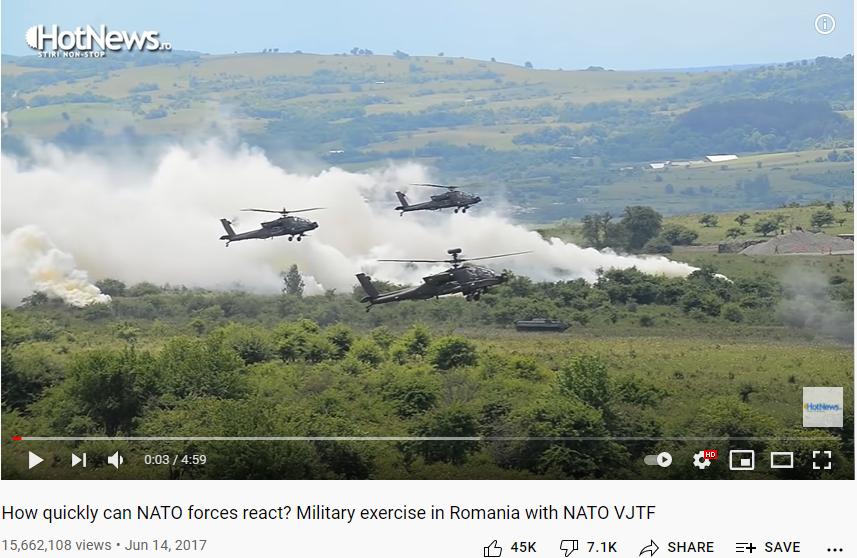
An image was shared on Facebook claiming to show the Ethiopian Air Force in action. Even though the claim was shared a week before, we observed that it has still been circulating this week. Haqcheck has analyzed the image and obtained a YouTube video posted on June 15, 2017, that contains the exact image posted by the Facebook page.  The image is taken from a YouTube video showing NATO forces conducting military training in Romania. The post has been rendered false due to its use of the wrong image to support the claim.

A false advertisement on Facebook

Another misinformative piece that grabbed our attention this week was a sponsored post on Facebook. Analyzing the message of the post and the logo it used, we could learn that the page had been impostering a reputed organization, Ethio Telecom. Imposter content is one of the types of disinformation used to deceive and mislead users. The post offers prizes including “free 100 GB and iPhones”. It also has an invitation to click on a link that doesn’t actually open.

Such kinds of sponsored or boosted posts are paid advertisements with the privilege of posting the desired message in a text, image, or video. Facebook reviews the post’s appropriateness according to its advertising policies. Despite the fact that misinformation is one of the prohibited intents to be advertised according to the review policies, Facebook could be said to be irresponsible to approve a post that misinforms the public by impostering a well established public organization to the wider audience. 

Recommendations 

No matter what the intention is, social media influencers, activists and public figures should be careful about the information they share and be more alert in choosing a trustable information outlet and act responsibly in whatever content they share. 

People are advised to be well aware of the social media landscape; disinformation trends, identify the right pages and media and take time to understand the intention and credibility of the message they are consuming and sharing.

As a fact checking initiative based in Ethiopia, we call upon giant social media platforms like Facebook to give due attention, responsibility and respect to users from different countries, languages and cultures and work with local initiatives that understand the Ethiopian context and media landscape better.

—————————————————————————————————————————————————–

HaqCheck is a local multilingual fact-checking project based in Ethiopia, formed inside Addis Zeybe’s newsroom, now Inform Africa’s Counter Disinformation Project – a board-led Civil Society Organization (CSO) – dedicated to verifying media contents from social to the mainstream. HaqCheck works in collaboration with media outlets to monitor media contents in English and four local languages (Amharic, Afaan Oromo, Tigrigna, and Somali).

This report is produced with the support of UNESCO under the #CoronavirusFacts: Addressing the ‘Disinfodemic’ on COVID-19 in conflict-prone Environments that the UNESCO Addis Ababa Office is implementing in Ethiopia with financial support from the European Union (EU). The designations employed and the presentation of material throughout this publication do not imply the expression of any opinion whatsoever on the part of UNESCO or the EU concerning the legal status of any country, territory, city, or area or of its authorities, or concerning the delimitation of its frontiers or boundaries. The ideas and opinions expressed in this publication are those of the authors and do not necessarily reflect the views of UNESCO or The European Union and do not commit these organizations in any way.

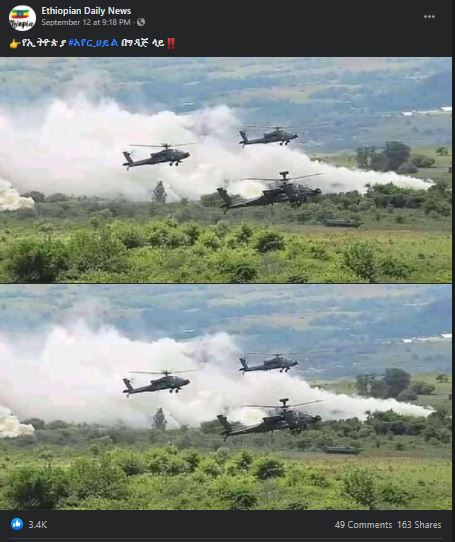
FALSE: the image does not show the Ethiopian Air Force in action

A Facebook page with more than 100 thousand followers posted two similar images on September 12  with an explanatory phrase claiming, “ the Ethiopian air force in action”.

The post had been shared more than 163 times including different public groups until the time this article was published. 

However, HaqCheck looked into the credibility of the images and finally rated the post as False.

This post is among misinformative images that had been circulating across social media following the ongoing armed conflict between the Ethiopian federal government and the Tigray People’s Liberation Front (TPLF) since November 2020. Given some claims that the Ethiopian Air Force is backing up the battle in Tigray, and its employment of modern drones, the Air Force happened to become a center of attention.

However, a reverse image search of the picture led to a youtube video posted on June 15, 2017. The video entitled “how quickly can the nato forces react?  Military exercise in Romania with NATO VJTF “ has more than 15 million views. The footage shows a military training named “Exercise noble jump 17” held in Romania.

Hence, though there are various reports claiming military operations are being held on TPLF, the image doesn’t actually show the Ethiopian Air Force in action, making the post to be rated as False.

False: The video doesn’t show military operation in the Afar front

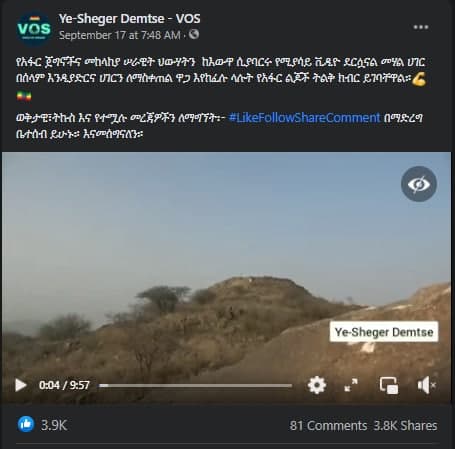
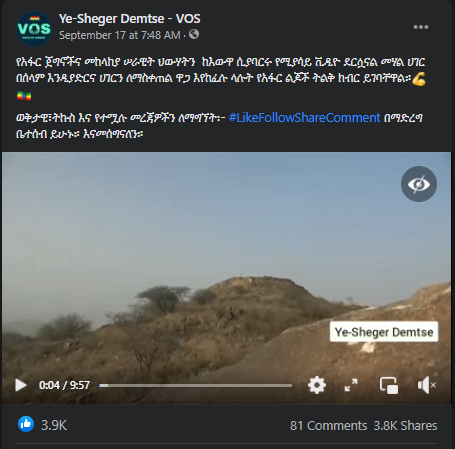
Video circulating on Facebook since September 17 posted by a page with more than 35,000 followers, reports, “We have received a video showing Afar heroes and the defense force expelling TPLF…” By the time this article is published the post has been shared more than 3800 times. 

However, the video in the Facebook post doesn’t show the claimed operation in the Afar front, and the post is rendered False.

On November 4, 2020, armed fighting started between TPLF and Federal Government forces in Tigray. In the ensuing conflict, the federal army has controlled major areas in Tigray, but there have been reports of armed battles and guerilla attacks in the region. 

Late last month the Ethiopian government, following a request from the Tigray Interim Administration, declared a sudden unilateral ceasefire with the supposition of its concern over humanitarian issues and immediately withdrew its forces from the mainlands of the regional state.

After the federal forces left the region, the TPLF-forces rebranded themselves as Tigray Defense Forces (TDF), taking control of urban centers of the regional state.

The TPLF-forces have been advancing southwards and southeast, moving out of the heartlands of Tigray. Recently armed clashes have been reported in border areas adjacent to Tigray, such as Amhara and Afar regional states.

The Facebook post was circulating amid this situation.

However, a reverse image search of screenshots from the video shows the video was neither from Ethiopia nor shows a recent incident. The footage found shows an operation between the Saudi-led forces and Yemen forces in the Jizan axis, Saudi Arabia border, on May 29.

The footage

Given the result of the aforementioned analysis, the post claiming to show an operation in the Afar front is rendered False.

September: week two disinformation trend summary

False Images

‘Heavy artillery shelling in Mekelle’

One of the claims that appeared during the first week of this September alleges that gunshots were heard accompanied by heavy artillery shelling in Mekelle, Tigray regional capital.

The social media post claims that the sound of the shooting was heard as far as Abala town of the Afar region, approximately 49 Km from Mekelle. The post used an image in a bid to support or prove the claim.

HaqCheck looked into the image and found that the image was taken from an old social media publication and confirmed that the picture doesn’t show heavy artillery shelling in Mekelle. 

As HaqCheck previously interrogated, a reverse image search of the image that is used in the post revealed that the picture was first published by VOA Amharic on November 16, 2020. The report stated that an airstrike was carried out in Mekelle town, at which one person was killed and some houses were burnt down.

HaqCheck, therefore, convicted the post as FALSE due to its appeal to an old image to prove the claim.

‘Demonstration in Mekelle’

The other social media claim, fact-checked by HaqCheck, was that there was a public protest in Mekelle. The Facebook post claimed that people in Mekelle protested against the Tigray People’s Liberation Movement (TPLF) saying that they could no longer tolerate the rule of the TPLF.

The post used three images to support the claim that seemingly shows road blockades, public protest, and some public gatherings.

HaqCheck interrogated the images in an effort to fact-check the claim and found that the pictures used in the post don’t show protests recently undertaken against TPLF.

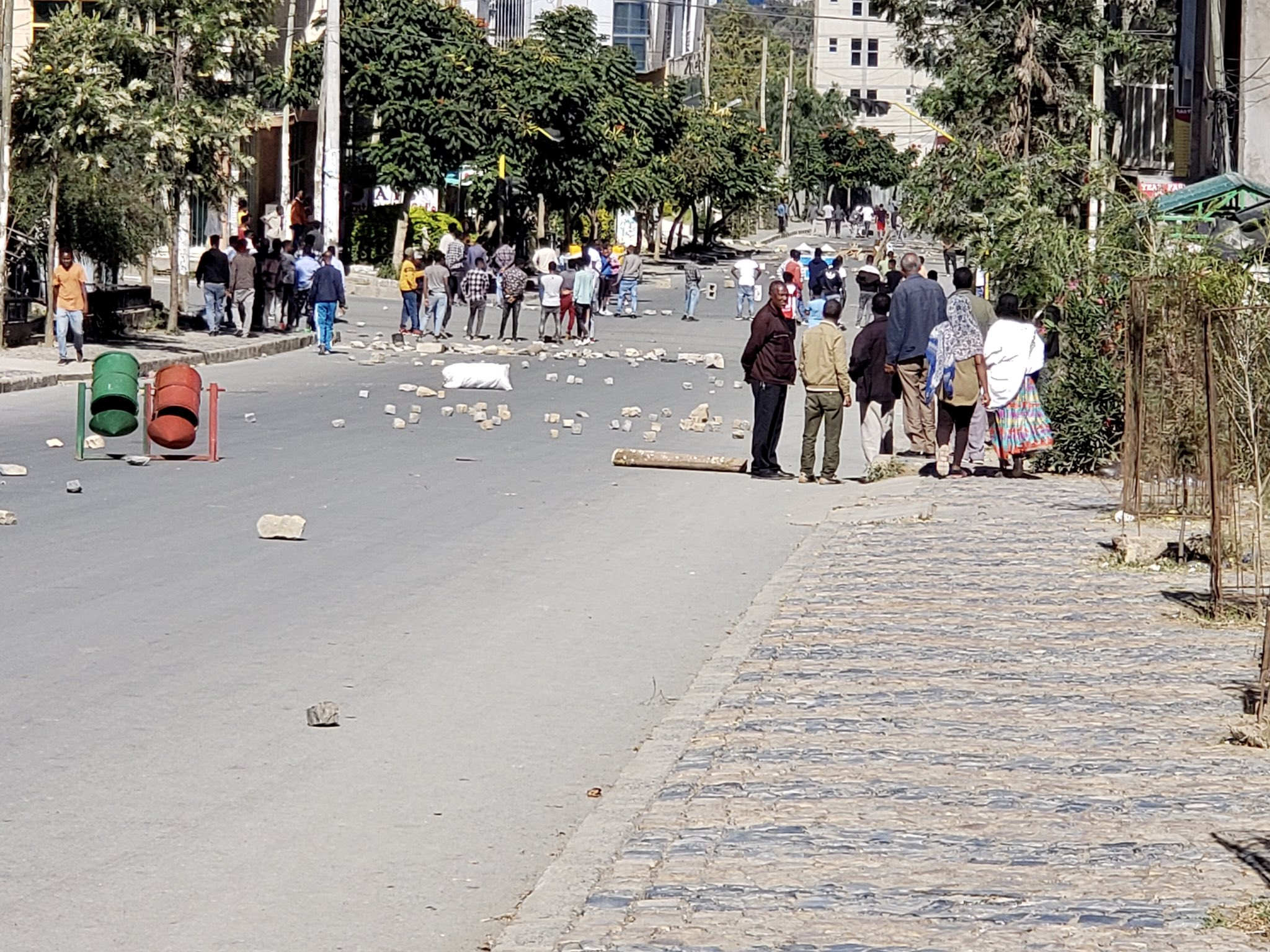
The first image in the post was not found. However, the second and the third pictures utilized to support the claim were taken from previous social media posts. The second image is of Mekelle residents safeguarding their neighborhoods some ten months ago during the armed conflict between forces loyal to the TPLF and Ethiopian Federal government-led forces.

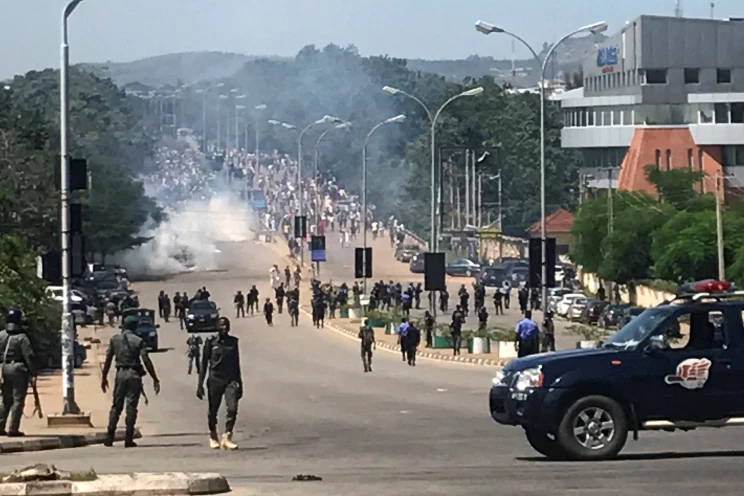
The third cropped picture in the Facebook post shows a protest in Abuja, Nigeria on October 30, 2018.

Therefore, HaqCheck concluded that the Facebook post was FALSE due to the fact that it used inaccurate images to prove the claim.

‘Scams’

Last week scams appeared on social media that used the names and logos of globally known companies and were being circulated across social media platforms. HaqCheck found that the scams were sent through inboxes with automatic links. 

The messages sent indicate that people who fill out the prepared forms would be nominated for awards. This is one of the ways in which scammers extract people’s personal information and use it for various purposes. HaqCheck has noticed that the messages have similar contents and has warned users.

“Wollo starvation”

There have been different fundraising campaigns for people affected by the war in Tigray around North Wollo. However, while activists and social media influencers were spreading the news and joining the campaign, we have noticed that a couple of false images were used.  

The first image was actually taken from a fire accident that happened in Wolaita, in December 2020.

The other picture was taken on September 20, 2011, showing a child affected by malnutrition in Somalia. 

Recommendations

Social media influencers and activists should be careful about the information they share with their followers. Even if it is for good intentions they should not misinform the public and need to correct their mistakes at the time they learn about them.

The public should be aware of the disinformation trend and be cautious about what they consume from social media. Cross checking the information from different sources and trying to get information from relatively credible media is recommended. 
 
Regarding scams, when social media users receive such messages and automatic links they should refrain from giving their private information because it can be used for potential scams. 

HaqCheck recommends that social media users should basically look for information from credible and original sources before sharing or consuming such claims. They consider checking out official statements, updates, and clarifications from authorities on such controversial issues. For more recommendations about scams, you can read here.

—————————————————————————————————————————————————–

HaqCheck is a local multilingual fact-checking project based in Ethiopia, formed inside Addis Zeybe’s newsroom, now Inform Africa’s Counter Disinformation Project – a board-led Civil Society Organization (CSO) – dedicated to verifying media contents from social to the mainstream. HaqCheck works in collaboration with media outlets to monitor media contents in English and four local languages (Amharic, Afaan Oromo, Tigrigna, and Somali).

This report is produced with the support of UNESCO under the #CoronavirusFacts: Addressing the ‘Disinfodemic’ on COVID-19 in conflict-prone Environments that the UNESCO Addis Ababa Office is implementing in Ethiopia with financial support from the European Union (EU). The designations employed and the presentation of material throughout this publication do not imply the expression of any opinion whatsoever on the part of UNESCO or the EU concerning the legal status of any country, territory, city, or area or of its authorities, or concerning the delimitation of its frontiers or boundaries. The ideas and opinions expressed in this publication are those of the authors and do not necessarily reflect the views of UNESCO or The European Union and do not commit these organizations in any way.

True: Debub Global Bank is offering prizes for Telegram users

As we have connoted in our previous fact-checking publication, some Telegram channels and groups had been intending to deceive users in the name of different prominent banks offering people attractive prizes on the condition that they join their channels and share the links to a number of people. HaqCheck clarified these claims and rendered them as Hoax. 

We have been requested by our audiences to look into a Telegram channel with the same content of offering prizes. The channel’s Amharic post published in the name of Debub Global Bank reads, “our bank is offering prizes on the occasion of Ethiopian new year with the supposition of motivating Telegram channels, an opportunity open until Oct 11, 2021.” 

The post has been watched by more than 52,700 people up until this article is published. Unlike the previous misleading Telegram hoaxes, HaqCheck confirmed that the messages are actually from the bank.

The post listed four different prizes. The first prize being modern mobile phones for three lucky winners, there are lists of other prizes such as  DSTv decoder with a one month package, Golden membership account of the bank, and daily mobile air time of 100 ETB. In order to qualify for the prizes, people are reminded to join the channel and invite more than 50 people following the shared link. 

In an effort to ratify the claim, HaqCheck spoke to Temesgen Fekadu, an officer in the marketing department of Debub Global Bank.“ Telegram Channel is real. We provided different prizes for Telegram users including 100 airtime packages, mobile devices, and DSTv decoders. The opportunity is open for members of the channels until the deadline” he explained.

HaqCheck also reached out to  Asnake Worku, Marketing and Brand Officer of the bank. He also confirmed that the prize offer is real. Moreover, we have called to different branches of the bank to find out that all the information we had from the bank is in accord.

Therefore, the Telegram messages offering new year prizes in the name of  Debub Global Bank are confirmed to be True. 

False: the images do not show a recent demonstration in Mekelle

A Facebook page that has more than 60,000 followers published a post with a compilation of images on September 14. The post states that people of Mekelle are in resistance saying, “We had enough! We don’t tolerate the Junta (referring to TPLF) anymore! We don’t know the whereabouts of our children, while those alive are coming back losing their limbs”. The images attached to the post show road blockades, demonstrating people clashing with security forces, and dwellers gathering on streets in surprise.

However, the images are found to be inaccurate and are rated as False.

The ongoing  Tigray conflict between the Ethiopian federal forces and the Tigray People’s Liberation Front (TPLF) since November 2020 had various social repercussions. One of the issues that were tremendously focused on by the international community and the media was TPLF’s use of child soldiers on the front line of active battles

Basically triggered by the story published in The New York Times and other similar allegations, it was reported that TPLF is conscripting child soldiers into fresh battles. Interviews of supposedly captured child soldiers were also aired on Ethiopian national television. Over the past few months, different false information had been emerging regarding the subject, including the one debunked by HaqCheck and this Facebook post.

However, a reverse image search of the pictures shows that they are not related to the incident reported by the post. While the first image can not be found from any source in our investigation, the other two were actually taken at different times and places. 

The Second Image

The second image can be found in a Tweet from December 3, 2020. The caption reads “…People of Mekelle are out in the streets blocking all roads & confronting the armed Eritrean troops & Amhara militias…”

The Third Image

The third image was taken during a protest in Abuja, Nigeria, by Reuters reporter Abraham Achirga, on October 30, 2018. It is found attached in a news article entitled “Nigeria police fire on Shi’ite march, kill protester-group” alongside other pictures from the incident. 

It is apparently clear that the image in the Facebook post is also cropped out from the original one.

Therefore, due to its usage of inaccurate images, the post is rated as False.

Exit mobile version