Does international law guarantee that landlocked Ethiopia gets a coastline?

Ethiopia’s government officials and affiliated media have stated that the country requires coastline access or access to the sea. Prime Minister Abiy Ahmed has emphasized the need for Ethiopia to secure a coastline or access to the sea through the Red Sea or Indian Ocean. The government has also urged neighboring countries to discuss or negotiate the issue.

Claims and themes of the claims

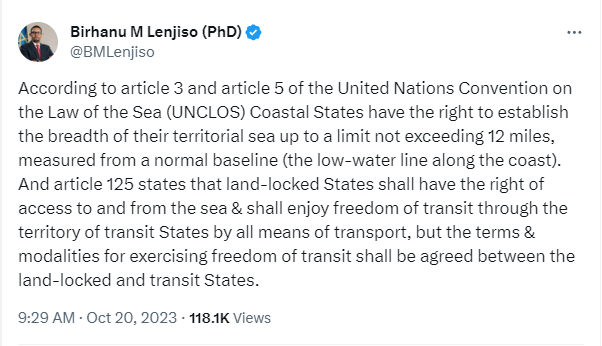
[X post: link]
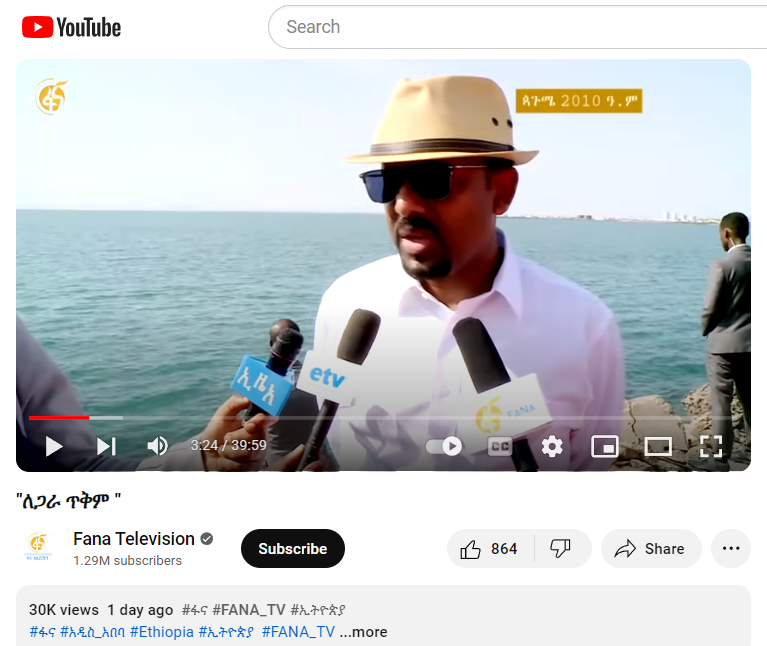
[YouTube video: link]

Based on its monitoring of state-affiliated media and social media reports, HaqCheck identified four main themes in the Ethiopian government’s claims regarding the issue:

  1. Coastline or access to the sea: State media (link) and the government have asserted that Ethiopia needs a coastline (access to the sea) and that it can secure this right under international law.
  2. Utilization of maritime resources: HaqCheck also observed claims that international law permits landlocked Ethiopia to utilize maritime resources, such as fishing, on an equal basis with coastal states.
  3. Right of transit for imports and exports: State media and government officials have asserted that international law guarantees landlocked countries the right of transit for imports and exports.
  4. Freedom of navigation: Government officials, citing international law, have stated that the high seas belong to no one and that Ethiopia has the right to freedom of navigation.

The Ethiopian government’s claims about international law guaranteeing Ethiopia a coastline, transit for imports and exports, freedom of navigation, and resource utilization are primarily based on the United Nations Convention on the Law of the Sea (UNCLOS) of 1982.

Ethiopia’s government, state-run media, and officials have claimed that international law allows Ethiopia to obtain coastline or sea access.

What is the law of the sea?

The law of the sea is a body of international law that governs matters related to seas and oceans, issues of navigational rights, sea mineral claims, and coastal waters jurisdiction.

What are the sources of the law of the sea?

The sources of the law of the sea, which is the international law governing maritime issues such as the high seas, transit rights, navigational rights, sea mineral claims, and coastal waters jurisdiction, are primarily international customs, treaties, and agreements.

Evolution of the law of the sea

The Viena Congress of 1815 

In 1815, Austria, Britain, Russia, Prussia (Germany), France, and other European countries signed the Treaty of Vienna. The treaty stated that European rivers, especially the Rhine and Danube, should be open to navigation.

The Congress of Vienna established that all countries should have equal access to navigation on international rivers and their tributaries. This principle was used in all nineteenth-century treaties on seas and navigation.

The Mannheim Act of 1868

In 1868, the present-day German states of Baden, Bavaria, Hesse, and Prussia, as well as France and the Netherlands, signed the Treaty of Mannheim. The treaty made the Rhine River free for all countries to navigate.

The Barcelona Convention and Statute on Freedom of Transit of 1921

The 1921 Barcelona Convention, which followed the Treaty of Versailles, allowed landlocked countries to transport goods across the territory of other countries. The treaty prohibited governments from charging transit fees that exceed the cost of operating or providing transit services.

The Geneva Conventions on the Law of the Sea of 1958

In 1958, the United Nations General Assembly resolved to convene a conference to draft a convention on the law of the sea. The First United Nations Conference on the Law of the Sea was held in Geneva, Switzerland, and resulted in the adoption of four international conventions between United Nations member states:

  1. The Convention on the Territorial Sea and Contiguous Zone
  2. The Convention on the Continental Shelf
  3. The Convention on the High Seas
  4. The Convention on Fishing and Conservation of Living Resources of the High Seas.

The Convention on Transit Trade of Land-locked States of 1965

This Convention allows landlocked countries to transport goods through the territory of other countries to and from seaports. The convention is based on the principle that landlocked countries need access to the sea to trade and grow their economies.

The Convention states that import and export goods from landlocked countries that pass through the territory of other countries should not be subject to customs duties or excessive transit charges.

The UNCLOS III

In 1982, the United Nations Convention on the Law of the Sea (UNCLOS III) was signed. UNCLOS is a comprehensive convention that supersedes all four of the previous conventions. It is now the main source of international law for international waters.

The United Nations Convention on the Law of the Sea (UNCLOS) entered into force in 1994 after 60 countries had ratified it. However, several countries still need to ratify UNCLOS, including the United States, Eritrea, and Turkey. The United States has argued that UNCLOS could limit its sovereignty and its freedom to act in its own national interest.

Ethiopia and UNCLOS

Ethiopia signed the United Nations Convention on the Law of the Sea (UNCLOS) in 1982, but it has yet to be a party to the convention because it has yet to ratify it.

Ethiopia and access to the sea

Ethiopia maintains a complex and significant relationship with the Red Sea. Although currently landlocked, the country’s historical ties, geopolitical significance, and economic interests render the sea an essential element in both its foreign and domestic policy frameworks.

Tracing back to the Aksumite Empire, Ethiopia’s influence over the Red Sea was once substantial, dominating key sections of the coastline. Throughout different historical periods, the country leveraged this maritime access for trade and geopolitical sway. After Italy colonized Eritrea in the late 19th century, Ethiopia temporarily lost its Red Sea access. However, the incorporation of Eritrea as an Ethiopian province in 1952 restored this access.

During the reign of Emperor Haile Selassie, Ethiopia utilized the Eritrean ports of Massawa and Assab for various maritime activities. These ports assumed increased significance after the Suez Crisis in 1956 and throughout the Cold War, as Ethiopia aligned with Western powers. The conclusion of the Eritrean War of Independence in 1993, however, rendered Ethiopia landlocked and fundamentally changed its relationship with the Red Sea. Between 1991 and the onset of the Ethiopia-Eritrea border war in 1998, Ethiopia continued to rely on Eritrean ports for its import and export needs.

In contemporary times, the Red Sea is a critical conduit for global trade, particularly in oil and natural gas. Despite lacking direct access, Ethiopia still views the Red Sea as a cornerstone in its geopolitical strategies. Its geographical proximity to Red Sea nations like Eritrea, Djibouti, and Yemen means its regional politics and security concerns are deeply interwoven with its interests. Moreover, Ethiopia’s diplomatic and economic ties with global powers such as the United States and China add further layers to its Red Sea considerations.

Economically, the port’s strategic location near the Red Sea renders it indispensable for Ethiopia’s commercial activities. At present, Ethiopia primarily relies on the ports of Djibouti, Berbera in Somaliland, and Sudan for its import and export transit. The port of Djibouti is particularly crucial, handling over 90% of Ethiopia’s international trade.

Claims fact-checked

1. Does UNCLOS guarantee Ethiopia’s quest to have a coastline?

No. UNCLOS does not contain any provisions that guarantee landlocked countries the right to own coastal areas.

However, UNCLOS grants landlocked countries the right to transit through the territory of other states to and from the sea. This means that landlocked countries have the right to pass through other states’ territories in order to reach the sea and transport their imports and exports without infringing on the sovereignty or interests of the transit states.

Put another way, landlocked countries have the right to use other states’ territories as a corridor to the sea, but they do not have the right to claim a coastline of their own.

Article 125 and Article 127 of UNCLOS grant landlocked states the right to transit their imports and exports through the territories of transit states by all means of transport without being subject to unfair payments.

Article 125 of the United Nations Convention on the Law of the Sea (UNCLOS) clarifies that the right of landlocked states to transit imports and exports through coastal states must not in any way violate the sovereignty of the transit states. It also grants transit states the right to take all necessary measures to protect their sovereignty and interests.

2. Does international law guarantee maritime resource utilization?

Yes, to some extent. UNCLOS grants landlocked countries the right to access and exploit the ‘living resources’ of the exclusive economic zone (EEZ) of their coastal neighbors.

On the other hand, the provision on the right of landlocked states to exploit the living resources of the EEZ of coastal states is subject to certain limitations. First, landlocked states are only entitled to exploit an “appropriate part” of the living resources. Second, they can only exploit the “surplus” of the resources. Third, they must agree with the neighboring coastal states on the terms of exploitation. The coastal state has the final say on the allowable catch of the living resources in its EEZ.

Additionally, the convention does not give landlocked states the right to exploit non-living resources such as minerals and oil within the EEZ of neighboring coastal countries.

3. Does international law guarantee the right to transit?

Yes. UNCLOS guarantees landlocked countries the right of transit through the territory of other states to and from the sea. The convention states that “land-locked States shall have the right of transit through the territory of transit States by all means of transport.” The right of transit allows landlocked states to transport their goods and people through the territories of coastal states to and from the sea. 

However, the right of transit is not absolute and is also subject to certain conditions, such as the need to respect the sovereignty and interests of the transit states.

4. Does international law and freedom of navigation?

Yes. UNCLOS guarantees all states, coastal and landlocked, the right to freedom of navigation on the high seas.

5. Do the right of transit, maritime resource utilization, and free passage mean the right to have a coastline?

No. HaqCheck observed social media posts that referred to provisions of the UNCLOS convention that grant states the right of import-export transit through transit states, maritime resource utilization, and the right of free passage on the high seas to support the claim that Ethiopia has a right to a coastline under international law.

However, this connection between these different topics is false. The right of transit, maritime resource utilization, and free passage are all distinct concepts from the right to a coastline. The right of transit allows landlocked states to transport their goods and people through the territories of other states to and from the sea. Maritime resource utilization will enable states to exploit the natural resources of the sea, such as fish and minerals. Free passage allows all states to navigate freely on the high seas.

The right of transit, maritime resource utilization, and free passage do not imply the right to a coastline.

The right to a coastline, on the other hand, is a territorial claim that gives a state sovereignty over a strip of land along the sea. UNCLOS does not guarantee any state the right to a coastline.

October week two disinformation summary

Afar militias fighting the Ethiopian army supporting Fano

HaqCheck encounted Facebook posts (here, here, here, here) sharing a particulat image with a claim that Afar militants joined Amhara Fano militants in waging a fighting against the Ethiopian government.

The Facebook posts use an old image that is out of context to support the claim that Afars are fighting the Ethiopian army and supporting Fano militias.

The image was first published on Facebook in May 2021, and the original description says that it shows armed conflict between Afar and Somali militants.

Additionally, there is no evidence to support the claim that Afars were fighting with the Ethiopian army troops.

The Sitti zone is located in the Somali regional state and borders the Afar and Oromia regions. There have been reports of conflict and violence in the area in recent years, but there is no evidence to suggest that Afars are fighting the Ethiopian army along with Fano militants.

Eritrea deploys troops near the Ethiopian border

Social media posts (here, here) have claimed that Eritrea has massed its troops near the Ethiopian border and made military preparations following controversial statements by the Ethiopian government about access to the Red Sea. The posts used different images to support the claim.

Ethiopian government officials recently made controversial statements about Ethiopia’s right to have access to the Red Sea.

Prime Minister Abiy Ahmed told members of the Ethiopian parliament that Ethiopia needs to have access to the sea via the Red Sea or the Indian Ocean. The Eritrean government responded by saying that it was not interested in participating in such discussions.

However, the images were old and do not prove the allegation that Eritrea deployed its troops near the Ethiopian border.

The first image in the Facebook post above was originally published on a website in August 2021 with a description that the Ethiopian and Eritrean militaries were preparing for a coordinated offensive using Turkish drones against the forces of the Tigray People’s Liberation Front (TPLF).

The second image was first posted on Facebook in February 2021 with a caption that appreciates the support of the Eritrean military for Ethiopia during the war with the TPLF.

Recommendations

HaqCheck recommends social media users to be skeptical of misleading posts, especially those from unknown or unverifiable sources. They should verify claims before reacting.

Social media content creators should be responsible and avoid spreading false or misleading information.

Public institutions and other concerned entities should provide timely and up-to-date information on a regular basis.

To counter disinformation, access to information is key. The government should guarantee the right of the public and the media to access information.

September monthly disinformation trend analysis

Disinformation in the Amhara region in September was mostly about the war between the Ethiopian government and the Fano militia. The following are the specific themes of disinformation that circulated in the month:

Fighting casualties

Disinformation about ENDF soldiers being killed in fighting and the government transporting troops using planes was common in the Amhara region in September.One specific piece of disinformation was an X (Twitter) post claiming that Ethiopian soldiers were being transported by helicopter to Amhara during the ongoing conflict. The post included an image that was purported to show this.

However, HaqCheck found out that the image is actually from a video clip shared on Facebook in August 2021. The original video clip described Ethiopian Airlines as being involved in ethnic cleansing, transporting soldiers, logistics, and weapons to the war in Tigray.

Fano seizing weapons and capturing soldiers

One of the most prevalent disinformation themes was that Fano militants were seizing weapons and capturing soldiers from the Ethiopian National Defense Forces (ENDF).One specific instance that circulated on social media was a video clip that was falsely attributed to Field Marshal Birhanu Jula, the Chief of Staff of the ENDF. The original video showed Field Marshal Jula talking about the armed conflict between the Tigray People’s Liberation Front (TPLF) and the Ethiopian government in October 2021.

In the video, Field Marshal Jula said that the TPLF forces had taken many weapons from the ENDF, including tanks and artillery. However, the video clip was edited to make it seem like Field Marshal Jula was talking about the current conflict in Amhara and that he had confirmed that Fano militants were seizing ENDF weapons.

Another example that circulated on social media was a Facebook post that shared an image purportedly showing newly graduated Ethiopian commandos captured by the Fano militia. The caption claimed that the commandos were learning the lessons of Fano.

However, the image was not connected to the conflict between Fano and the Ethiopian army. It was actually first published on a website in September 2022, with the claim that it showed Ethiopian army prisoners in southern Tigray. A third piece of disinformation that circulated on social media was a Facebook post that shared two images purporting to show weapons belonging to the Fano militia.

The post claimed that the militia was armed with heavy and light weapons and would not allow the slaughter of Amharas to continue. However, the images were of weapons that had been handed over to the ENDF by the TPLF in accordance with the Pretoria peace agreement.

ENDF troops committing crimes and atrocities in Amhara

Another disinformation theme that was amplified during the month of September was that the Ethiopian National Defense Forces (ENDF) was committing crimes and atrocities against civilians in the Amhara region.

Specific examples of this disinformation included a Twitter video that falsely claimed that ENDF soldiers were beating people in the Amhara region based on their ethnicity, and a Facebook post that falsely claimed that ENDF soldiers were committing atrocities in the Amhara region.

The Twitter video was old and did not support the claim. The video had been previously posted on Twitter in March 2021, with a description that Ethiopian soldiers were beating people in Tigray.

Another instance was a Facebook post claiming that an image showed Ethiopian National Defense Force (ENDF) soldiers committing atrocities in the Amhara region. The post also described human rights violations that have been committed in the Amhara region.

The image, however, was old and had been circulating online since May 2021. It was originally shared on a website to accompany an article about atrocities committed by federal government soldiers in the Tigray region during the war between the Ethiopian government and the Tigray People’s Liberation Front (TPLF).

Government bombing in Amhara

One of the disinformation themes that HaqCheck tracked during the month of September was that the Ethiopian government was indiscriminately bombing the Amhara region.

Specific examples of this disinformation included a TikTok video that falsely claimed to show the Ethiopian government bombing the city of Gondar, and a Facebook post that falsely claimed that an image of a missile launch from an MQ-9 Reaper drone shows an Ethiopian government drone attacking civilians in Gojjam.

The TikTok video was actually old and does not support the claim. The original video was shared on Facebook in August 2022.

The Facebook post claiming that the image of a missile launch from an MQ-9 Reaper drone shows an Ethiopian government drone attacking civilians in Gojjam is also false. The image is actually from a Korean website and was published in 2020.

These social media posts were using old and unrelated images to spread false claims about the Ethiopian government bombing the Amhara region.

Arbitrary detention of civilians

One of the trends of disinformation in September 2023 in the Amhara region of Ethiopia was related to the detention of ethnic Amharas. False information about the detention of civilians was debunked by HaqCheck.

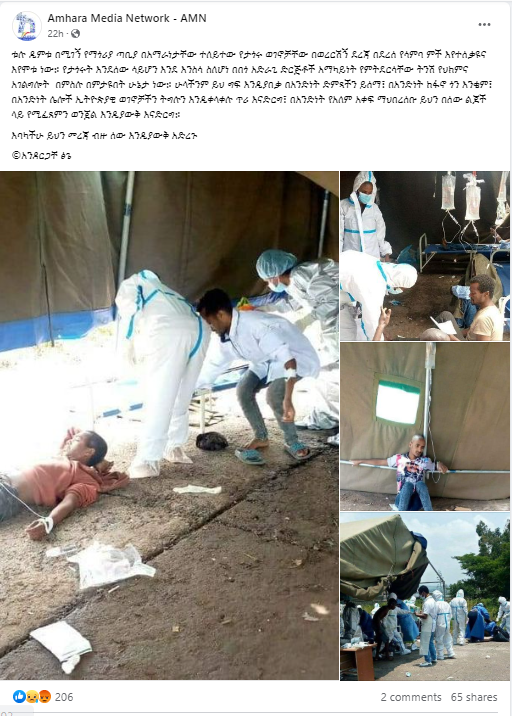
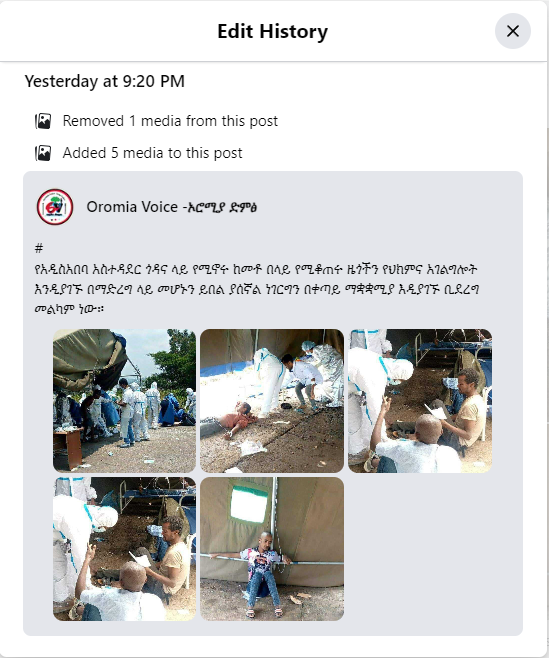
On September 13, 2023, a Facebook post shared four images claiming that the people shown in the pictures were ethnic Amharas detained by the government in Tulu Dimtu, a town on the outskirts of Addis Ababa. The post also stated that they were suffering and dying of contagious diseases in the camp.

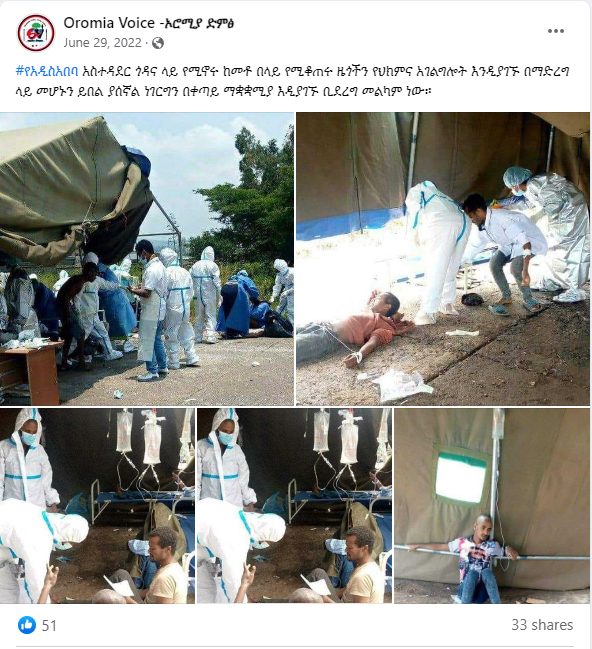
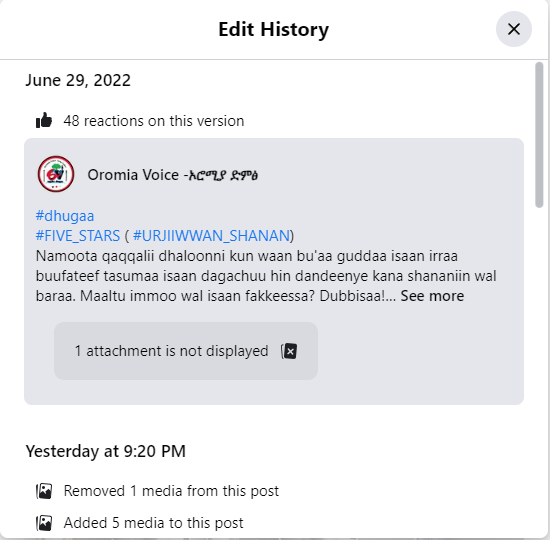
To discredit the claims, some social media accounts shared a screenshot of an old Facebook post that showed images of homeless people. An old Facebook post from June 2022 was found containing the controversial images.

However, the old Facebook post was edited and the new images were added later.

HaqCheck found that a Facebook post that was originally about five assassinated leaders was edited to claim that the Addis Ababa City administration was providing medical services to homeless people. The post also added five new images that were unrelated to the original post.

Recommendations

HaqCheck recommends social media users to be skeptical of posts that may be misleading and that come from unknown or unverifiable sources. They should look for other sources of information to verify claims before reacting to them.

Social media content creators are advised to be responsible and avoid spreading false or misleading information.

We urge public institutions and other concerned entities to provide timely and up-to-date information on regular basis.

Access to information is key to counter disinformation. The government should guarantee the right of the public and the media to access to information.

Verification of Social Media Accounts and their Implications

Verification of Social Media Accounts and their Implications

In today’s digital world, social media platforms have become powerful tools for public discourse, connecting people across the globe. However, as their influence grows, the need for credibility and authenticity has become increasingly important.

At the heart of this digital evolution lies the process of verification, a mechanism employed by social media networks to establish the legitimacy and authenticity of user accounts belonging to notable figures, celebrities, businesses, and prominent entities. This verification process is encapsulated by the unmistakable blue checkmark, an emblem that signifies an account’s credibility.

The following article delves into the intricacies of the verification process employed by some of the most popular social media platforms. We explore the steps taken to validate the identities of individuals and entities, shedding light on the meticulous scrutiny they undergo to earn that coveted blue badge. But we also confront a growing phenomenon: the confusion and skepticism surrounding these verification badges.

How to Get Verification on these Platforms?

X (formerly known as  Twitter), a platform that numerous influential figures and content creators utilize, has undergone two distinct approaches when it comes to verifying its users. Initially, X granted the coveted blue badge to celebrities, public figures, brands, and organizations that were active and maintained a complete profile.

This completeness included having a profile picture, a display name, a confirmed phone number, and a track record of compliance with X’s rules. Additionally, these accounts needed to represent individuals associated with specific and notable categories, such as government officials, journalists, activists, or prominent personalities. Those who met these criteria could request verification by completing a designated form.

In the past, X employed a team of reviewers responsible for evaluating verification applications. Their role was to verify if the account fulfilled the eligibility criteria and to scrutinize the provided information. This meticulous process was designed to ensure that verified accounts genuinely represented noteworthy individuals or entities.

However, these procedures have faced criticism for various reasons, including a lack of transparency, subjective and inconsistent decision-making, the potential amplification of controversial figures, verification of accounts engaged in hate speech and disinformation, the presence of anonymous accounts, and limited verification opportunities for journalists and activists.

New Eligibility Criteria for the Blue Checkmark at X

Since Elon Musk, the largest shareholder at Tesla and SpaceX, bought the platform, several changes have been implemented, including alterations to its name and the account verification process. Presently, users can verify their accounts.

X Premium (Twitter Blue), represented by the blue checkmark icon, comes at $8 per month and is primarily tailored for individuals, although brands can also enroll in the program, at least for now. On the other hand, verification for organizations, denoted by the gold checkmark, targets larger brands to ensure their recognition and reputation within the platform.

Under the current system, anyone can apply for account verification, provided they have a notable presence, maintain authenticity, remain active, and adhere to X’s rules. To initiate the process, users are required to complete an online form and submit identification documents to substantiate their eligibility.

Meta Accounts  Verification 

Facebook

Facebook is one of the most popular social media platforms worldwide. Facebook undergoes two distinct approaches to verify accounts/pages. Facebook grants verification badges to celebrities, public figures, brands, organizations, and people who have a complete profile and meet certain criteria.

These criteria included having a profile picture, a name that people could recognize, a verified phone number, and a track record of obeying Facebook’s rules. Some social media accounts were reserved for important individuals like government officials, journalists, activists, or famous people. These individuals could ask for their accounts to be verified by filling out a special form. The verification is intended to confirm genuine accounts and to confirm if they belong to the specific person they claimed to be.

In the past, Facebook also had a team of reviewers responsible for evaluating verification applications.

People were having problems with Facebook’s verification process. Even if they provided the information that was required to be eligible for verification, Facebook was not giving them the verification checkmarks they were supposed to receive.

New Eligibility Criteria for the Blue Checkmark on Facebook

In October 2021, Facebook, WhatsApp, Instagram, and five other platforms merged to form Meta, a conglomerate that owns these platforms. Meta added a payment system called Meta Verified Subscription to the features of Facebook and other platforms. This allows users to buy and sell goods and services through the platform. This was a major change to the previous verification process, which is now required for users to apply for the blue verification badge.

Meta now requires users to pay a monthly subscription fee in addition to meeting eligibility criteria to be verified. For $11.99 per month, anyone can get a blue verification badge on their account.

Instagram  Blue Checkmark

Instagram is a different platform from Facebook because its main purpose is to enable users to share images or videos with their audience. It was bought by Facebook (now Meta Platforms Inc.) in 2012.

Initially, Instagram used to give verification badges to celebrities, public figures, brands, artists, organizations, and people who had a complete profile and met certain.

These criteria included having a profile picture, a name that people could recognize, a verified phone number, and a track record of obeying Instagram’s rules. Some social media accounts were reserved for important individuals like government officials, journalists, activists, or famous people.

The verification process involves reviewing the activity of the account and engagements and the basic information provided.

New Eligibility Criteria for the Blue Checkmark at Meta (Instagram)

Instagram now requires users to have a Meta Verified Subscription to apply for the blue verification badge. Since October 28, 2021, users have also been required to pay a monthly fee of $11.99 in addition to meeting the eligibility criteria. By verifying their identity and paying the subscription fee, anyone can have a blue verification badge on their Instagram account.

TikTok Account Verification

TikTok, the largest social media platform for sharing short videos, does not have a specific application process for getting verified. Instead, TikTok seeks out creators, brands, and influencers to grant a verification badge.

To be verified, the platform requires an account to be authentic, complete, notable, and secure, and it must have been active for at least 6 months. Additionally, accounts must adhere to community guidelines and terms of service. TikTok does not charge for bestowing the verified badges.

Telegram Verification Process

Telegram verifies public figures and organizations to help users easily identify official sources. To get verified on Telegram, accounts must have an active official channel, bot, or public group on at least two of the following platforms: TikTok, Instagram, Facebook, YouTube, Twitter, VK, or Snapchat.

Telegram currently uses this method to verify every one. The platform’s terms of service do not specify any clear eligibility criteria.

Impressions given to having verified social media accounts

Having a verified social media account can make a good impression on people because it suggests that the account is credible, authentic, and trustworthy. It also helps to establish the account owner’s authority, expertise, legitimacy, and authenticity. Verified accounts are seen as reliable and knowledgeable sources of information, and they can help to prevent impersonation and identity theft. Additionally, verified accounts are often seen as having a lot of impact and influence.

However, social media platforms may now grant verification based on factors such as payment and other criteria that are not publicly disclosed. This means that not all information provided by verified accounts may be accurate or true. Therefore, it is important to verify information from verified accounts with other trusted sources.

Verification  and D/Misinformation

Just because an account is verified doesn’t mean that the information it shares is accurate. Verification is about confirming the identity of the account holder, not the accuracy of their content. Verified accounts can still make mistakes or spread false information.

To avoid being misled, it’s important to be critical of the information being circulated online, even if it’s from a verified account. Social media users should not blindly trust anything they read. It is crucial to cross-check and verify information from multiple reliable sources.

It’s also important to get information from a variety of sources and perspectives. Relying on just one account or a few sources can give people on social media limited and possibly biased views and false perceptions.

HaqCheck recommends that social media users use fact-checking groups to evaluate the accuracy of information shared on social media, including information from verified accounts. This can help to ensure that social media users are getting accurate and reliable information.

Verification is just one factor to consider when evaluating the credibility of information. Social media users should be critical and cautious, and seek out reliable sources. These are all essential skills for navigating the digital landscape and combating false information dissemination.

October week one summary

The government smuggled stolen artifacts into the UAE

A Telegram channel with over 334,000 members claimed that the Ethiopian government smuggled stolen artifacts from the Amhara and Tigray regions to the UAE and that half of the stolen artifacts were sent to Vatican City, Rome and half of them were given to Emirati President Sheikh Mohamed bin Zayed. The post was viewed by close to a hundred thousand users and thousands reacted to it.

The claim is false. The images used to support the claim are old and were found published on websites. The one image that shows gold bars was published on a website called the PicLoc. According to the information on the website, the gold bars are for sale. The second image was published on a Turkish website and claimed to belong to a house-to-house transportation service company named Özdurmuşlar in the city of Gaziantep, Turkey. The image shows household items and it was presented to describe the company that it gives household items transportation services.

During the war between the TPLF and the Ethiopian government in 2020, there were allegations of looting of relics after some artifacts appeared for sale on websites including eBay. There were false claims backed with videos and images that stolen artifacts from Tigray were being sold in foreign countries.

However, there is no evidence to support the claim that the Ethiopian government smuggled stolen artifacts to the UAE. The images used to support the claim are false.

Child detention during Demera

A Facebook media post claimed that a child was snatched away from her parents and detained by federal police officers for wearing a dress with a red, green, and yellow color pattern during the Demera celebration. The post was widely shared on different social media.

The government had warned against holding or wearing any unrecognized flags and symbols during the Demera celebration, and the Ethiopian Orthodox Tewahedo Church had also warned attendants not to carry with them or wear provocative symbols or unrecognized flags except the red-yellow-green flag that has the Church’s symbol.

However, the claim that a child was detained for wearing a dress with a red, green, and yellow color pattern during the Demera celebration is false. The image used to support the claim is old and was published on January 2022 on X.

False Telegram channels: Safaricom and Amhara Bank

Telegram channels and TikTok accounts have been opened in the names of Safaricom and Amhara Bank respectively. These channels are fake and are not affiliated with the real companies.

The Safaricom Telegram channel is offering a challenge promising to reward 3,000 Birr for those who add people to the channel. However, this challenge is a scam. The Telegram account has more followers than the real Safaricom Telegram account, but this is likely due to the fact that the fake channel is promoting a scam.

HaqCheck has confirmed that the Safaricom Telegram channel does not belong to Safaricom. The company’s Telegram account is mentioned on the website and currently has more than 22 thousand followers. Likewise, HaqCheck confirmed that the TikTok account opened in the name of Amhara Bank doesn’t belong to the Bank.

Recommendations

HaqCheck recommends social media users be critical of the information they see on social media and verify it with other sources before sharing it. They should make sure that the information comes from a credible source.

Telegram users are advised to be aware of fake channels and to avoid interacting with them. Scammers may use fake Telegram channels to steal personal information, spread misinformation, or promote scams.

The government should make information available to the public and media in a timely and transparent manner. It should provide information that is accurate and up-to-date.

Social media content creators and outlets should be careful about the information they share and make sure that it is correct. They should be aware of the potential harm that can be caused by spreading false information.

September week three summary

Oromia regional militia attacked Somali villages

An X (Twitter) post on September 18, 2023, claimed an image showed an Oromo militia attacking Somali villages. The post shared two pictures and claimed that the never-ending civil war in Ethiopia was spreading to the east and that heavily armed Oromo militia sponsored by the regional government of Oromia had attacked villages and the largest Somali refugee camp, Qolaji, near Jigjiga. The post was shared nearly 294 times and received over 428 reactions.

The conflict between the Oromo and Somali communities in Ethiopia is complex and has a long history. Both communities inhabit the areas around the regional border, and they often clash over resources such as land and pasture. The conflict has been exacerbated by the instability in Ethiopia, and it has led to the displacement of thousands of people.

HaqCheck investigated the claim and found that the images were old and did not support the claim. The first photo was originally posted on Facebook on August 19, 2019, with a caption that stated: “We know the administration of the region protects their seats and the civilians who don’t have interest. I don’t understand why ONLF is so short of the problems facing the people of Qoloji.”

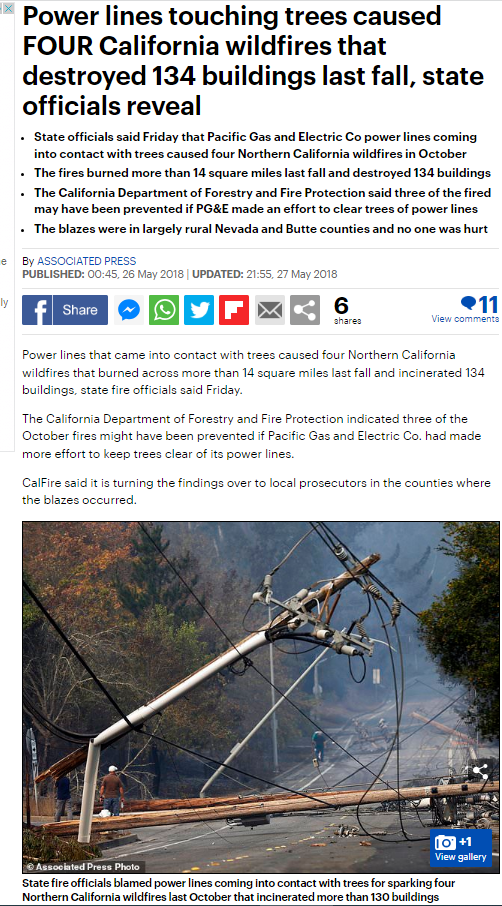
The second image had been previously published on a website on May 27, 2018, with a caption describing how power lines touching trees caused four California wildfires that destroyed 134 buildings.

Thus, the image used in the Twitter post was not accurate and did not support the claim that Oromo militiamen were attacking Somali villages.

A video showing soldiers beating up people in Amhara

On August 11, 2023, an X (Twitter) post shared a video with the claim that it showed Ethiopian National Defense Force (ENDF) soldiers beating people based on ethnic identity in the Amhara region. The post went viral on the platform, with nearly 379 retweets and over 329 reactions.

The Amhara region in Ethiopia has been experiencing ongoing armed conflict between government armed forces and Fano militia groups. Last month, armed militia groups gained control over various areas in the region, prompting the Ethiopian federal government to declare a state of emergency in Amhara

In August 2023, the government launched a counteroffensive and managed to recapture major urban areas from Fano militants. However, reports indicate that armed clashes and confrontations continued in the region.

However, HaqCheck investigated the claim and found that the video was old and did not support the claim. The video had been previously posted on X on March 13, 2021, with a description that Ethiopian soldiers were beating people in Tigray.

Recommendations

Social media users are recommended to be careful what they read and share. They shouldn’t believe everything they see, and check other sources before sharing something.

Governments and other organizations should be transparent and give people accurate information. This is especially important during times of crisis when misinformation can spread quickly. The public and the media should be given unfettered access to information.

Social media content creators are advised to be responsible and not to spread false or misleading information.

September week two disinformation summary

Claims related to detention and editing old posts

Throughout the week, there were claims and controversies on Ethiopian social media over the detention of ethnic Amharas across various parts of the country. Images circulated on social media with claims that they showed recently detained ethnic Amharas, but HaqCheck could not confirm whether the images were true or false.

In this context, HaqCheck has observed a new disinformation tactic in the Ethiopian social media landscape: editing old Facebook posts to mislead people.

On September 13, 2023, a Facebook post shared four images, claiming that the people in the photos were ethnic Amharas detained by the government in Tulu Dimtu, a town near Addis Ababa. The post also alleged that they were suffering and dying from contagious diseases in the camp.

The post went viral and gained traction on social media platforms. However, HaqCheck could not confirm whether the post was true or false. We could not confirm the origin and authenticity of the images presented to support the claim.

Some pro-government social media accounts shared a screenshot of a Facebook post that had been edited to show that the images were posted a year ago, unrelated to the claim of government detention of ethnic Amharas. They presented this as evidence to disprove the claim, suggesting that the images were false.

HaqCheck checked the images and Facebook posts to see if they had been posted before and found that a Facebook post from June 29, 2022, contained the same images with an Amharic caption.

However, the old Facebook post was recently edited to add the images and change the caption. The original post, made on June 29, 2022, was in Afaan Oromo and compared five assassinated figures: John F. Kennedy, Martin Luther King Jr., Abraham Lincoln, Malcolm X, and Hachalu Hundessa. The original post had only one image, which HaqCheck could not see because it had been replaced.

On September 13, 2023, the post was edited to change the text to Amharic and add five new images. The edited caption now claims that the Addis Ababa City administration is providing medical services to over a hundred homeless people.

Recommendations

One way that disinformation is spread on social media is through edited old posts. Social media users should be cautious of editing old posts, as they can be used to spread disinformation. They should check the edit history of posts.

Social media users should be skeptical of controversial information circulating on social media. They should get their news from reliable sources and verify information before sharing it.

The government and other organizations should be transparent and provide timely updates to the public. Lack of information prompts false information dissemination. The government should guarantee the right of citizens and the media to access information freely and securely. This includes the right to access government records and report on sensitive topics.

September week one summary

Soldiers being transported to the Amhara region

On August 26, 2023, an X (Twitter) account shared an image that they claimed showed Ethiopian military personnel being transported by helicopter to the Amhara region amid the ongoing conflict.

Despite the Ethiopian government’s recapture of many areas, including major cities, from Fano militia groups in the Amhara region, fighting and armed clashes between the Ethiopian military and Fano militia groups continued.

In this context, an X (Twitter) post appeared that shared an image allegedly showing Ethiopian military soldiers being transported by helicopter to the Amhara region amid the ongoing conflict.

HaqCheck investigated the claim and found that the image does not support the claim. The original photo appeared in a video clip that was shared on Facebook on August 2, 2021. The video clip described Ethiopian Airlines as being involved in ethnic cleansing, transporting soldiers, logistics, and weapons to the war in Tigray.

Birhanu Juna said Fano seize ENDF tanks

On August 28, 2023, a Facebook page shared a video that falsely claimed that Field Marshal Burhanu Jula, chief of staff of the Ethiopian National Defense Forces (ENDF) had recently said that Fano militants in the Amhara region had seized countless tanks from the ENDF during the ongoing conflict.

In the video clip, the chief of staff is seen saying, “They took countless tanks and weapons from us”. This claim was made amid intensified conflict between Fano militants and the Ethiopian government in the Amhara region.

However, HaqCheck confirmed that the video clip does not support the claim. The clip was taken from a video posted on YouTube in October 2021 by the Ethiopian Satellite Television (ESAT). The video is an interview with the chief of staff about the armed conflict between the Tigray People’s Liberation Front (TPLF) and the Ethiopian government at the time. In the video, Field Marshal Birhanu Jula says that the TPLF forces took countless tanks and weapons from the ENDF.

HaqCheck’s investigation found that the video clip was taken out of context. The chief of staff was not referring to the Fano militants in the Amhara region but to the TPLF forces.

Christian Tadelle was released from detention

On August 9, 2023, a TikTok page with over 12,000 followers shared a video that they claimed showed Christian Tadelle, a member of the House of People Representatives who had been detained, being released from detention.

The Ethiopian government declared a state of emergency and arrested people, including politicians and opposition party leaders. Christian Tadelle, a former executive of the National Movement of Amhara (NaMA) and member of the House of People’s Representatives, was among those arrested. The Ethiopian Human Rights Commission confirmed that he was detained in Awash Arba.

Against this backdrop, a TikTok video surfaced claiming that Tadelle had been released from detention.

However, HaqCheck investigated the claim and confirmed that the video did not support it. The original video was found to have been published on March 9, 2020, on the YouTube channel of Asrat Media. It showed Tadelle speaking at a public discussion event.

Recommendations

Social media users should be cautious about misleading and controversial claims. They should look for additional information such as fact-checks for potential false claims. They should also be aware of the techniques used to spread disinformation, such as using sensational headlines and creating fake accounts.

Government offices and other entities should provide timely updates to the public. This is especially important during times of crisis when there is a lot of uncertainty and misinformation circulating. Governments should also be transparent about their activities and decisions.

The government should guarantee the right of citizens and the media to open and secure access to information. This includes the right to access government records, to report on sensitive topics, and to express dissenting views.

August week three summary

False Image of Aerial Attack in Finote Selam

A Facebook page with over 40,000 followers posted an image claiming that the Ethiopian government had recently conducted an aerial attack in Finote Selam, resulting in the deaths of 270 civilians, including children as young as three.

The post went viral on the platform, garnering nearly 30 shares and over 150 reactions at the time.

This claim emerged amidst a security crisis in the Amhara region, prompting the Ethiopian federal government to declare a state of emergency due to armed militia groups gaining control of various areas within the region.

Additionally, clashes between Fano militants and Ethiopian government forces in the Amhara region further exacerbated the situation. Later on, government forces managed to regain control of major cities and towns after initially losing ground to Fano armed militias.

The claim gained traction following reports of a suspected airstrike in Finote Selam that resulted in the deaths of at least 26 people.

HaqCheck conducted a Google reverse image search, revealing that the image had been previously posted on Facebook on July 21, 2023.

Ethiopian Military Tank Destroyed by Fano Militants in Motta

On August 9, 2023, a Facebook page with more than 46,000 followers shared an image alleging that it depicted an Ethiopian military tank destroyed by Fano militia groups during the ongoing armed conflict in the Amhara regional state. The post also claimed that Ethiopian troops and their tanks had been routed in Motta, in the East Gojjam zone of the Amhara region.

Despite the federal government reclaiming major areas of the Amhara region, fighting and armed confrontations between Ethiopian armed forces and Fano militia groups persisted.

Reports indicated that casualties had occurred during these clashes.

In this context, a Facebook post came out sharing an image with a claim that Fano militia groups destroyed Ethiopian army troops including tanks.

HaqCheck investigated the claim and determined that the image did not support the claim.

The original image was previously published on X (Twitter) on August 8, 2022, with a caption stating that the Russian army had destroyed Ukrainian artillery vehicles in a recent battle.

Consequently, HaqCheck rendered the Facebook post as False due to its use of an inaccurate image.

Fano Militia Down Ethiopian Military Helicopter

On August 7, 2023, a Facebook account shared an image claiming to depict an Ethiopian military helicopter brought down by Fano militia groups during the ongoing armed conflict in the Amhara region state.

The post also alleged that the helicopter had attacked and crashed in the Amhara region. This Facebook post gained attention on the platform.

HaqCheck investigated the claim and found that the image did not substantiate the claim.

The original image had been previously published on a website on March 3, 2022, with a caption describing the crash of a Romanian helicopter searching for a fighter jet in the Black Sea.

As a result, HaqCheck rated the Facebook post as False.

Recommendations

HaqCheck urges social media users to exercise caution and be critical when encountering potentially false information across various media platforms. It is essential to verify the source of information before sharing it and ensure that the information originates from a credible source.

The government is advised to provide timely, accurate, and sufficient information to the public and media. This is crucial in preventing the spread of disinformation, as the absence of accessible information can lead to the proliferation of disinformation.

Content creators and media outlets on social media have a responsibility to share accurate information with their followers, refraining from disseminating false information.

August week two summary

Fano militants captured Ethiopian army soldiers

A Facebook page with over 300,000 followers shared an image claiming to show an Ethiopian army soldier who had recently surrendered to Fano militants. The post was shared close to 200 times and received over 1,700 reactions.

The claim came amid intensified fighting between the Ethiopian military and Fano insurgents in many parts of the Amhara region, including the regional capital, Bahir Dar. The Ethiopian government also stated that Fano militants had captured several major cities in the Amhara regional state.

HaqCheck applied a Google reverse image search on the image to verify the claim. The search result showed that the image was first published on X (Twitter) by a user on Jan 7, 2022.

The caption of the post reads, “Our heroes are falling for our freedom, peace, and safety, as well as for the sovereignty of our motherland Ethiopia, and wish them a happy holiday.” The original post on X was reposted close to 300 times. As a result, HaqCheck rated the Facebook post as False.

Fano militants reclaimed Delanta Woreda

A Facebook page with over 30,000 followers shared an image claiming that Fano militants had retaken control of the entire Delanta Woreda, including the town of Wegeltena, the capital of Delanta District in North Wolo.

The claim came out after the Ethiopian government stated that it reversed the armed insurrection in the Amara region and retook many cities and towns.

The image used in the Facebook post shows a group of people carrying rifles and waving a flag.

The claim that Fano militants have retaken control of Delanta Woreda has not been verified by independent sources.

However, HaqCheck found out that the image used in the Facebook post was old. The picture was circulated on social media a month ago in June. At the time, a media organization, Addis Maleda shared the image on its website along with a news story that a protest was held following the rape of an eight-year-old child in the Dalanta Woreda.


The government killed over 100 civilians in a drone attack in Debre Birhan

A Facebook page with over 190,000 followers posted five images with a claim that over a hundred people were killed in a drone attack on the city of Debrebaran by the Ethiopian government.

The claim emerged amid the intensified armed clashes between the government and Fano milia groups in the Amhara region. Unverified social media reports appeared stating that a drone was deployed in the city of Debre Birhan.

HaqCheck investigated the images used to support the claim. However, two of the five images were published on X two years ago allegedly showing a conflict that occurred in the Ataye town and its vicinities, in the North Shewa zone of the Amhara region.

One of the images was confirmed to show an air strike in Kobani, Syria, carried out by the Russian Air Force in coordination with the American Air Force in 2015. The remaining two images could not be confirmed if they support the claim or not.

Recommendations

HaqCheck urges social media users to be critical of potentially false information they encounter across media platforms. They should verify the source of information before sharing it. They should make sure that the information comes from a credible source.

The government should make information available to the public and media in a timely and transparent manner. It should provide information that is accurate and up-to-date. This is important because it helps to prevent the spread of disinformation. When people do not have access to information, they are more likely to believe misinformation.

Social media content creators and outlets have a responsibility to the public to share accurate information. They should abstain from circulating false information, whether intentional or unintentional.

Exit mobile version