Does Ethiopia Hold the Sixth Position in Global Internet Speed Rankings?

Internet connectivity has become a significant indicator of a country’s technological advancement and economic potential in recent years. As countries attempt to improve their digital infrastructure, global internet speed rankings are receiving considerable attention.

On February 4, 2025, a post on X (previously Twitter) was shared, captioned “Fast internet, brighter future! Ethiopia now ranks 6th in global internet speed rankings, proving the power of visionary leadership.”

Nevertheless, HaqCheck inspected the claim shared by the account and rendered it false.


Screenshot taken from a post on X (formerly Twitter) on February 4, 2025.

Prime Minister Abiy Ahmed initiated the Digital Ethiopia 2025 initiative, which aims to transform Ethiopia into a digitally inclusive economy by leveraging technology to drive economic growth and social development.

According to the statistics shared by Ethio Telecom on its official site, more than 40 million data and internet users recently used the company’s services. We have found the original post by the World of Statistics, shared on February 4, 2025. The World of Statistics’ X account has over 3.9 million followers on X and is engaged on YouTube and LinkedIn. 


The screenshot shows the post by World of Statistics shared on Feb 4, 2025. 

The post by World of Statistics highlighted global disparities in internet usage, showing that North Korea has the lowest rate at 0%, while countries like the UAE and Iceland achieve 100% penetration.

Many African and some Asian nations, such as Somalia which is 2%, South Sudan 7%, and Ethiopia 17% show significantly low percentages, contrasting with developed countries in Europe and North America, where usage exceeds 90%. According to the post, the global average is 63%, underscoring the digital divide affecting economic growth and access to information in less internet-available regions.

The post references data from the International Telecommunication Union (ITU), a specialized United Nations agency responsible for information and communication technologies.

The International Telecommunication Union (ITU) is a specialized agency of the United Nations established in 1865. It is focused on information and communication technologies (ICTs) and facilitates international connectivity by developing technical standards, managing the global radio spectrum, and providing capacity-building resources to countries.

The ITU collects and publishes statistics on telecommunications and internet usage. Its goals are to promote universal access to ICTs, bridge the digital divide, and ensure interoperability among global communication systems. The ITU’s key decision-making bodies include the Plenipotentiary Conference and the World Telecommunication Standardization Assembly.


A screenshot shows connectivity uses & access in Ethiopia (Automatically displayed by location)

The World of Statistics post concluded that Internet users have used the Internet in the past three months from anywhere. This clearly shows that they are claiming that the data is from the last 3 months.

However, as of our research, the ITU’s ICT Indicators Database was discontinued in 2024 primarily to transition to the ITU DataHub, where all the data is available free of charge. This change aims to provide users with updated and more accessible data under the new Terms of Use.


A screenshot shows an important note from ITU as the ICT indicators database was discontinued in 2024

For the latest data and information, we surfed the ITU’s DataHub which is to provide access to a wide range of data and statistics related to information and communication technologies (ICT). The centralized repository enabled us to explore various datasets, including those on internet usage, mobile subscriptions, broadband penetration, and more.


Screenshot shows ITU’s latest data of individuals using the internet as of 2021


We observed different years of data that varied from 2012 – 2024. The variation in data years displayed in the ITU DataHub might be due to several factors. Different surveys may have distinct collection cycles, and reporting delays can cause lags in data processing, resulting in some indicators showing more current information while others reflect older data. 

For these reasons, we have approached ITU (International Telecommunication Union) via E-mail to get a verification Regarding Data Claim Mentioning ITU as a source on X.

We will update readers once we receive a response from the International Telecommunication Union (ITU) about the claim and the data shared on their website.

We also tried to assess the intention of the World of Statistics in sharing this post. The intention could be to raise awareness about specific data trends or issues related to statistical information. We have witnessed such awareness creation posts before.

They might aim to highlight discrepancies, provoke discussion, or encourage transparency in data reporting. They also could be advocating for better data practices and accountability in statistics.

Thus, it’s still important to debunk the post on X which used the data from World of Statistics. The Account joined X in January 2020, harnessing more than 400 followers.


The screenshot shows a comparison between the two posts 

The post shared by the account Fooziya reused a post from World of Statistics to show that Ethiopia is placed sixth in global internet speed rankings. The tweet further claimed that this is the result of visionary leadership, undoubtedly referring to Prime Minister Abiy Ahmed, who can be seen as photoshopped in the attached image.

Nonetheless, we can see that the original post by World of Statistics shows individuals using the internet in percentage. As of the report by the World Bank, Ethiopia is the second most populous nation in Africa after Nigeria, with 126.5 million people (2023). Comparing this population with the percentage mentioned by World of Statistics, it becomes 17% of 126.5 million, which is approximately 21.46 million.

We have also tried to see more credible sources like Ookla and World Population Review, regarding internet speed globally. Both Ookla’s Speedtest Global Index and World Population Review are considered credible sources due to their rigorous data collection and transparency.

Ookla gathers information from millions of user-initiated speed tests via their Speedtest app, ensuring a large and representative sample that reflects actual user experiences. We have also observed that World Population Review compiles data from reputable sources, including government databases and international organizations like the UN and World Bank, offering a comprehensive view of global trends. The site presents various statistics in an accessible format and cites its sources, allowing for verification and enhancing its reliability.

HaqCheck tried to see data and statistics regarding global internet speed status from both websites. The information we found showed rankings of mobile and fixed broadband internet speeds from around the world.


Screenshot shows Ookla’s ranking of countries on mobile and fixed broadband internet speeds (World)

According to OOKLA’s global ranking of mobile and fixed broadband internet speeds as of December 2024, significant leaders such as the United Arab Emirates and Singapore have achieved speeds of more than 500 Mbps. Ethiopia ranks 149th out of 154 nations in the fixed broadband internet speed category. Among the 110 nations listed in the mobile internet speed category, we were unable to locate Ethiopia.

Ethiopia may not be listed there because of insufficient data or a lack of user-initiated speed tests that meet the criteria for inclusion in that specific ranking. The methodology for mobile rankings often requires a certain volume of tests to ensure accuracy and representativeness. In contrast, Ethiopia’s inclusion in the fixed broadband rankings shows that there is enough data from fixed broadband tests to warrant a ranking.


Screenshot shows (WPR) ranking of countries on mobile and fixed broadband internet speeds (World)

We also tried to check the internet speed of countries by World Population Review and found that Ethiopia has a mean download speed of 4.45 Mbps for fixed broadband and 9.48 Mbps for mobile internet. This places Ethiopia among the lower ranks in terms of internet speeds globally.

We also couldn’t find Ethiopia in the top 10 countries with the fastest Mobile and broadband internet speed rankings. These online available data show that the claim made by the X account is false.

The X account shared a post that had nothing to do with the original, which is still being investigated.

We have also tried to approach the claimant to ask about the intention, but it was impossible since the account restricted the message section on X. However, we have tried to look past engagements of the account to assess its intention.

Most of the posts praise Prime Minister Abiy Ahmed and his policies and initiatives. This indicates that the account is likely pro-government. We also identified some retweets on cryptocurrency.

As a result, HaqCheck investigated the post, discovered more data, and then concluded that the post by the X account was misleading, rendering it false.


Assessing the prime minister’s speech at the grand opening of the Ethiopian Securities Exchange

On January 10, 2025, Ethiopian Prime Minister Abiy Ahmed inaugurated the Ethiopian Securities Exchange (ESX) with a speech that positioned the nation at the forefront of technological and economic ambition. Addressing stakeholders at this event, the Prime Minister underscored Ethiopia’s rising regional stature, notably citing its advancements in artificial intelligence (AI) infrastructure, telecom sector modernization, and strategic economic reforms.

His claims of digitalization and smart city, including Ethiopia’s improved regional AI ranking and expanded telecom accessibility, painted a vision of a nation leveraging innovation to drive financial inclusion and attract foreign investment.

However, HaqCheck proved that some of the prime minister’s claims were false, and some were true. 


Screenshot taken from Prime Minister Abiy Ahmed’s Speech at the grand opening of (ESX)

Prime Minister Abiy Ahmed assumed office on April 2, 2018, ushering in an era of reforms. His administration prioritized technological modernization, including liberalizing the telecom sector to break the state monopoly, attracting private investment [Safaricom’s $850 million license in 2021], and launching the Digital Ethiopia 2025 strategy to drive digital ID systems, e-governance, and tech innovation.

In this regard, it is believed that the recently inaugurated Ethiopian Securities Exchange is part of Ethiopia’s digitization initiative. HaqCheck examines and assesses what the prime minister says about different issues during the grand opening event. 

Is Ethio Telecom Africa’s largest telecom service provider?

Ethio Telecom is a state-owned telecommunications company in Ethiopia, which is one of the oldest telecom companies on the continent. Ethio Telecom plays a crucial role in the country’s telecom sector. It offers various services, including mobile voice, SMS, and data, making it the biggest telecom operator in Ethiopia with a substantial subscriber base.

Prime Minister Abiy Ahmed claims, in the 5:38-second video, “According to the report by GSM, Ethiopia [Ethio Telecom] is registered as the biggest telecom in Africa.” At 11:05 seconds, he also says, “The Ethiopian economy means running the biggest telecom in Africa, While there are 80.5 million users from Ethio telecom only”.

Albeit, the prime minister claims more than 80 million users, the latest information shared on the official Ethio telecom shows that as of June 2024, there are 78.3 million total customers.

A screenshot shows a statistics shared on the official Ethio telecom website as of June 2024

This shows that the Prime Minister shared different statistics than the data that is displayed on Ethio telecom’s official site. While the Prime Minister is expected to have access to the most current data regarding governmental organizations, sometimes it is important to note that the updates available on official websites may not always reflect the latest information. This discrepancy can lead to misunderstandings and misinformation among the public, as outdated data may still be presented as current.

However, we may compare the statistics stated by the Prime Minister with the most recent data from other telecommunication providers in Africa. The Prime Minister claimed the data from GSM (The Global System for Mobile Communication) to support the asserted claim.

The Global System for Mobile Communications Association (GSMA) is a non-profit business organization representing the interests of mobile network operators worldwide. The GSMA has since evolved to integrate the whole mobile ecosystem, which now includes over 750 full members, licensed mobile operators, and about 400 associate members from diverse mobile technology-related industries.

The screenshot shows the 2024 Sub-Saharan Africa Mobile Economy report by GSM

The latest Sub-Saharan Africa-focused report was released in Nov 2024, highlighting the importance of mobile connectivity in driving digital transformation and socio-economic growth in Sub-Saharan Africa. The report doesn’t specifically rank the Sub-Saharan African countries based on their capabilities and number of consumers. 

GSMA uses metrics like unique mobile subscribers, mobile internet users, SIM connections, and licensed cellular IoT connections to analyze and evaluate the performance of countries’ telecom industries.

However, they don’t typically rank countries in a competitive league-table style. Instead, these metrics provide insights into market maturity, digital inclusion, and growth trends.

MetricWhat It MeasuresExcludesWhy It Matters
Unique Mobile SubscribersIndividual people using mobile servicesDuplicate counts (multiple SIMs)Reflects true user base and market reach.
Mobile Internet UsersPeople actively using mobile internetSubscribers without data plansShows internet adoption and digital access.
SIM ConnectionsTotal active SIMs (consumer devices)IoT (Internet of things)  SIMsIndicates network usage and operator revenue.
IoT (Internet of things) ConnectionsSIMs in machines/devices (M2M)Consumer SIMsHighlights IoT (Internet of things) ecosystem growth.

A table shows metrics used by GSM to analyze and evaluate the performance of telecom industries

NB: IoT (Internet of Things) refers to a network of interconnected physical devices (e.g., appliances, vehicles, sensors) embedded with software and connectivity to collect, exchange, and act on data via the Internet.

GSM also considers other indicators like Mobile Penetration Rate, Coverage, Gender Gap, and 5G Readiness to evaluate the ecosystem.

A screenshot shows infographic representations of licensed cellular IoT connections and projections.

The image illustrates the projected growth of licensed cellular Internet of Things (IoT) connections in Sub-Saharan Africa from 2023 to 2030, specifically highlighting data for Ethiopia, Kenya, Nigeria, South Africa, and the rest of Sub-Saharan Africa.

As we can see from the graph by the GSMA intelligence, the overall number of licensed cellular IoT connections is growing steadily, as projected from 2023 to 2030. South Africa has the largest share of IoT connections, contributing significantly to the total.

Nigeria and the rest of Sub-Saharan Africa are major contributors after South Africa, gradually increasing. Kenya and Ethiopia have smaller shares but show consistent growth as well.

Based on the visual representation of the graph by GSMA Intelligence, the ranking of regions by the size of their contribution to licensed cellular IoT connections are South Africa, the Rest of Sub-Saharan Africa, Nigeria, Kenya, and Ethiopia. Here Ethiopia is the smallest contributor, represented by a thin yellow section. Ethiopia grows steadily but remains the smallest throughout the timeline.


A screenshot shows subscriber Penetration and Smartphone adoption in Ethiopia

This graphical representation on page 8 of the report presents data on subscriber and technology trends across various African regions, specifically focusing on ECCAS, ECOWAS, SADC, EAC, and Ethiopia. However, the image does not explicitly rank the countries or regions. Instead, it presents data for each area individually, highlighting trends in subscriber penetration, technology mix, and smartphone adoption for 2023 and projections for 2030.

Screenshot shows the top five smartphone markets in Sub-Saharan Africa by 2030

This graphical representation by GSMA intelligence mentioning Ethiopia shows the top five smartphone markets in Sub-Saharan Africa by 2030, ranked by the number of smartphone connections. According to the graphical representation by GSM, the first leading country is Nigeria with 230 million connections, making it the largest smartphone market in the region.

The rest are ranked South Africa with 140 million connections; the third one is  Ethiopia with 97 million connections, showing substantial growth potential. Tanzania is also close to Ethiopia with 92 million connections.

This shows that Nigeria leads by a wide margin, likely due to its large population and rapid adoption of technology. South Africa is a mature market with high penetration, explaining its second position despite a smaller population. Ethiopia, Tanzania, and Kenya represent emerging markets with growing mobile ecosystems and infrastructure.

Therefore, according to recent reports by GSMA Ethiopia is not the leading and first country in the telecommunication sector which proved the claim by the Prime Minister to be false.

HaqCheck tried to observe the intention and credibility of reports published by the GSMA. GSMA aims to provide an accurate and insightful analysis of the mobile telecommunications industry. The organization is widely regarded for its credibility, supported by its extensive expertise, reliance on reliable data sources, and collaboration with industry experts.

As of our research, many of its reports undergo a peer review process, which further enhances their validity. Given its global recognition, GSMA’s findings are frequently referenced by policymakers and stakeholders, making it a valuable source for informed decision-making. Therefore it’s essential to consider the specific context and methodology of each report to fully evaluate its reliability

However, we have approached GSMA to provide us with the report for the fiscal year and received no response yet. We promise to update our readers once we receive confirmation from GSMA.

Is Telebirr Africa’s largest mobile money service provider?

At this event, the prime minister also claimed that Telebirr mobile money service recently has more than 51 million active users and is registered as the largest mobile money service provider in Africa in the 6:44-second video. We have tried to look for the latest statistical report of Telebirr on the official Ethio Telecom website and found that as of January 2025, Telebirr has more than 51.93 million users, and has done a transaction value of more than 3.86 trillion Ethiopian birr.

Screenshot shows the recent statistics of Tele-birr from the official website

Tele-birr has more than 51 million customers, according to Prime Minister Abiy Ahmed’s claim, which is supported by the Tele-birr official site.  There are also other mobile money platforms like M-Pesa, MTN Mobile Money, Airtel, and Orange Money. As of the report by the MTN overall subscriber base at 290 million and 60 million active monthly MoMo (Mobile Money) wallets. MTN is also based in 13 markets in Africa including Benin, Cameroon, Côte d’Ivoire, Eswatini, Ghana, Liberia, Nigeria, the Republic of Congo, the Republic of Guinea, Rwanda, South Africa, Uganda, and Zambia.

The other mobile money platform is M-Pesa, a mobile money transfer and payment service that was launched in Kenya in 2007 by Safaricom. It allows users to perform a variety of financial transactions directly from their mobile phones. We have found statistics on the official M-Pesa site that it has more than 60 Million Active customers across Africa. 

Screenshot taken from the official M-Pesa website shows recent statistics 

Therefore, the Prime Minister’s statement argument is disproved by the data we found publicly, which shows that MTN and M-Pesa have more users than Tele-birr. However, when compared to Telebirr’s statistics, the prime minister’s assertion that the platform has over 51 million subscribers is confirmed.

Does Ethiopia have the largest AI center in Africa?

Prime Minister Abiy Ahmed also stated about AI at 12:01-Second in the video: “Without any hesitation, we [Ethiopia] have the biggest AI center in Africa.”

On Sep 20, 2020, Prime Minister Abiy Ahmed inaugurated the Artificial Intelligence Center in Addis Ababa, Ethiopia. As stated on the official website of the institutions it has the power and duty to provide research-based artificial intelligence products and services necessary for the development of the country, design and implement short and long term artificial intelligence research implementation plans, strategies and programs based on the country’s  development direction.

On October 8, 2021, the name of the Federal Democratic Republic of Ethiopia’s Artificial Intelligence Center was changed to the Artificial Intelligence Institute in compliance with the proclamation establishing the authorities and functions of the government’s executive organs.

The institute also pointed out that it will carry out its duties as a liaison to the prime minister.

We came up with an observation on their official Facebook page [Page transparency] that the Artificial intelligence center changed its name to Artificial intelligence institute on October 8, 2021.


Screenshot shows the Page transparency report of the Ethiopian Artificial Institute. 

The institution has also a vision of becoming the premier African AI research & development center by 2030 and playing a key role in creating innovative AI-enabled solutions.

The Prime minister already claimed the AI center as the biggest in Africa, but What characterizes an AI Center as large [big] and significant?

As of our research online there are several key factors contributing to such a center to call it big and impactful.

Some of them are High volumes of published research papers, Adequate financial backing from government, private sectors, or partnerships, Access to high-performance computing resources, data storage, and advanced technology tools, which support large-scale experiments and projects, Partnerships with universities, industry leaders, and other research institutions, Being part of a vibrant tech ecosystem, including startups and incubators, can foster collaboration and innovation. Engaging in international projects or having a global presence can enhance influence and attract more talent and resources.

The EAII (Ethiopia Artificial Intelligence Institute) was named Africa’s Center of Excellence in AI in 2022 during the 5th Ordinary Session of the African Union Specialized Technical Committee on Communication and ICT. Not only this but the institute also achieved great things like securing patent rights for four AI-based techs the institute developed by the The Ethiopian Intellectual Property Authority.

These accomplishments highlight the institute’s active role in advancing AI research and its commitment to addressing both national and continental challenges through innovative solutions.

As of now, the Ethiopian Artificial Intelligence Institute (EAII) is not featured in major global or regional rankings for artificial intelligence institutions. This absence may be attributed to the institute’s recent establishment in 2020 and the time required to accumulate measurable research output and recognition.

However, we found a global ranking of AI Index featuring Ethiopia and other African countries by Tortoise Media. As of the global AI index by The Tortoise Media, Ethiopia is ranked at the 83rd place after countries like Ghana, Nigeria, Benin, Rwanda, and Others as they have a better AI Index than Ethiopia. 

         
    A screenshot shows countries ranked by their AI capacity at the international level as of  Sep 19, 2024.

We have tried to assess the credibility and methodology of the ranking system.  However, like any ranking methodology, it has both strengths and limitations that should be considered when assessing the reliability of the ranking by The Tortoise Media.

The AI index by Tortoise Media has several strengths, including its comprehensive evaluation with different points such as investment, innovation, infrastructure, research, development, talent, and operating environment. This makes the ranking process one of the most thorough globally. It usually uses publicly available data from reputable sources, also covers over 60 countries for broad comparisons, and is dynamically updated to reflect the latest AI developments.

However, it also faces limitations, such as potential underestimation of AI capabilities in countries with less transparent data, the subjective weighting of the pillars affecting rankings, and a perceived bias towards wealthier nations with established infrastructures, which could undervalue emerging AI hubs in developing regions.

Even Though the ranking has several limitations, it ranked Ethiopia in the 83rd place.

What could be the intention?

A prime minister’s claims of having Africa’s biggest telecom industry, largest mobile money service, and biggest AI center likely aim to position the country as a continental leader in technology and innovation, both politically and economically.

Such statements could serve to attract foreign investment, bolster national pride, and legitimize the government’s agenda by framing it as forward thinking and successful, especially ahead of elections or amid regional competition. We also need to remember that Ethiopia is going to have a National election next year.

By the time this article was published, we had contacted the Office of the Prime Minister-Ethiopia for clarification and sources for different claims made by the Prime Minister but had not received a response. However, we assured our readers that we would provide an update once we had received a response from the office.

Conclusion
The Speech by the Prime Minister was mixed with false context and conclusions. HaqCheck tried to prove the bold statements by the Prime minister based on publicly available data, and evidence and proved the statements as wrong.

Does the image show a wooden home that made it through the wildfire in Los Angeles? 

Our world has experienced and is still witnessing a variety of natural disasters caused by Earth’s natural processes, many of which have had a significant impact on human beings and the environment. Earthquakes, such as the deadly 2010 Haiti earthquake, and hurricanes, such as Hurricane Katrina in 2005, cause widespread devastation, whereas tornadoes cause localized devastation. Tsunamis, caused by underwater earthquakes or volcanoes, pose a threat to coastal areas, as evidenced by the 2004 Indian Ocean tsunami, which killed over 230,000 people.

Recently, an image of a log home surviving the Los Angeles wildfires was spread around the world, including in Ethiopia. The image was widely circulated in Ethiopia via various social media platforms. A TikTok account with over 1.4 million followers published this image in video format saying “The holy word, ‘LET HIM WHO BOASTS BOAST IN THE LORD,’ has been fulfilled. Miracles continue to happen throughout the world. This century-old house, which is surrounded by statues of Jesus Christ and the Virgin Mary, survived the Los Angeles wildfire. This is a divine intervention the miracle of the Holy Virgin Mary and her son Jesus Christ.” 

By the time this article was published, the post had more than 170,000 likes and over 1.3 million views.

However, HaqCheck inspected the posts and rendered them false. 

Screenshots show multiple claims shared regarding the alleged surviving home 

The wildfire in Los Angeles U.S. started on Jan 7, 2025, causing a lot of casualties in the state. As of January 17, 2025, the ongoing wildfires have resulted in the deaths of at least 27 individuals and the destruction of buildings and structures. This image of a home with a red roof unscathed by fire has caused some confusion due to being conflated with other situations. HaqCheck tried to find different evidence and related claims online.

We found some similar claims back in Aug 2023, posted on news websites like the New York Post and CBS News claiming that the nearly 100-year-old home on Front Street in Lahaina stands out amid widespread destruction from the Maui wildfire, where other homes have been reduced to ash and debris. In the video explaining the tragedy, CBS News showed an image of the house that survived. We utilized Google Earth Street View to find the exact location at Lahaina, Hawaii, 266 Front Street. 

A screenshot shows a 100-year-old house in a YouTube video and a Google Earth street view

According to different News reports, we found the owners of the house Trip Millikin and his wife bought the property in 2021. The owners did much of the work to reconstruct the home Millikin told the outlet that when they were doing renovations, they also put it in the commercial-grade steel roof and dug out old landscaping to replace it with river stones about a meter around the house. We then tried to look for any historical satellite imageries found online, especially in the year of Aug 2023. 


A screenshot shows a survived red roof house from satellite images of Aug 11, 2023, in Hawaii 

This proves that there was a house that survived the Maui wildfire incident back in 2023 and the image was real. However, different social media posts tried to use this image to depict it as it happens in the current wildfire in Los Angeles, California. Which is not true.

Even though there are false claims related to the wildfire, we found online videos claiming that different houses from traditional houses to multi-million dollar mansions survived the catastrophe.  

Screenshots of reports showing surviving houses from the recent Los Angeles wildfire


The screenshot shows the image used by the TikTok video receiving more than a million views

If we upload the image to Google Lens or Google’s reverse image search tool and navigate to the ‘About this image’ section of the result, we can see that it is, “Made with Google AI.”


The screenshot shows the About this Image section of the alleged image shared online

According to Google’s blog post, their AI technology adds an invisible watermark to the content it generates. When you search for an image in Google’s search box, the search engine will recognize and categorize images made by Google’s AI image generator as AI.

We have approached the TikTok account and got a response “When I saw how extensively it was spread online, I decided to share it. Additionally, I saw others connecting it to matters of faith. I figured out that I chose the wrong image. However, it only appears on the image or there is no issue with the content.”  

We tried to evaluate the claimant’s intention. The TikTok account usually shares news-related information, ranging from local to international. According to our observations, the objective was to break the news quickly, which could mislead lots of people.  Even if the TikTok account accepts his wrongdoings, he failed to remove the video, which is still going viral and receiving millions of views. 

Despite several claims that some homes survived the blaze in Los Angeles, HaqCheck proves some of the images were taken long ago and fail to show the current scenario, while the others were created by artificial intelligence.

Because of the reasons and results stated above HaqCheck rendered the posts false. 

Have Renowned Ethiopian Athletes Unveiled a New Mobile Gaming App to Engage Fans?

Technology comes with its swords, even though its perks are immense. As technology becomes more sophisticated, it simultaneously gives rise to increasingly complex and difficult to detect deepfakes. Incorporating AI technology is leading to big improvements in many areas. However, problems like a lack of infrastructure and skills, the need for more rules, and the rise of deepfake technology need to be fixed before they reach their full potential.

Widely circulated Facebook videos featured two prominent Ethiopian athletes, Haile Gebrselassie and Kenenisa Bekele, as they unveiled a new mobile application that became increasingly popular among Ethiopians. The video was said to have been broadcast on Ethiopia Broadcasting Corporation by two different news anchors. We observed several common phrases in the two videos. According to the video, both athletes stated that “only lazy people do not register and win” Which makes us more skeptical.

However, HaqCheck inspected the post carefully and rendered it false.


Screenshot of Facebook posts claiming a New mobile app by Ethiopian Athletes

Haile Gebrselassie is an Ethiopian long-distance runner who has set numerous world records and won two Olympic gold medals in the 10,000 meters. On the other hand, Kenenisa Bekele is also an Ethiopian long-distance runner, is renowned for his world records in both the 5,000 meters and 10,000 meters, and has won multiple Olympic titles.

They both made significant contributions to the business sector by investing in various ventures in Ethiopia, including real estate and hospitality They also engaged in partnerships with brands to promote health and fitness products, further contributing to the development of sports culture in Ethiopia.

The claims came at the backdrop of these situations. 

We took a screenshot from the video and found the real footage of the interview scenes used by the Facebook page on YouTube. We found Haile Gebrselassie’s actual clip on the MERI Podcast YouTube series, shared on Mar 6, 2024, titled “I’m Haile-running makes me disciplined.”

HaqCheck was also able to find the real clip of Kenenisa Bekele’s interview on a YouTube channel named Athletics Weekly. The video was shared on Apr 19, 2024, and focused on Kenenisa Bekele’s career. During the interview, he said at his age it’s still possible to run a faster time, and if there are no injuries and trains well then it’s possible to run 2:01 again at some point in his career.


A screenshot shows a comparison of footage and backgrounds of the real and deepfake videos

There are a few clues in the video that allow us to realize it was created by artificial intelligence, like unnatural facial features, expressions, and movements; odd lip-syncing; flawed eye movement; and blinking.

We have used an online deepfake audio detection tool by downloading the videos and uploading them on the tool. According to the tool The Fake-o-meter or the deepfake score for the video featuring Haile Gebrselassie is 99.9%. This indicates that the Audio has a likelihood of being a deepfake with a probability of 99.9% out of 100%, while for the video featuring Kenenisa Bekele, it is 68.3% out of 100%. 

According to the tool we utilized to identify that the audio is AI-generated, the Fake-o-meter score near 0% indicates that the audio is more natural, but as we go up and approach 100%, the audio is more likely to be a deepfake.


The screenshot shows the audio analysis by a tool of both deepfake audio

Additionally, we have attempted to assess the Facebook page that is disseminating these claims. The page’s cover image features a huge building that appears to be a casino. As a result of our search, we found the Caesar Palace Hotel and Casino in Las Vegas. The Facebook page provided an email address, a website called Cocopah Resort, and a phone number. We used online resources to find the owner of the phone number and discovered the name Cocopah Casino and Resort. These findings led us to hunt for the Cocopah casino and resort, which we discovered in Arizona.


A screenshot shows the Phone number details and the satellite images of the Casino. 

The addresses all direct us to the same street. This suggests that there may be some confusion about the exact address of the casino claimed by the Facebook page.

According to our research, the addresses 1 and 3 refer to Somerton. While Address 2 indicates Yuma, it uses the same street number and name. All addresses also share the same zip code (85350), which corresponds to Somerton.

For further investigation, we visited the official Cocopah Casino and Resort website, which is also linked to the Facebook page that disseminated the alleged claims. At the bottom of the website, we found a street address 15318 South Avenue B Somerton, AZ 85350. The official Facebook and Instagram pages are also attached at the bottom of the website. 

This shows that the Facebook page allegedly stating that well-known Ethiopian athletes have released a new mobile game app is not from an official account of the Cocopah Casino and Resort. The E-mail can be also found in the Contact Us section which proves that the address and contact information are manipulated.

We attempted to contact both athletes via direct phone calls and text messages. We received a reply from athlete Kenenisa Bekele. He said, “The video attributed to me is unfamiliar, and I have no knowledge of the alleged gaming application. I will consult with my lawyers and take appropriate legal action against those involved.”

However, Haile Gebrselassie did not respond by the time we published this article. We will update our readers once we receive confirmation from Haile Gebrselassie. 

Because of the reasons stated above HaqCheck inspected and rendered the post false.

Updated!

Is Sheik Mohammed Hussein Ali Al Amoudi giving a 75,000 ETB gift to Ethiopians for Christmas?

Whenever the holiday season approaches, robbery incidents, counterfeit currency circulation, and various types of scams tend to increase. In response, government entities, particularly security agencies, frequently warn the public to remain vigilant during holiday activities.

Scammers employ a variety of personas and techniques, making their activities often seamless and difficult to detect. These scams typically use urgency and emotional appeals, suggesting that recipients must act quickly to claim their rewards. Common tactics include impersonating well-known brands or charities and using official logos and websites to lend credibility to their claims.

Recently, a post was shared here and here on Facebook claiming that Mohammed Sheik Alamudin is gifting 75,000 Ethiopian Birr to Ethiopians, and calling for an action to click the link and fill out a form. 

However, HaqCheck inspected the post carefully and found out the post was a Scam. 

Screenshot of the circulated posts claiming a money giveaway by Hussein Al Amoudi

Mohammed Hussein Al Amoudi is an Ethiopian-born Saudi billionaire businessman Born in Ethiopia to a Yemeni father and Ethiopian mother from the province of Wollo, he migrated to Saudi Arabia and became a Saudi citizen.

According to the Bloomberg Billionaires Index 2024, his net worth was estimated at 8.73 billion dollars, which put him at the 324th richest person in the world. A relative fall in net value was linked to the global fall in oil and gold prices at the time of estimation. He was also listed as Ethiopia’s richest man and the second-richest Saudi Arabian citizen in the world.

HaqCheck sees every possible way to contact the claimants about the post they shared and their intention. However, these Facebook pages have locked their message section which blocks the transparency process of the checking ways. 

HaqCheck also tried to look into the claimant’s potential intentions. The Facebook page with the name “Apostl Esrael Abebe” usually shares spiritual related contents. Additionally, we saw that he responded to his post about the potential scam involving Sheik Mohammed Hussein Ali Al Amoudi giving money to Ethiopians for Christmas. We also observed that he shared it because someone else shared the link with him. He also cautioned his followers to be wary when clicking the link. As of these observations we can say that he might be Misinformed by someone else.

We also tried to look into the other Facebook page with the name Mekonnen Maryamawit Muktar, and assess that the page usually shares posts spanning from politics to recreational activities to workout videos. The page usually tends to share others posts on his Facebook page.  


We carefully analyzed the Facebook link that directed people to click the link and fill out a form to get the giveaway money. Online link checker tools assess the link and mark it as a malicious and phishing element. We were also able to access the link homepage without clicking the link.


Screenshot showing the malicious health of the link and the look of the homepage

The link’s site featured a thumbnail of Mohammed Hussein Al Amoudi and indicated that he was giving away 95,000 Ethiopian birr, however it was also written as 75,000 Ethiopian birr in Amharic.

The screenshot shows the content inconsistency and textual errors of the website

By the time this article is published, we have contacted the MIDROC Ethiopia investment group, the main investment of the Sheikh in Ethiopia which engages with philanthropic activities, to get a clarification about the alleged post circulating online. They said the post is a scam but promised to check that with the media team and get back to us. We will update readers once we receive confirmation from them.

Sheik Mohammed Hussein Ali Al-Amoudi and his family provided resources to drought-affected areas at various times and food to the people during the holidays. 

However, HaqCheck analyzed the post and the link associated with it, which has a high tendency of phishing and scamming users, and classified the post as Scam. 

Is Ethiopia the second country in Africa in terms of military capacity?

In recent years, it has been common that whenever Ethiopia encounters a conflict or other foreign diplomatic issues that are directly or indirectly related to war, Ethiopian social media is swamped with videos comparing Ethiopia’s military power to neighboring countries.

Recently, a claim with an infographic representation went viral on Facebook, claiming to show the African military strength rank of 2024. According to the post shared by the Facebook account, South Africa, Ethiopia, Algeria, Egypt, and Nigeria are ranked respectively. Identical claims were also shared here, here, and here on Nov 12, 2024.

Nevertheless, HaqCheck analyzed the source and allegation and declared the post false. 

      Screenshot of multiple misleading Facebook posts, captured on November 12, 2024

A country’s military strength is typically evaluated through various metrics, including the number of active and reserve personnel, equipment capacity, which refers to the amount of material personnel and resources military equipment can handle, defense budgets, and logistical capabilities, which involve planning, executing, and managing the movement and maintenance of forces and their supplies. 

What defines a country’s military power? 

Military strength is a broad, diverse concept that includes many factors contributing to a country’s ability to demonstrate power and defend its interests. The size of a country’s armed forces does not solely determine its military power; it also involves an intricate interplay of factors that either enhance or diminish military effectiveness.

These factors include the quality and technological advancement of military equipment, the strategic positioning of forces, and the financial resources available for defense spending.

A country’s military power can also be defined by its personnel strength, equipment quality and quantity, strategic positioning, financial resources, industrial base capabilities, doctrine and strategy formulation, alliances, and operational readiness.

Military rank of Africa 2024

Some key organizations and entities assess and rank countries’ military capabilities worldwide. These rankings typically consider various factors, including military personnel, equipment, budget, logistics, and overall strategic capabilities.

Among those organizations, Global Firepower is widely recognized for its comprehensive assessments of national military capabilities and defense resources of countries worldwide. Global firepower uses a unique ranking system that evaluates nations’ military strength based on various quantitative and qualitative factors.

The military data we found from different websites and news sources are taken from the Global Fire Power website as a source.

Their annual report, often referred to as the GFP Index, ranks countries based on their military capabilities, resources, and overall power. The reports by Global Firepower contain more than 60 factors to measure a country’s power index. In the 2024 GFP report, 145 countries are considered. 

               
Screen record is taken from Global Fire Power African Military Strength (2024) Ranking

Statista, which has been used as a source of the claims, is a global data and business intelligence platform providing access to a vast collection of statistics, reports, and insights across over 80,000 topics. It also released a report about the Military power ranking in Africa in 2024.

     
Screen record is taken from:
Statista Military power ranking in Africa 2024, by leading countries

As per our research, Statista receives information and data from market research institutes, government agencies, academic institutions, industry reports, and publications.

The infographic information these Facebook posts share holds a logo named “Statisense.” HaqCheck tried to find information about this platform and discovered that Statisesne is a pioneering AI data company focused on transforming how businesses interact with and analyze their financial data. It also operates as a data visualization platform, providing released insights through its evolving AI capabilities.

                 
                    Screenshot of a Statisense logo detected on the alleged posts

HaqCheck looked for the original infographic post uploaded on Statisense’s social media platforms and found it. The original post was shared on Statisense’s official X account on February 6, 2024. According to our assessment, the infographic disseminated on the Ethiopian social media site has been modified. The accounts modified several of the country’s flags and ranked them. 


                            Screen records taken from the original and alleged claims

We emailed Statisense to confirm whether their office identified or detected this content but did not receive a response when the article was published. 

Conclusion 

The claim that Ethiopia has the second-most powerful military in Africa circulated widely on Ethiopian social media. However, HaqCheck rated this claim as false. The original infographic does not support this assertion, nor do widely recognized platforms corroborate it.

Does the video show the earthquake in Addis Ababa?

Ethiopia has witnessed many earthquakes throughout its history, with some particularly significant ones in recent years. The country is located on the East African Rift, a tectonic plate border marked by frequent earthquakes and geological instability.

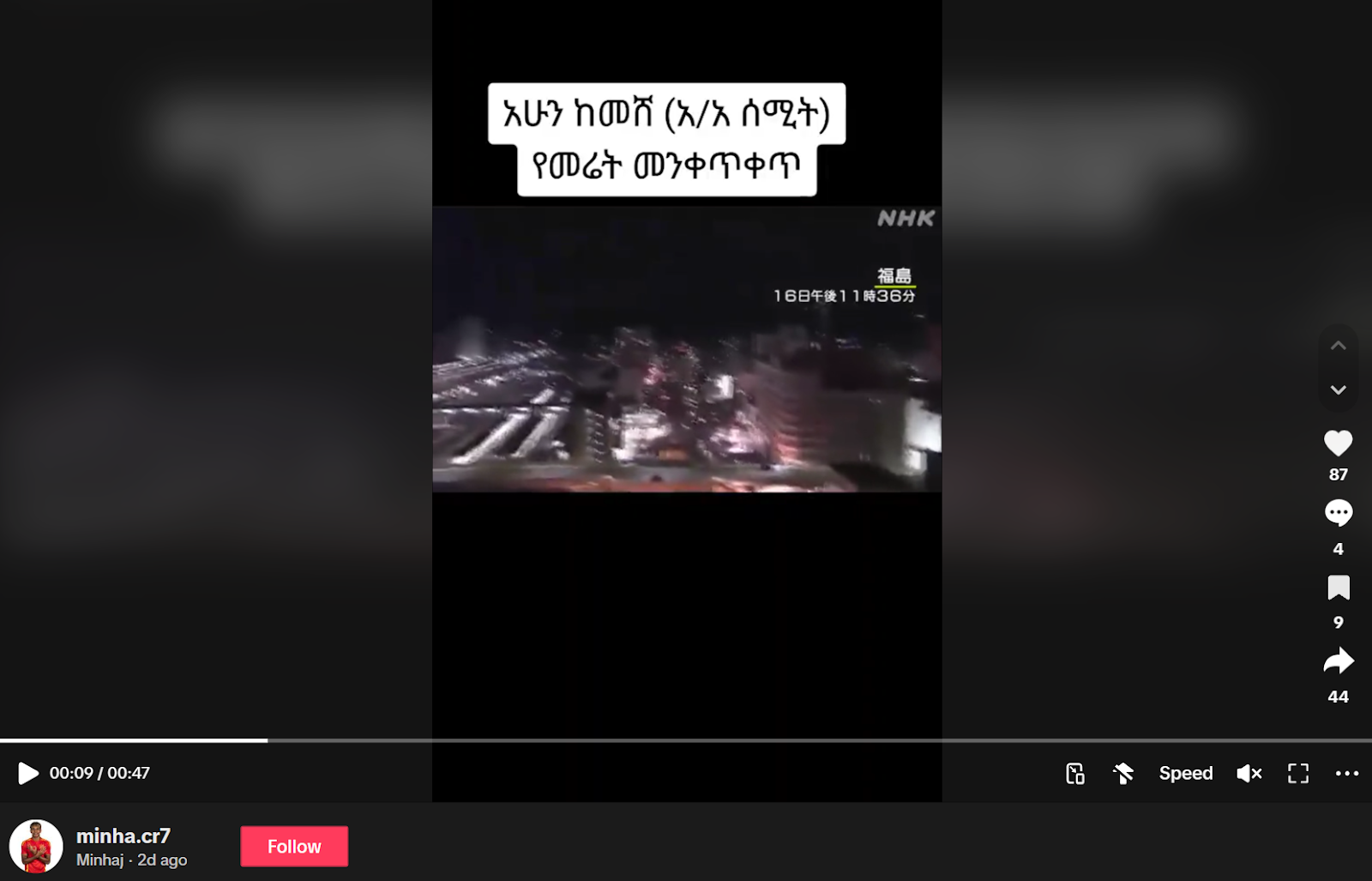
A video gets more than 40 thousand views on TikTok claiming to show an earthquake incident that happened on Sunday, Oct 6, 2024, captioned “An Earthquake happening now in Addis Ababa around Sumit area”. However, HaqCheck proved the video to be false and didn’t show the incident happened.
 

Link

On October 6, 2024, a 4.9 magnitude earthquake with a depth of 10 kilometers reportedly hit Ethiopia. It occurred in the Awash Fentale area in Afar Region, which is about 165 kilometers south-east of Addis Ababa. The FDRE government Communication Services has also confirmed this on its official Facebook page. The government page also states that the vibration reached from Dessie to Kombolcha, Addis Ababa, and Metehara.

Volcano Discovery  is a website which alerts the public about volcanoes and earthquakes happening anywhere in the world and provides an extensive database of these phenomena in all corners of the globe. The recent earthquake in Ethiopia was also recorded by Volcano discovery.


Link

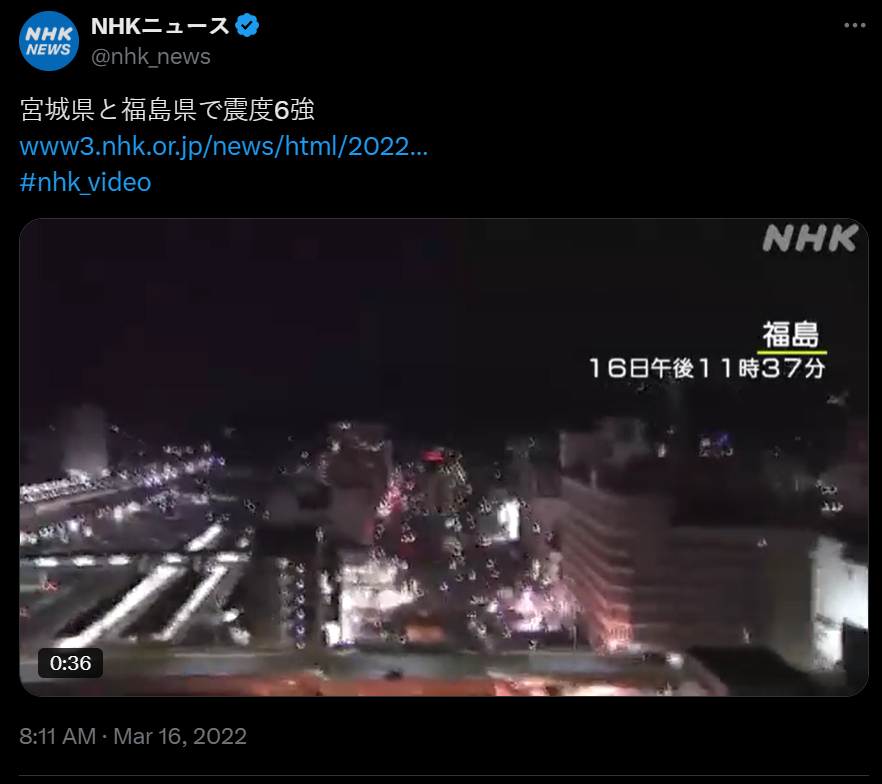
HaqCheck analyzed the alleged video to determine its credibility and found that the original video was shared on the official Twitter account of the NHK-Japan official on March 16, 2022.


Link

Japan’s history has been significantly influenced by its location on the Pacific Ring of Fire, known for regular seismic activity due to tectonic plate movements. The first recorded earthquake in Japan happened in 416 AD. Notable historical earthquakes include the 1703 Genroku earthquake, which devastated Edo (now Tokyo) and claimed thousands of lives.

According to a report by CBC news, on Mar 16, 2022, a powerful 7.4-magnitude earthquake struck off the coast of Fukushima in northeastern Japan, smashing furniture, knocking out power and killing four people.

After the incident on March 17, 2022, Prime Minister Fumio Kishida told a parliamentary session that four people died during the quake and 97 others were injured.

The region is part of northern Japan, which was devastated by a deadly 9.0 quake and tsunami 11 years ago that also caused nuclear plant meltdowns, spewing massive radiation that still makes some parts uninhabitable. 


The text below the NHK news media logo reads “Sendai Aoba Ward on 16th 11:37pm”. According to different reports, on that day, a magnitude 7.3 earthquake occurred off the Fukushima Sea in Japan. There were about 2.08 million power outages in 8 counties in Kanto 1, including Tokyo, Kanagawa, and Chiba.

HaqCheck conducted a further satellite investigation to detect the exact footage at the 00:18 second seen in the video footage, which is the Sendai Airport in Japan. From Left to right airport video footage from NHK news video and exact footage of the airport from Google Maps, respectively.

HaqCheck also attempted to contact the claimant regarding the information he posted on TikTok but received no response when this article was published.

Even though an earthquake happened in Ethiopia, and was felt in Addis Ababa, the video shows an earthquake in Japan not in Addis Ababa.

Because of these reasons, HaqCheck rated the video as false.

False: There has been no recent gunfire incident in Addis Ababa.

A colossal social media campaign regarding the security situation in Ethiopia is being recorded. The campaign predominantly highlights the escalating tensions in the country, utilizing various footage regardless of their legitimacy.

Notably, since the signing of the Memorandum of Understanding (MoU) between Ethiopia and the breakaway Somaliland in January 2024, there has been a surge in social media content focusing on Ethiopia’s security situation. Furthermore, some social media accounts that previously concentrated on different issues now cover the situation in Ethiopia.

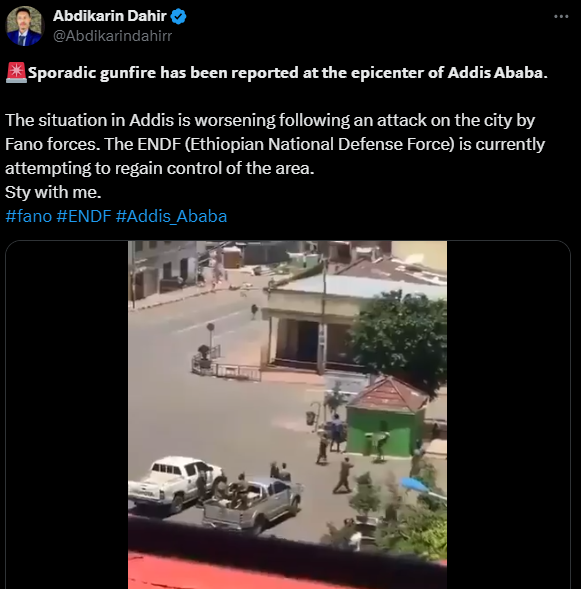
A Twitter account with more than 10 thousand followers shared a post on September 8, 2024, claiming there was sporadic gunfire in the capital, captioned “The situation in Addis is worsening following an attack on the city by Fano forces. The ENDF (Ethiopian National Defense Force) is attempting to regain the area’s control.”

By the time this article was published, the post had more than 60 thousand views and received attention on Twitter. However, HaqCheck investigated the claim and proved the video to be False.


Link

The ongoing war in the Amhara region.

In April 2023, the Ethiopian federal government announced that regional special force units should be disbanded and merged. The Ethiopian federal government gives the regional paramilitary forces options to join: the national army (ENDF), the regional or federal police, the prison guard department, or the anti-riot force, or to leave the discipline and live a normal life. This government decision triggered tension and conflict with Fano militants in the region.

Prime Minister Abiy Ahmed said last month that negotiations took place with armed militias in the Amhara region to resolve the ongoing conflict there peacefully. A spokesperson for Fano, an ethnic Amhara militia, denied holding talks with the federal government.

The shootout incident took place in the capital in April 2024.

Around the Bole sub-city, a gunfire incident happened in the capital Addis Ababa on April 20, 2024. According to the report by the Addis Ababa police, the arrested and killed militants are Nahusenay Andarge, Abenezer Gashaw, and Habtamu Andarge.

According to different reports, these militants are members of the Fano militia group, which is currently fighting in the region with the government. One of those killed was a civilian, while the other two were members of the group. According to the news report released by the police and state media, two police members were also injured.

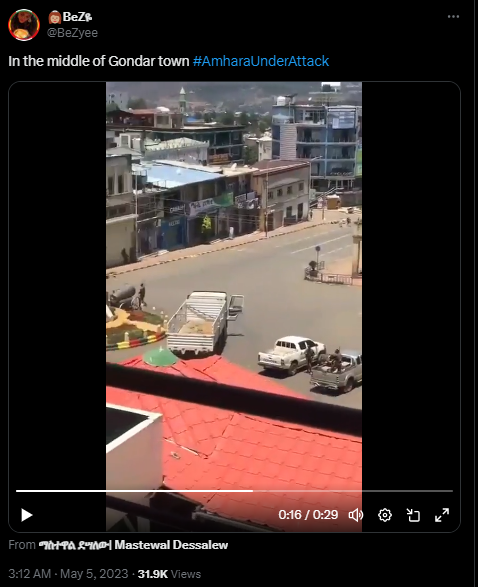
An alleged video was also circulating on social media to show the shooting incident in Addis Ababa.

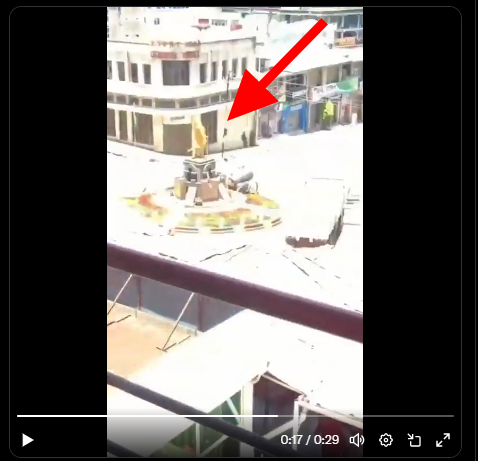
However, a search on social media reveals that the video was shared on May 5, 2023, with the caption “In the middle of Gondar town #AmharaUnderAttack”.


Post link

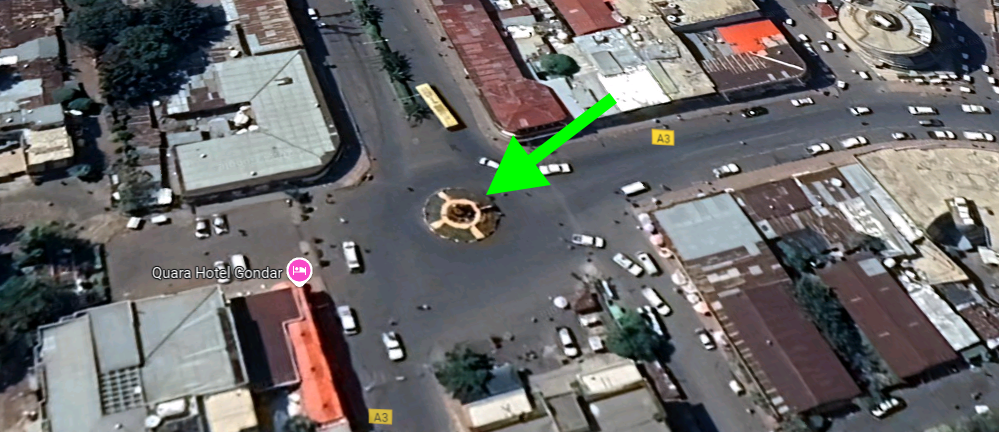
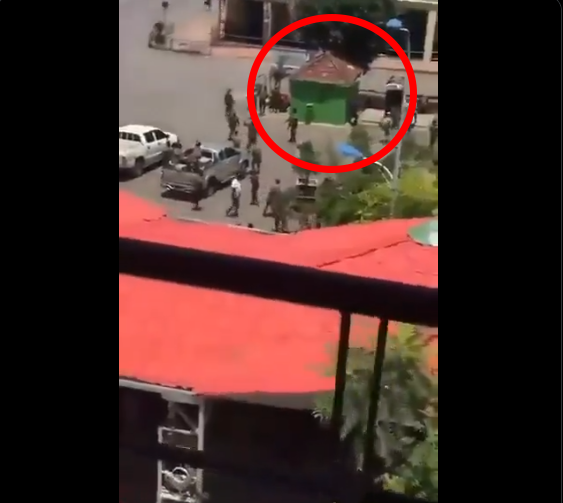
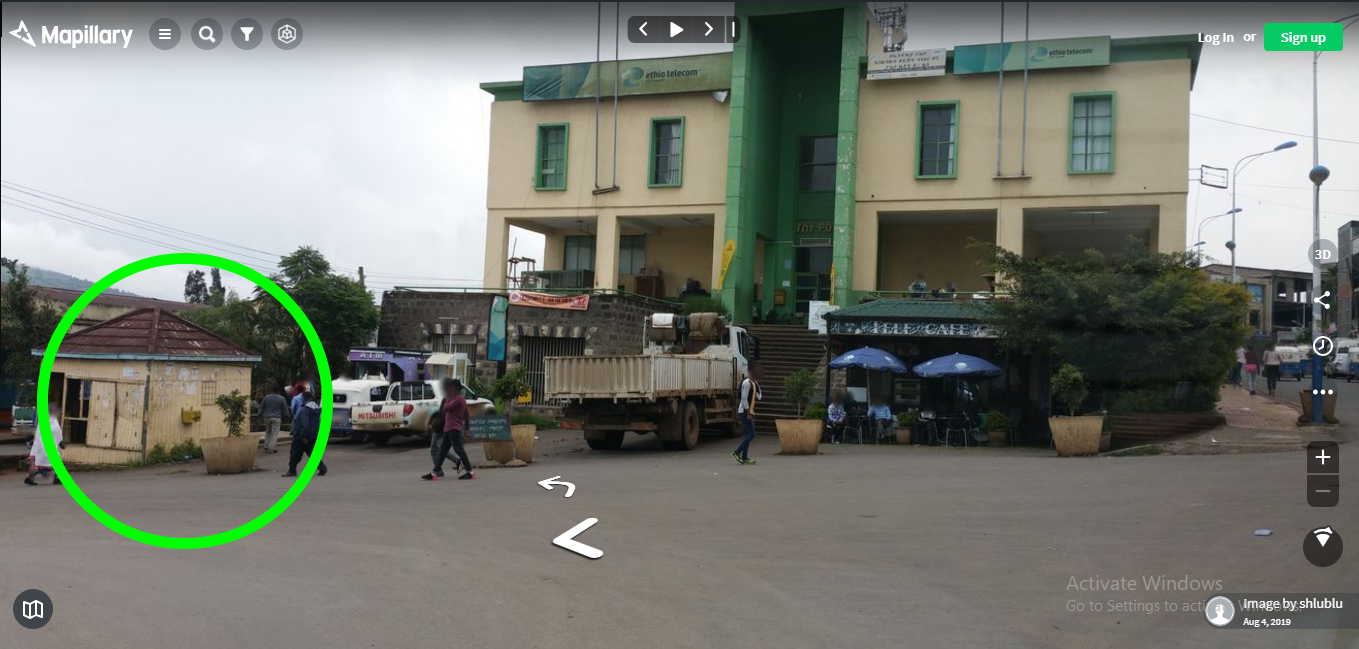
HaqCheck also tried locating the buildings and statues in the video using satellite imagery tools.
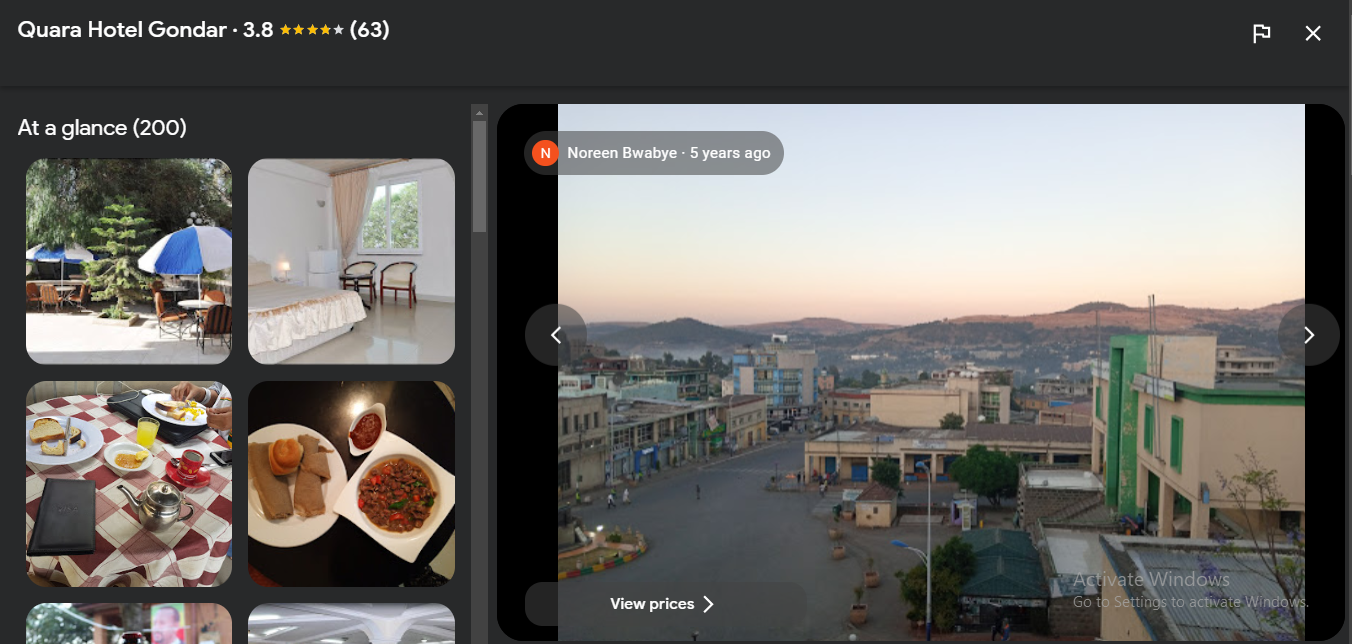
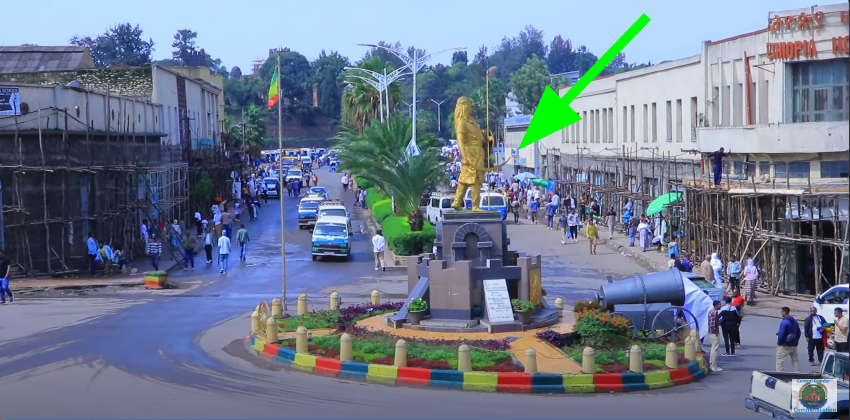
In the 00:17 seconds of the video, a statue is seen with green, yellow, and red colors. A search on hotels in Gondar also brings similar footage including the statue and the building in front of it. The same architectural buildings seen at 00:08 second of the video are also discovered using satellite imagery and hotel searches.


Link


The statue is seen in the video


Satellite imagery and video tour footage.

Small houses and buildings in the video

Building footage seen on Mapillary

Because of these reasons, HaqCheck rated the post false.

Did the Government Recently Declare a State of Emergency in the Amhara Region?


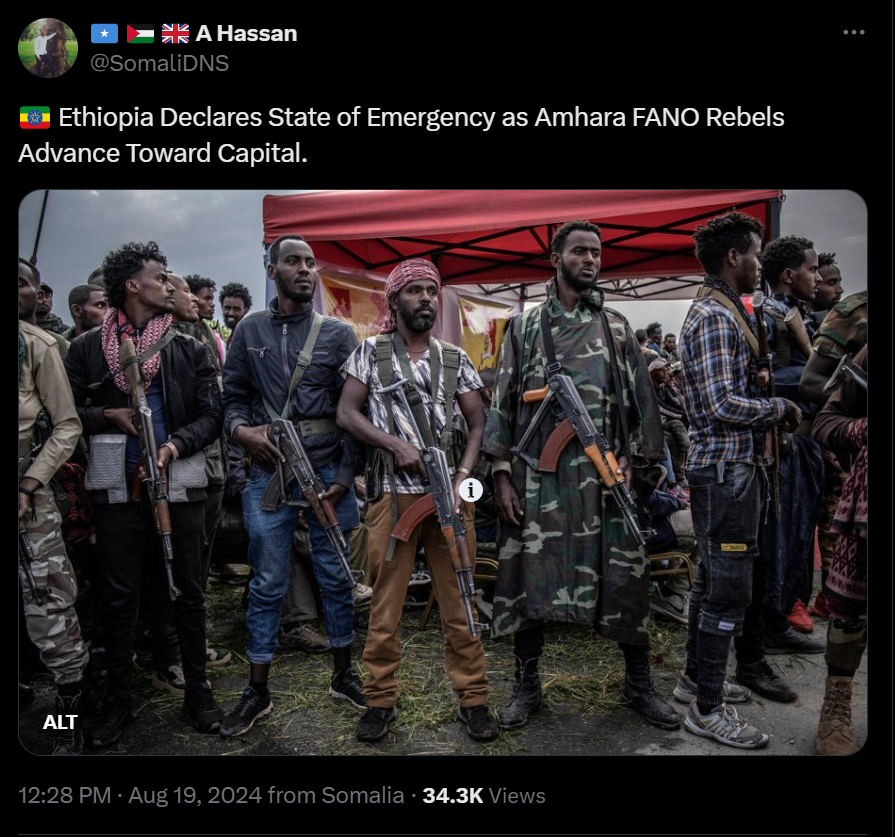
A Twitter account shared a post on Aug 19, 2024, captioned “the Ethiopian government declares a state of emergency as Amhara Fano rebels advance towards the capital.” 

By the time this article is published the post is viewed more than 34 thousand times and has more than 200 likes.

However, HaqCheck inspected the image used in the post and proved that the claim is false.

Post link

In April 2023, the Ethiopian federal government announced that regional special force units should be disbanded and merged. The Ethiopian federal government gives options to the regional paramilitary forces to join: the national army (ENDF), the regional or federal police, the prison guard department, the anti-riot force, or to leave the discipline and live a normal life.

Following the announcement of the dismantling of regional armed forces, tensions in the Amhara regional state escalated. The incident resulted in human rights violations such as killing individuals by security forces, destruction, and interruption of basic services. Additionally, the internet shutdown continued throughout many parts of the region.
The region keeps witnessing armed conflicts and rallies in response to the federal government’s plan to dismantle the region’s special forces.

Amhara Region Prosperity Party Office head and senior party official, Girma Yeshitila, was assassinated in North Shoa, Amhara region. The Ethiopian government accused armed groups, known as Fano, of assassinating a senior party official and promised to take strong action. Following the incident, deadly clashes started in several areas of the Amhara regional state.

Later, as the conflict in the region escalated, the Amhara regional government requested more help from the federal government. In response to this incident, Prime Minister Abiy Ahmed remarked,“It was found necessary to declare a state of emergency as it had become difficult to control this outrageous activity based on the regular legal system”.

In 2024, the federal government issued multiple state of emergency announcements in the region. On August 4, 2023, the federal government declared a six-month state of emergency in the Amhara region following days of clashes between the military and local Fano militiamen, giving it powers to impose curfews, restrict movement, and ban gatherings. Since August, 2023, the government forces have pushed Fano fighters out of cities, but fighting has continued in smaller towns and rural areas.

After the six-month state of emergency, the House of Representatives representative extended the state of emergency for another four months. Parliament said the extension was granted following a request by the justice minister and deliberations among lawmakers. The government denies it is seeking to undermine Amhara’s security.

HaqCheck proved that recently there has been no state of emergency called in the region after the four-month extension made back in February 2024. HaqCheck also can’t find any evidence indicating that the extended state of emergency has been lifted.


The post was shared at the backdrop of this situation.

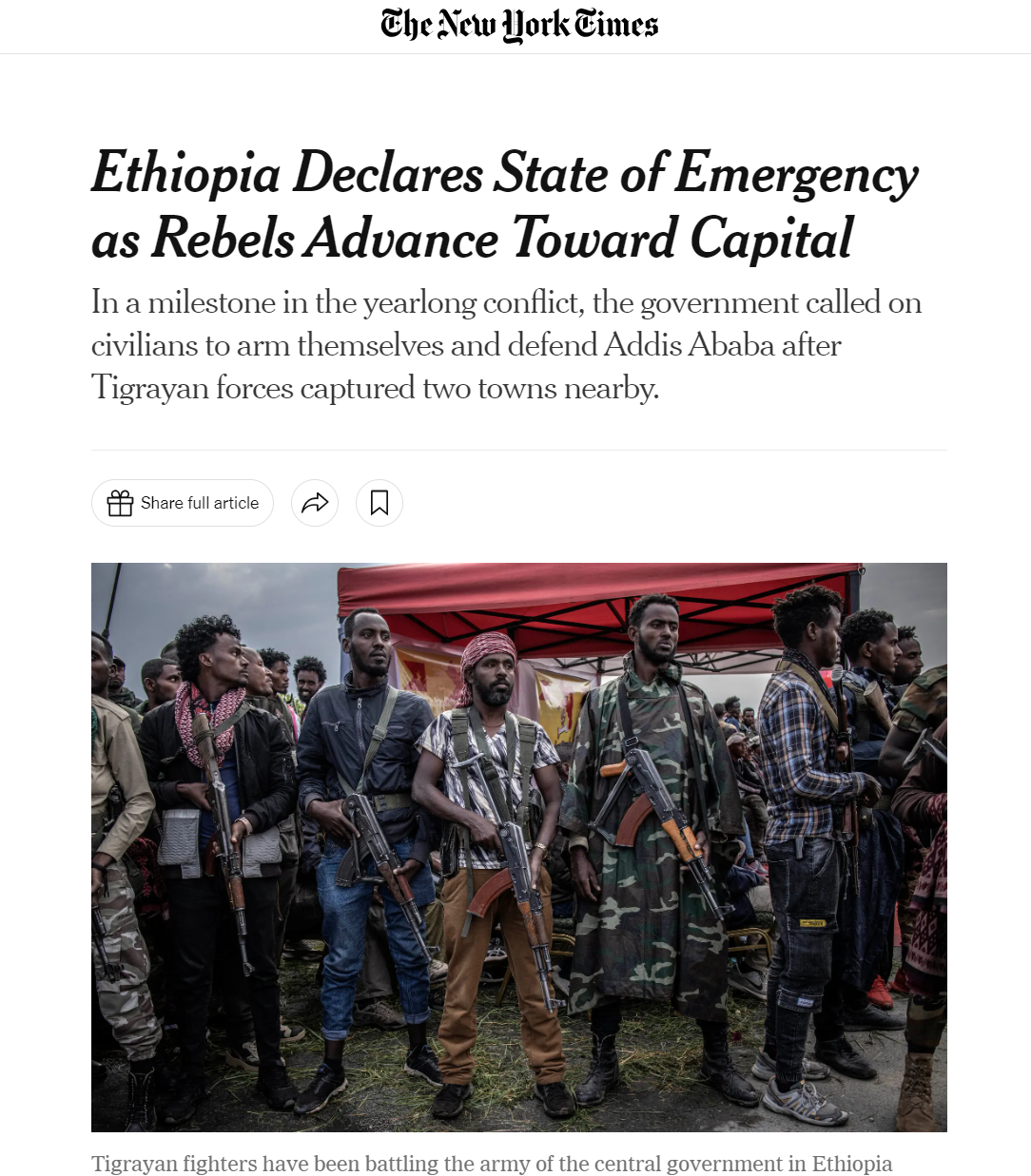
HaqCheck also analyzed the image used for the purported Fano militants, which showed that it depicted TPLF militants and was posted on many official websites in November 2021. The picture was titled as “Ethiopia Declares State of Emergency as Rebels Advance Toward Capital.”

During the war in the north the federal government  declared a state of emergency for its citizens to pick up arms and prepare to defend the capital as TPLF forces from the northern region of Tigray pressed south toward the city following the capture of towns.

The war between the Tigray people liberation front (TPLF) and the Federal government broke out in Nov 2020 after TPLF allegedly attacked the northern command in Tigray. Later they agreed to permanently silence the guns and end the two years of conflict in northern Ethiopia signed in south africa pretoria.


The war between the Tigray People Liberation Front (TPLF) and the federal government broke out in November 2020 after the TPLF allegedly attacked the northern command in Tigray. Later they agreed to permanently silence the guns and end the two years of conflict in northern Ethiopia signed in South Africa, Pretoria.


News link

Even Though there are several claims that there is still a fight in the second-largest region of the country, Haqcheck inspected the claim and rendered it false.

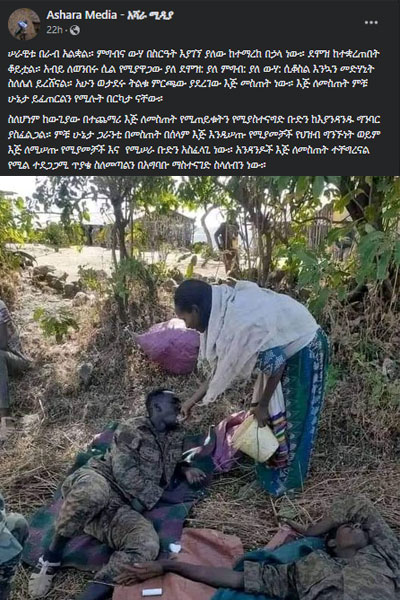
Does the image show an Ethiopian army soldier surrendered to Fano militias?

A Facebook page with more than 300 thousand followers shared an image with a claim that the picture shows an Ethiopian army soldier recently surrendered to Fano militants in the ongoing conflict in the Amhara region.

The Facebook post was viral on the platform and was shared close to 200 times and gained over 1,700 reactions by the time this article was published.

However, HaqCheck inspected the post and found that the image was old and doesn’t support the claim. Therefore, HaqCheck rendered the claim False.

On Apr 6, 2023, the Ethiopian federal government announced that it had decided that regional special police forces should be dissolved and integrated into the Ethiopian National Defence Forces, the Federal Police, or the regional police.

Upon the announcement of the dissolution of regional paramilitary forces, tensions arose in the Amhara regional state. There were armed clashes and public protests in the region opposing the federal government’s decision to disestablish regional special police forces.

Reports and social media posts have indicated that the ongoing conflict in the Amhara region killed many people.

The VOA Amharic recently reported that fighting between the Ethiopian military soldiers and Fano insurgents continued in many parts of the Amara region, Bahir Dar, the regional capital.

The Ethiopian government also stated that Fano militants captured many areas including major cities in the Amhara regional state.

Social media posts claimed that Fano milia groups captured Ethiopian army troops and various weapons during the ongoing conflict. 


Link

Against this backdrop, a viral Facebook post emerged sharing an image with a claim that many Ethiopian army soldiers surrendered to Fano militant groups.

To verify the claim, HaqCheck used a Google reverse image search. As a result, the image was found previously posted on X (Twitter) on Jan 7, 2022. The picture was shared on X with a caption that reads, “Our heroes are falling for our freedom, peace, and safety, as well as for the sovereignty of our motherland Ethiopia, and wish them a happy holiday. Ethiopia Shall prevail.”

The original post on X was retweeted close to 300 times.

Therefore, HaqCheck rated the Facebook post False due to its usage of an inaccurate image.

Exit mobile version