Did the Government Recently Declare a State of Emergency in the Amhara Region?


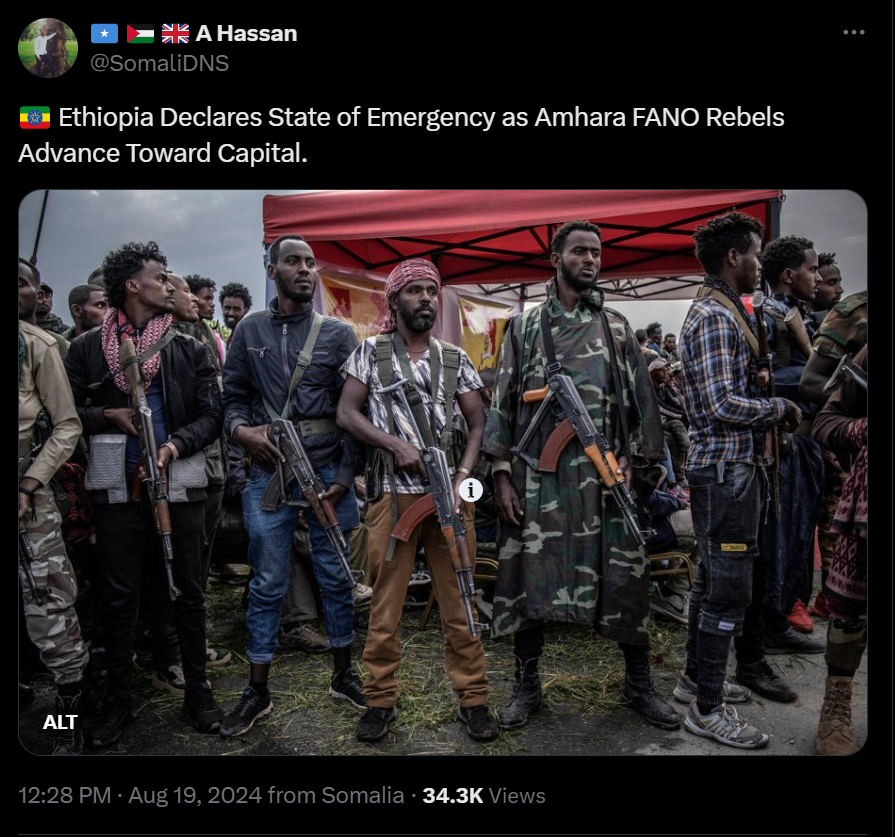
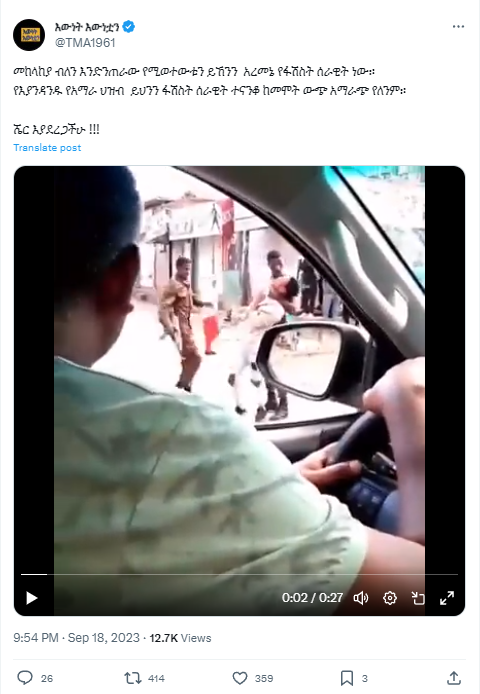
A Twitter account shared a post on Aug 19, 2024, captioned “the Ethiopian government declares a state of emergency as Amhara Fano rebels advance towards the capital.” 

By the time this article is published the post is viewed more than 34 thousand times and has more than 200 likes.

However, HaqCheck inspected the image used in the post and proved that the claim is false.

Post link

In April 2023, the Ethiopian federal government announced that regional special force units should be disbanded and merged. The Ethiopian federal government gives options to the regional paramilitary forces to join: the national army (ENDF), the regional or federal police, the prison guard department, the anti-riot force, or to leave the discipline and live a normal life.

Following the announcement of the dismantling of regional armed forces, tensions in the Amhara regional state escalated. The incident resulted in human rights violations such as killing individuals by security forces, destruction, and interruption of basic services. Additionally, the internet shutdown continued throughout many parts of the region.
The region keeps witnessing armed conflicts and rallies in response to the federal government’s plan to dismantle the region’s special forces.

Amhara Region Prosperity Party Office head and senior party official, Girma Yeshitila, was assassinated in North Shoa, Amhara region. The Ethiopian government accused armed groups, known as Fano, of assassinating a senior party official and promised to take strong action. Following the incident, deadly clashes started in several areas of the Amhara regional state.

Later, as the conflict in the region escalated, the Amhara regional government requested more help from the federal government. In response to this incident, Prime Minister Abiy Ahmed remarked,“It was found necessary to declare a state of emergency as it had become difficult to control this outrageous activity based on the regular legal system”.

In 2024, the federal government issued multiple state of emergency announcements in the region. On August 4, 2023, the federal government declared a six-month state of emergency in the Amhara region following days of clashes between the military and local Fano militiamen, giving it powers to impose curfews, restrict movement, and ban gatherings. Since August, 2023, the government forces have pushed Fano fighters out of cities, but fighting has continued in smaller towns and rural areas.

After the six-month state of emergency, the House of Representatives representative extended the state of emergency for another four months. Parliament said the extension was granted following a request by the justice minister and deliberations among lawmakers. The government denies it is seeking to undermine Amhara’s security.

HaqCheck proved that recently there has been no state of emergency called in the region after the four-month extension made back in February 2024. HaqCheck also can’t find any evidence indicating that the extended state of emergency has been lifted.


The post was shared at the backdrop of this situation.

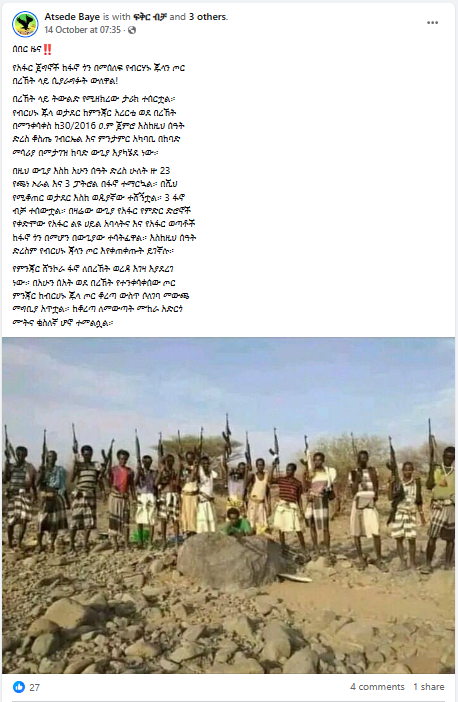
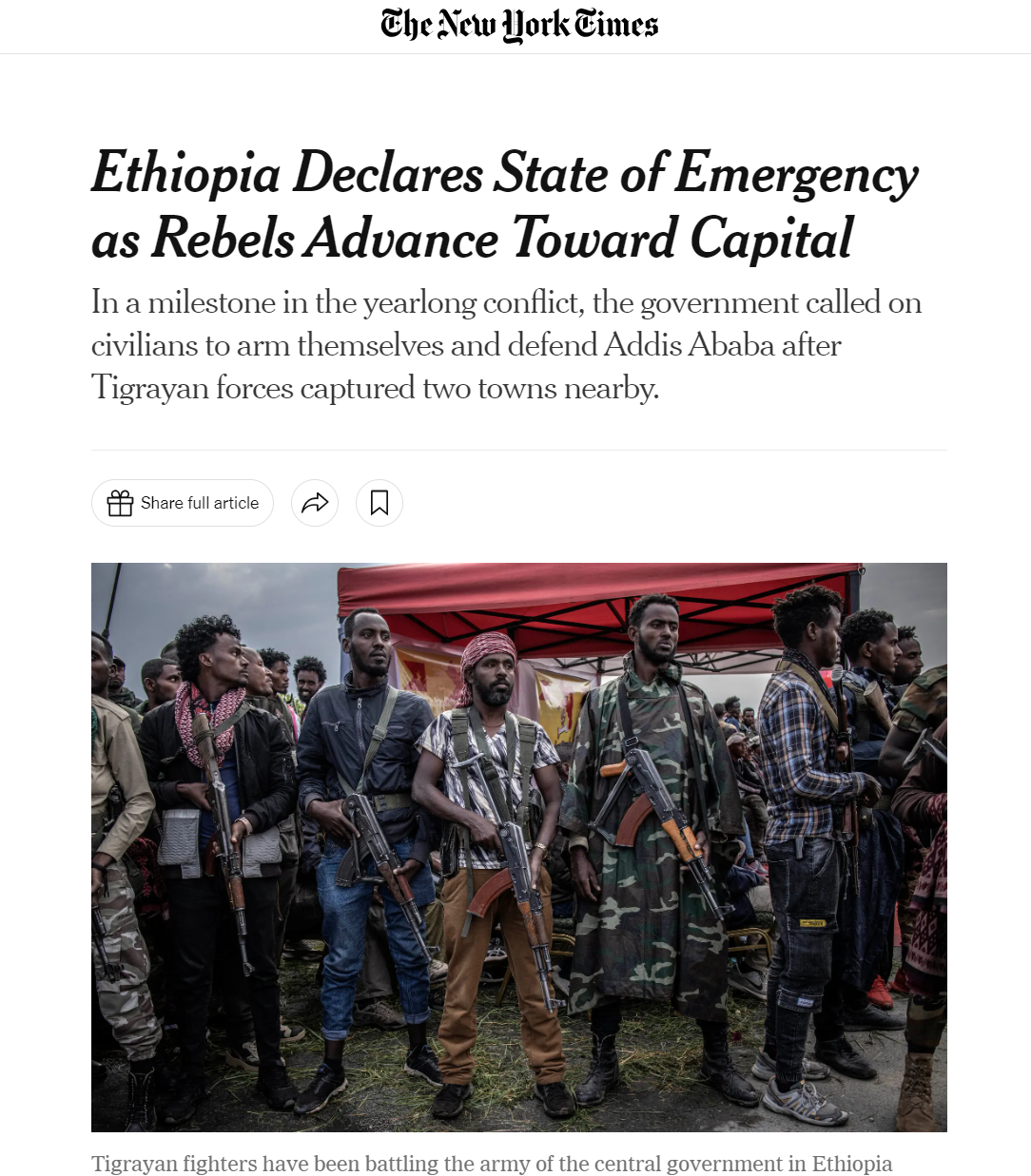
HaqCheck also analyzed the image used for the purported Fano militants, which showed that it depicted TPLF militants and was posted on many official websites in November 2021. The picture was titled as “Ethiopia Declares State of Emergency as Rebels Advance Toward Capital.”

During the war in the north the federal government  declared a state of emergency for its citizens to pick up arms and prepare to defend the capital as TPLF forces from the northern region of Tigray pressed south toward the city following the capture of towns.

The war between the Tigray people liberation front (TPLF) and the Federal government broke out in Nov 2020 after TPLF allegedly attacked the northern command in Tigray. Later they agreed to permanently silence the guns and end the two years of conflict in northern Ethiopia signed in south africa pretoria.


The war between the Tigray People Liberation Front (TPLF) and the federal government broke out in November 2020 after the TPLF allegedly attacked the northern command in Tigray. Later they agreed to permanently silence the guns and end the two years of conflict in northern Ethiopia signed in South Africa, Pretoria.


News link

Even Though there are several claims that there is still a fight in the second-largest region of the country, Haqcheck inspected the claim and rendered it false.

Is Ethiopia on Set to print Money locally ?

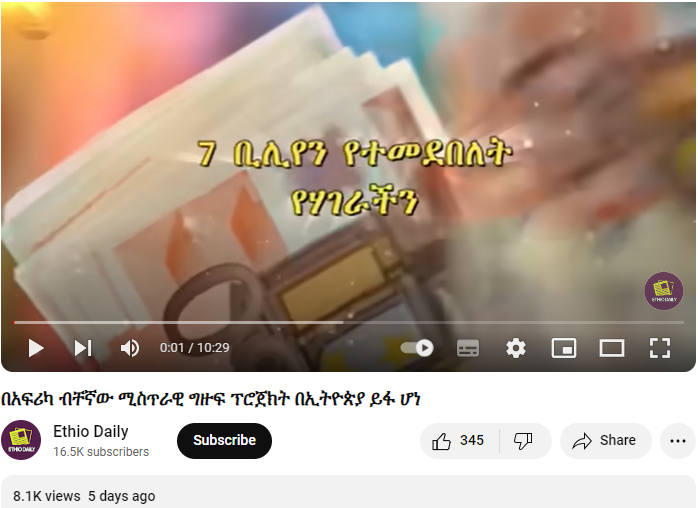
A video circulating on online platforms like Youtube with more than eight thousand views, on TikTok more than three thousand views claimed that Ethiopia has signed an agreement with a Japanese company, TOPPAN Gravity, to build a large infrastructure in Addis Ababa Bole, Lemi industrial park, for the purpose of printing Ethiopian Birr locally. 

Image

The video uses footage of various government officials and TOPPAN Gravity administrators to support its claim. 

Image

However, an investigation by Haqcheck reveals that the agreement is not for printing currency, but rather for the production of high-security documents like Passports: National ID cards, ATM cards, Mastercard products and other governmental documents.

On May 8,2024 Fana Broadcasting Corporate (FBC) an Ethiopian public media outlet news release covered the issue as the agreement between Ethiopia and TOPPAN Gravity focuses on the production of secure documents, including: Passports: Providing citizens with secure and tamper-proof travel documents, National ID cards: Enhancing identity verification and security measures, ATM cards: Ensuring secure access to financial services, Mastercard products: Enabling secure and reliable payment transactions ,and these documents will incorporate embedded microchips, further enhancing their security and authenticity.

In addition to Fana’s report TOPPAN Gravity too announced the agreement as “With the launch of the manufacturing plant in Ethiopia as a first step, the TOPPAN Group plans to harness its technologies and solutions to establish capabilities for the provision of a full range of government ID solutions in the African market, with a view to producing IDs and passports for neighbouring countries in the future. The government of Ethiopia, meanwhile, will ensure operational design aligned with local needs by establishing rules and regulations for passports and IDs.”

Mr. Mamo Mihretu, governor of the National Bank of Ethiopia, also verified for HaqCheck that the agreement does not include printing the Ethiopian currency.

Historically, Ethiopia has changed the currency a number of times and over the years, the nation have signed agreements with different currency printing companies. Although Ethiopia has had its own currency for many years and has undergone various changes, it is not easy to find such extensive information about the printing of currencies.

As Ethiopia underwent modernization around 1903, a new coinage system of currency, with 200,000 dollars, was produced at the Paris Mint in 1894 for Emperor Menelik II.

In the more recent history of Ethiopia, the first banknotes or paper money were introduced in 1915 by the Bank of Abyssinia, marking a shift from solely using coins as currency, Emerged in the country. Prior to this, the thaler had been the standard unit.

The Bank of Abyssinia introduced its first banknotes in denominations of 5, 10, 100 and 500 talari, with an initial print run of 280,000 talari worth of notes.

Ethiopia has had currency changes over the years, including recent currency changes.

In November 1997, the EPRDF government that took control introduced changes to the DERG currency, making minor feature and colour updates. The higher denomination notes, specifically the 50 and 100 birr bills, received enhanced security features as part of this redesign.

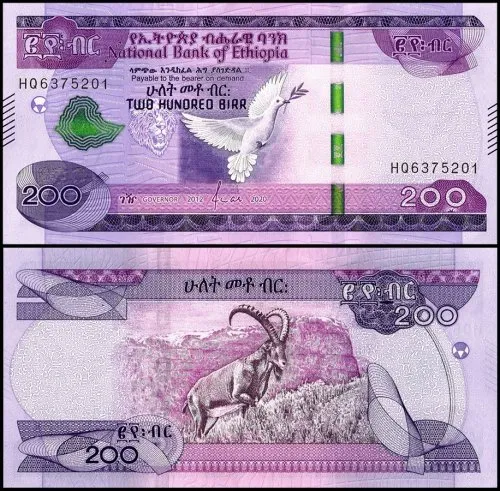
Later, on September 14,2020, the National Bank of Ethiopia introduced new currency notes, with enhanced security features and other distinctive elements. The new currency notes replaced the 10, 50 and 100 bill notes while an additional 200 birr note was introduced.

Image

In different times the currency printing issue has been raised and reported by different media outlets. In 2008, the National Bank of Ethiopia (NBE) awarded a multi-million dollar contract to two international currency printing companies – Giesecke & Devrient GmbH (Germany) and De La Rue (UK) – to print various denominations of the Ethiopian Birr. The NBE had announced an international tender in May 2008, inviting currency printers to submit bids to produce a total of just over 1.1 billion Ethiopian Birr in all denominations of the national currency.

Additionally, on July 31, 2013, online media purportedly reported that the National Bank of Ethiopia (NBE) is considering printing Birr notes in Sudan.

A group of experts travelled to Sudan and visited the Sudan Currency Printing Press (SCPP), a private enterprise established in 1994. According to the report experts from the state-owned printing company Berhanena Selam Printing Enterprise also went to Sudan to visit SCPP and its machines and assess the company’s capacity.

On December 14,2014, a report was released as “The National Bank of Ethiopia (NBE) is in the process of establishing its own banknotes and security printing factory to print cash locally.

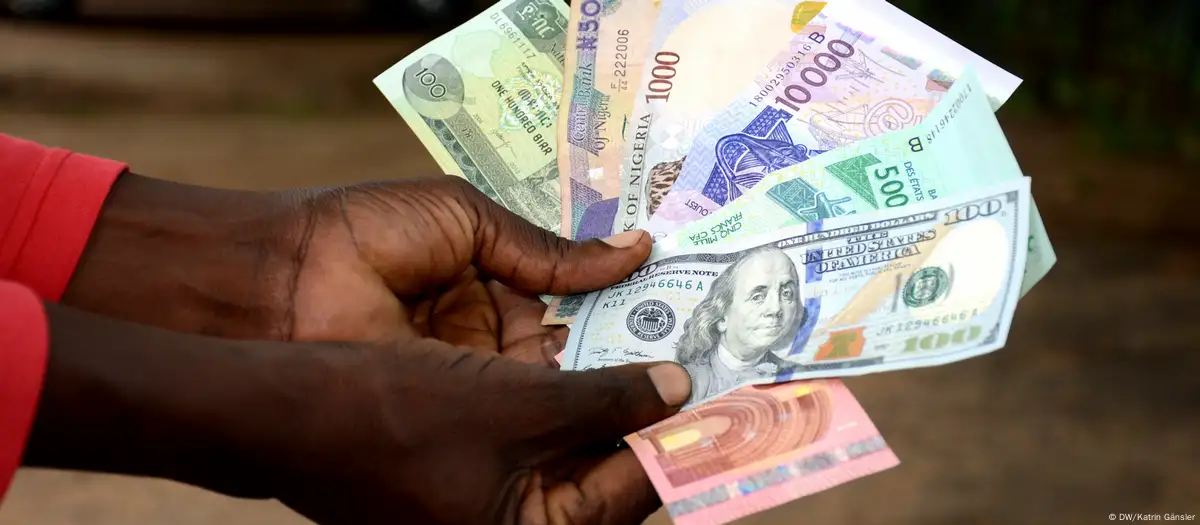
According to an article published by Deutsche Welle on March 24,2022, Ethiopia place orders for its currency printing from British banknote printing giant De La Rue.

Image

In another article published on May 29,2024 it was also stated that Ethiopia prints its currency in Europe and North America. Ethiopia, specifically, has its money printed by a British printer called De La Rue.

Although various ideas have been raised about Ethiopia’s currency printing, there is currently no official information from the government or the National Bank. But, the Ethiopian money printing centre as claimed recently, arose from an agreement made between Ethiopia and TOPPAN GRAVITY does not include currency printing.

The claim was made against this backdrop. The video’s misleading claim likely stems from a misunderstanding of the agreement’s scope. The focus on high-security documents might have been misinterpreted as a move to print currency. However, it’s important to rely on credible sources.

The video claiming that Ethiopia has signed an agreement with TOPPAN Gravity to print currency is false. 

The agreement focuses on the production of high-security documents, which are crucial for national security and economic development. It’s essential to be critical of information found online and to rely on verified sources for accurate information.

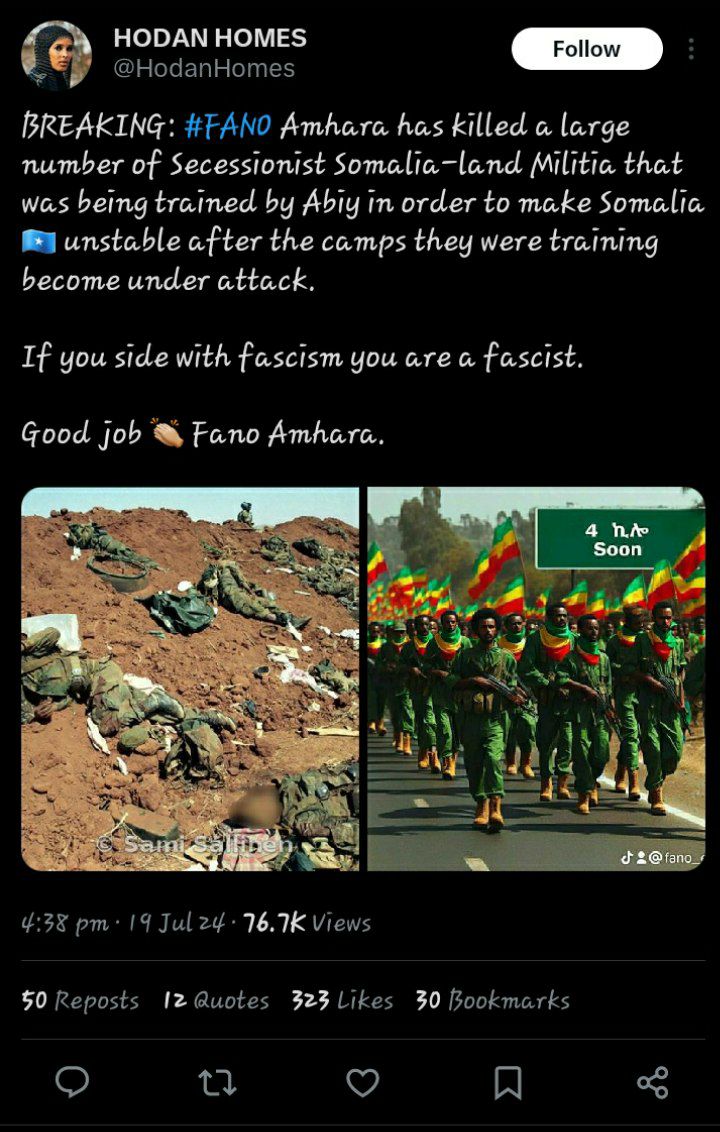
False: The Image doesn’t show Somaliland militias killed by Fano militants.

A recent claim that spread widely on the X account, alleging that the Fano militia had killed Somaliland militia members trained by Ethiopian Prime Minister Abiy Ahmed, has drawn a lot of attention. This assertion, which was accompanied by a graphic image of deceased soldiers, underscores the prevalence of misinformation in digital spaces. In addition, the content had significant engagement and reaction on social media. However, through diligent fact-checking efforts, this claim was swiftly and effectively debunked, highlighting the critical role of verification in combating false narratives.

Image

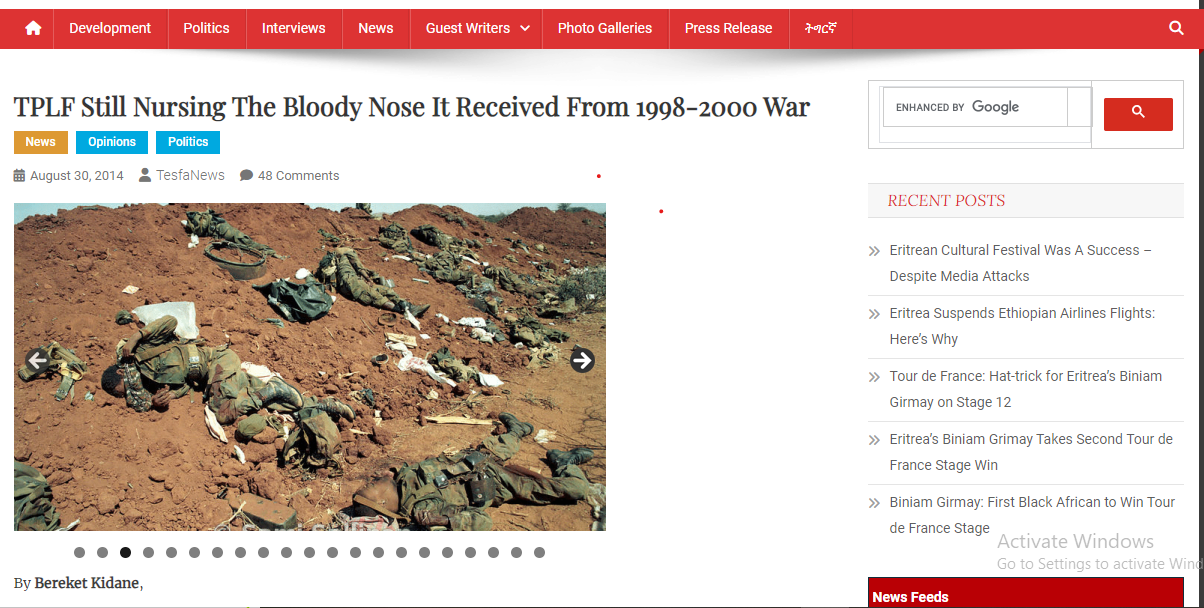
The first image, originally published in news outlets on August 30, 2014 depicted casualties from the Ethiopian-Eritrean war, before even Prime minister Abiy Ahmed was not Ethiopia’s Prime minister yet. . This discrepancy immediately raised red flags, suggesting the image was being used out of context to support a fabricated narrative.

A closer look on the image by itself gives credit to Sami Sallinen who is a photographer and video producer from Finland, who has lived and worked in Asmara for several years. He is a journalist, photographer and video producer who has worked in media and communications since 1991, based in England, Eritrea and Finland. During a seven-year stay in Eritrea (1996-2003) he worked for international news agencies as a journalist, photographer and videographer, and as a video producer for the United Nations Mission in Ethiopia and Eritrea.

Image

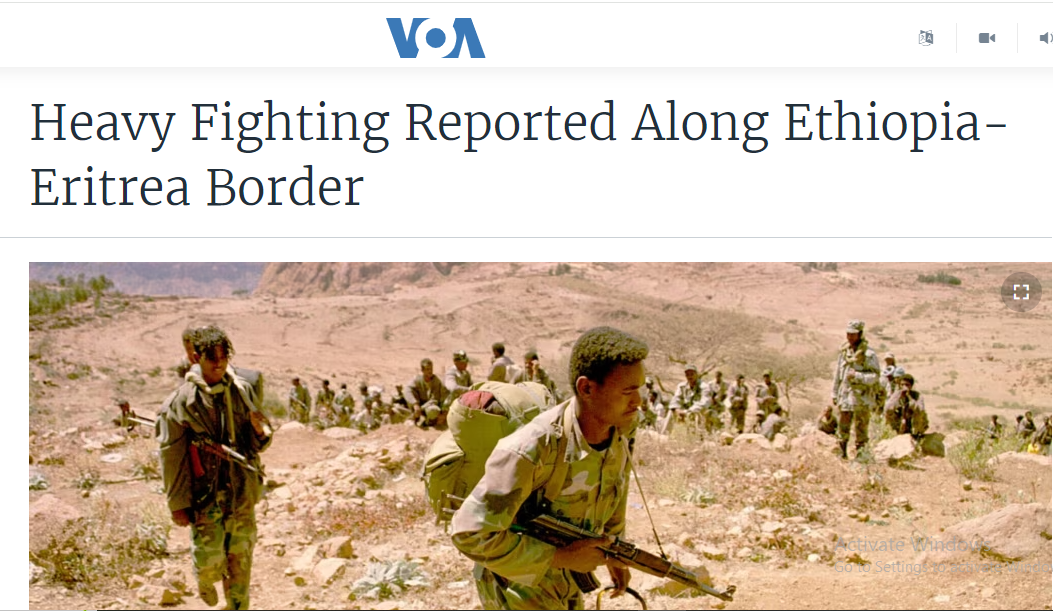
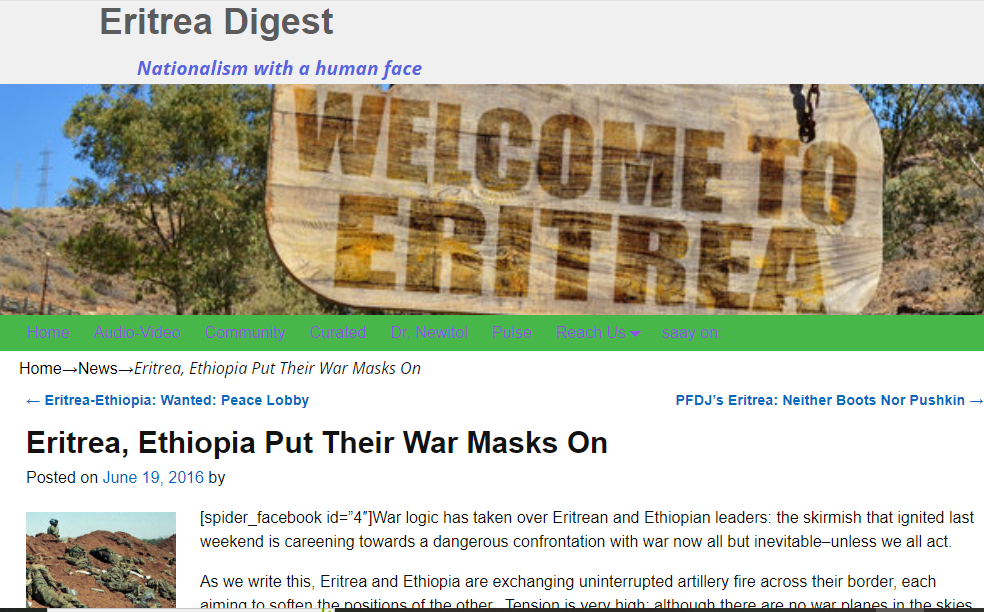
Eritrea and Ethiopia fought a border war with significant fighting occurring between the towns of Tsorona and Zalembessa. These places were the two major war torn areas and battle grounds. However, Bademe, Shiraro Alitena, Irob and so many more areas were among the prominent battlefields during the bloody war 20 years ago.Thousands died, and animosities continue to this day, with a heavy military buildup along the unmarked border. 

Image

Image

When the war ended, the international community formed a boundary commission to delimit and demarcate the countries’ shared border. The commission was responsible for issuing a final ruling after hearing each side’s border claims. It ended in 2000 with the signing of the Algiers agreement. But peace was never fully restored as Ethiopia refused to implement a ruling by a border commission established by the agreement.

That changed when Prime Minister Abiy Ahmed came to power and met Esayas Afewerki, but the town of Badme has not yet been handed to Eritrea.

The town of Badme, the flashpoint for the 1998-2000 conflict, was ruled to be in Eritrea by the border commission set up by the Algiers peace agreement.

Prime Minister Abiy announced that Ethiopian soldiers would start pulling out from border areas, in compliance with the Algiers peace deal.

Given the backdrop of two decades of political discord and violent conflict between the two nations, it is noteworthy that various social media accounts are circulating old, graphic images from the Ethio-Eritrea War. These images are misleadingly presented as recent incidents in Somaliland, following the signing of the Memorandum of Understanding (MoU) between Ethiopia and Somaliland.

The claim originated from a Somali individual whose X account displayed a clear opposition against the memorandum of understanding between Ethiopia and Somaliland, as well as against both the Ethiopian government and Somaliland’s.

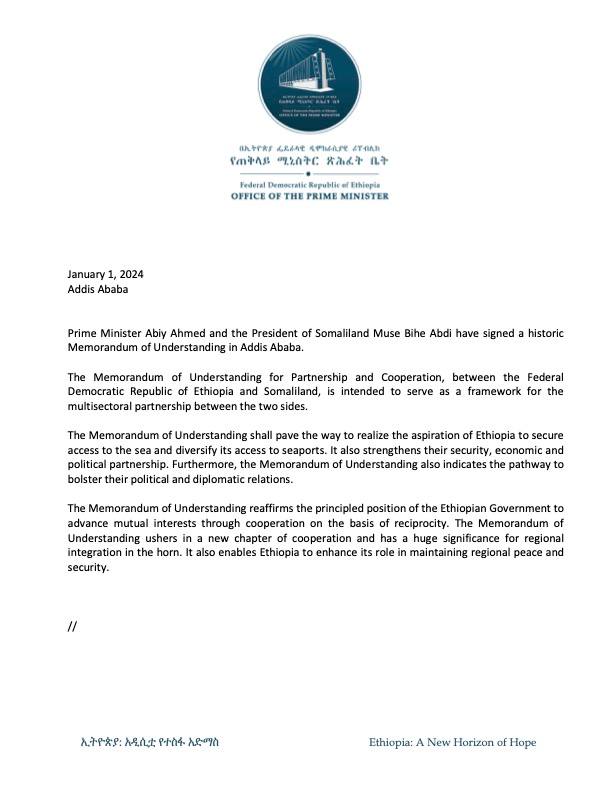
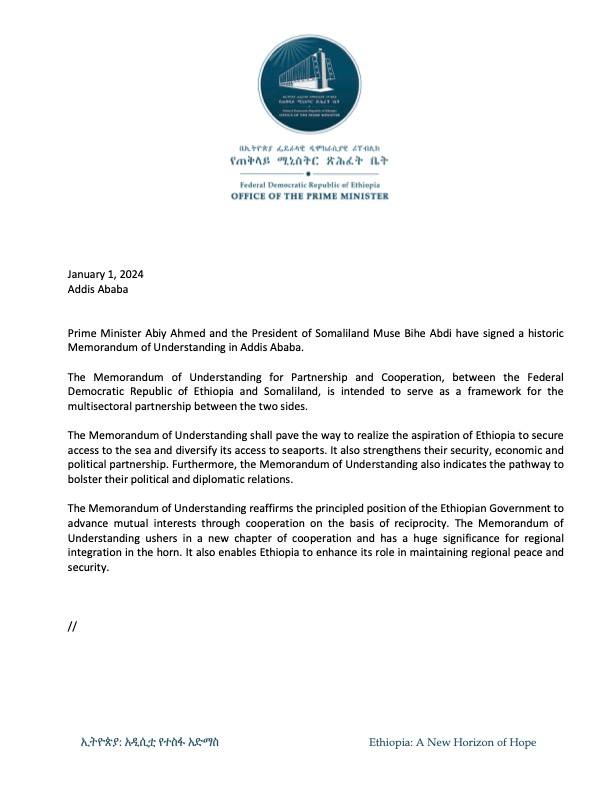
The memorandum of understanding signed by Prime Minister Abiy Ahmed and Somaliland’s president, Muse Bihi Abdi, on 1 January 2024 allows Ethiopia to lease for 50 years a 20-kilometre stretch of coastline in the breakaway Somali region and to establish a naval port there. In exchange, Ethiopia will become the first country in Africa to formally recognise Somaliland’s statehood. 

image 

The memorandum has thus prompted a furious reaction from authorities in Mogadishu, the federal capital of Somalia, which claims sovereignty over the disputed territory. 

The account likely exploited the ongoing conflict between the Fano militia and the Ethiopian federal government to advance their anti-agreement agenda.

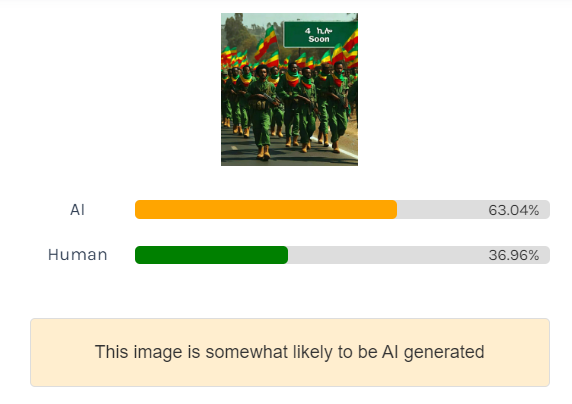
The second image, showcasing Fano fighters with flags and the statement “4ኪሎ soon,” was identified as AI-generated. 

Image

This further strengthens the conclusion that the initial claim was deliberately fabricated to manipulate public opinion.

Because of these reasons HaqCheck rated the post as false.

The internet has become a breeding ground for misinformation, particularly during times of political tension.

This case highlights the importance of critical thinking and fact-checking in navigating the digital landscape. It demonstrates how individuals can exploit existing conflicts and utilise manipulated imagery to spread misinformation for personal gain.

The spread of such false information can have detrimental consequences, increasing tensions between communities and undermining efforts towards peaceful resolution. It underscores the need for increased awareness and vigilance against misinformation campaigns, especially during sensitive political periods.


Does the image show the ongoing conflict in the Amhara region?

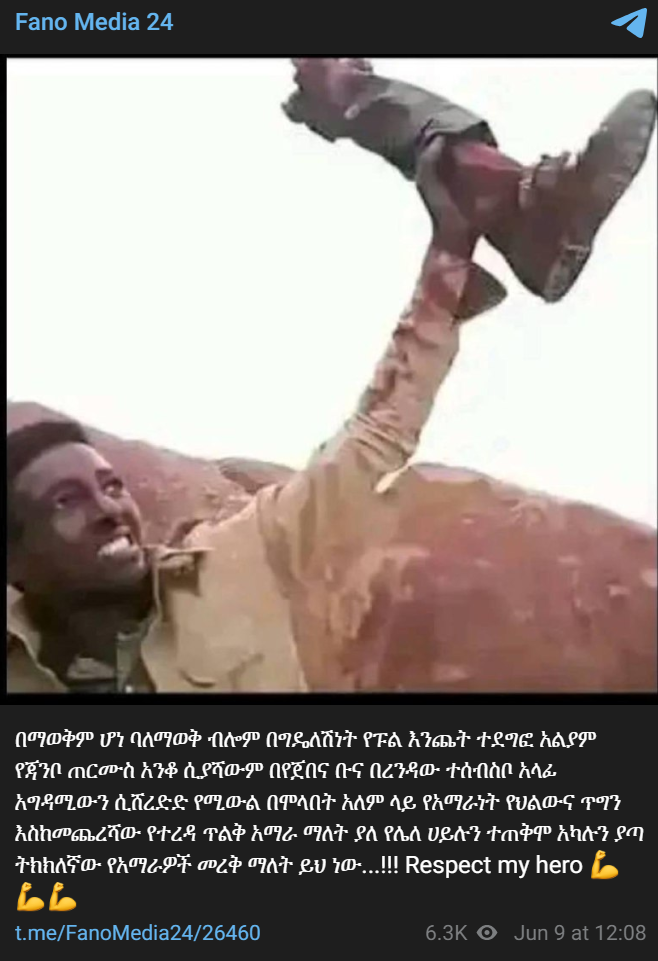
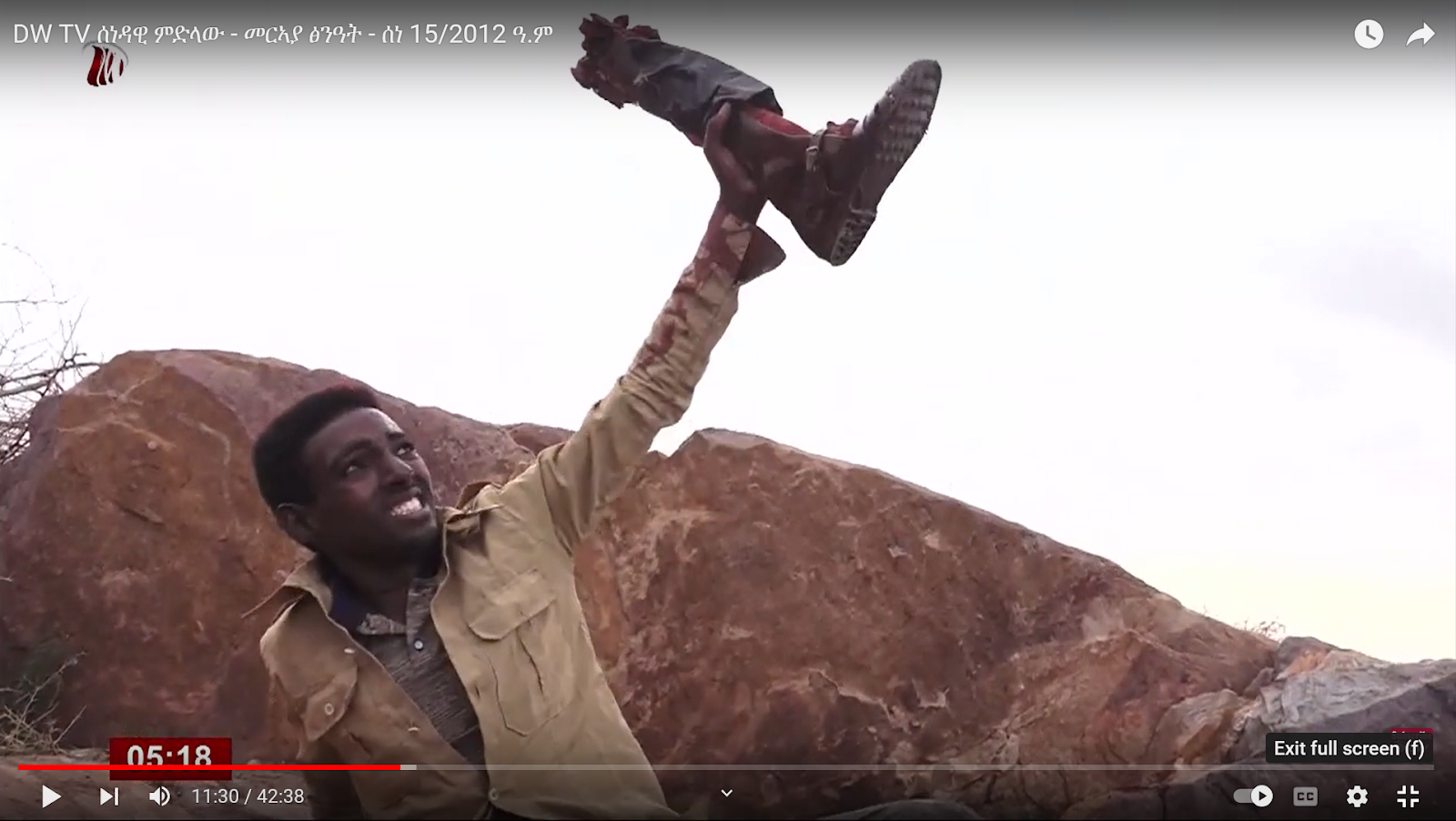
A Telegram channel with over 15,000 followers shared an image which up to the time this article was published having more than six thousand views, claiming that it depicts a fano member who lost his leg in the middle of the conflict while bravely lifting his lost leg and calling out ‘victory for fano’. The post also claimed that the person in the image is fano member Anduaelm Mihret, born in Merawi, a town in the North Gojjam of Amhara Region, located 30 kilometers southwest of Bahir Dar, the regional capital.The post was also found on other social media platforms like facebook on July 1,2024, and X on June 25,2024 with over one thousand views. However, HaqCheck inspected the post and verified it false.

HaqCheck conducted a comprehensive analysis of the image and its source, raising concerns about the wide reach of the claim. During our investigation, we found a video on the Dimtsi Weyane Television YouTube channel, a known source for Tigray-related news. 

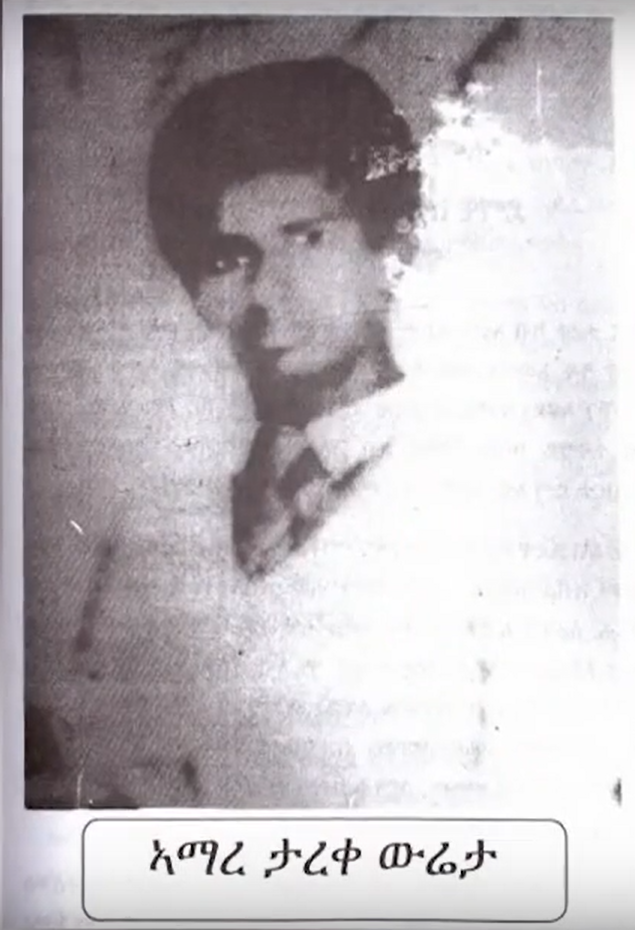
The video, posted on June 22,2020 having more than forty six thousand views, depicted the same individual identified as an actor who played a brave soldier during the war between the Tigray People Liberation Front (TPLF) and the Derg regime. The same image was found in a documentary video made and  posted on the Dimtsi Weyane YouTube channel, mainly as a memorial for a soldier (ተጋዳላይ) named Amare Tareke Wureta. 

 
Image

When it comes to the conflict in the Amhara region, numerous contents are presented, regardless of their accuracy. HaqCheck has seen a variety of information spreading on social media, including old photos.

On April 6, 2023, the Ethiopian government announced that it had decided to disarm regional special forces. The government has started to disband the regional paramilitary forces and has given the troops choices to join: the national Army (ENDF), the regional or federal police, the prison guard department, the anti riot force, or to leave the discipline and live a normal life. Following this government decision, armed conflicts and altercations broke out throughout the region and continue to this day.

The video focused on narrating Amare’s life from school to his last breath at the battle field in Shiraro. The video presents testimonies from the army’s officers and battlefield companions regarding the events and situations at the time, as well as his exceptional courage.
According to the testimony of the leaders, although Amare was hit in the right leg in the battle, he was shooting to prevent the enemy from approaching until his partner reached him.

The exact footage shown below is found as part of the video where the actor tried to portray Amare’s fight.


Video footage

The time difference between the video and the alleged involvement of the Fano group in fighting against the government is a crucial piece of evidence that disproves the first claim. 

By the time the video was recorded, there had been no conflict or hostilities between the Fano group and the federal government in the Amhara region.  

In this case, the false claim attempted to present an individual as a Fano soldier, even though the time discrepancy proved otherwise.
Because of these reasons, HaqCheck rated the post as false.

False: the image doesn’t show the new Berbera port in Somaliland.

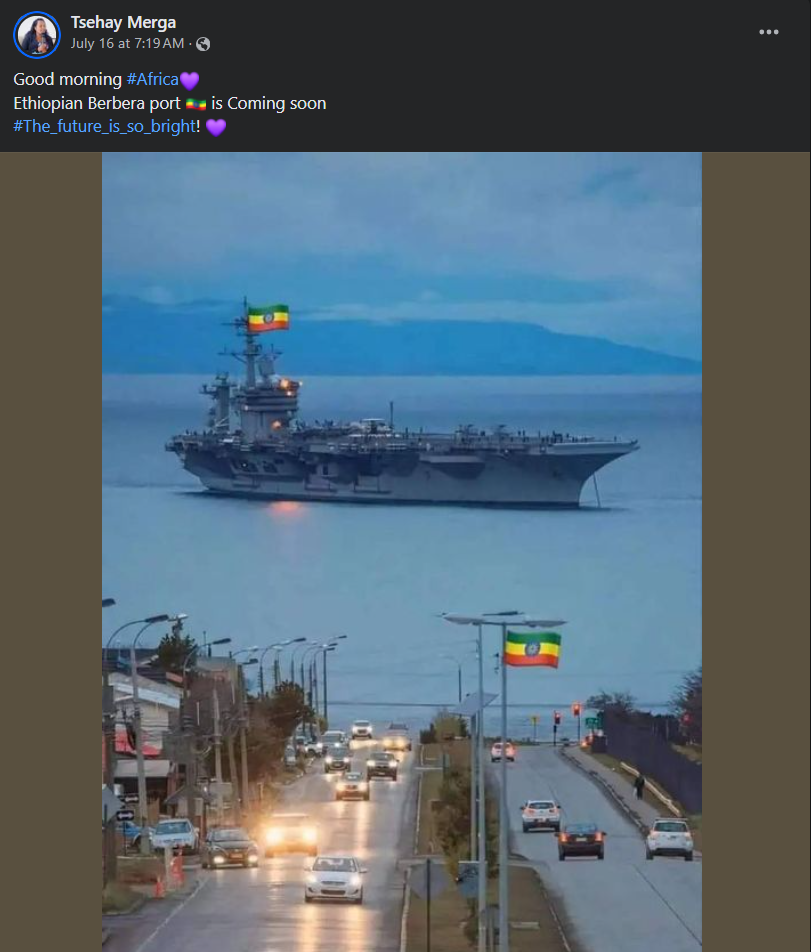
An image was recently circulating on different social media platforms, including Facebook, Twitter, and Instagram, claiming to show a ship hoisting an Ethiopian flag and docked at Berbera port in Somaliland.
However, HaqCheck inspected the posts and verified them as false.

                                                                  Post link

On the 1st of January 2024, a memorandum of understanding was signed between Ethiopian Prime Minister Abiy Ahmed and Somaliland President Muse Bihi Abdi. Reportedly, this MoU stated that Somaliland would lease 19 kilometers of its Red Sea coastline to Ethiopia around the port city of Berbera.

Link                            

This agreement comes on the heels of escalating tensions between the two nations. According to reports, the Memorandum of Understanding (MoU) between Ethiopia and Somaliland includes a critical provision: Ethiopia will recognize Somaliland as an independent state in the future, potentially making it the first United Nations member state to do so. This development has sparked significant controversy and drawn sharp criticism from Somalia.

In retaliation, the Somali government has recalled its ambassador to Ethiopia for consultations, signaling a deepening diplomatic rift. The MoU drew a lot of international attention, and the international community strictly suggested the MoU needs to be implemented in adherence to the sovereignty of neighboring Somalia. 

While the claim initially seemed to support the recent memorandum of understanding between Ethiopia and Somaliland, which allows Ethiopia to utilize the port of Berbera, closer inspection reveals the Ethiopian flag was digitally added to the original image using Photoshop.

The original photograph, which specifically doesn’t have the Ethiopian flag, was actually taken in Punta Arenas, Chile—a fact that can be easily verified through reverse image searches. The image was posted on the X account of the Ministry of National Defense of Chile, on June 5th, 20024  accompanied by the caption: “Punta Arenas: This photo shows the colossal nature of the USS George Washington aircraft carrier. It will take part in the Passex naval exercise with the Chilean Navy and will dock at the port of Valparaíso on June 11, remaining in the bay until June 15.”

Post link                                                      

HaqCheck found the post to be false because the image used was not accurate.

HaqCheck contacted the person who claimed to get more information, but the person did not respond until this article was published.

Does the video show a recent landslide in Gofa Zone, Ethiopia?

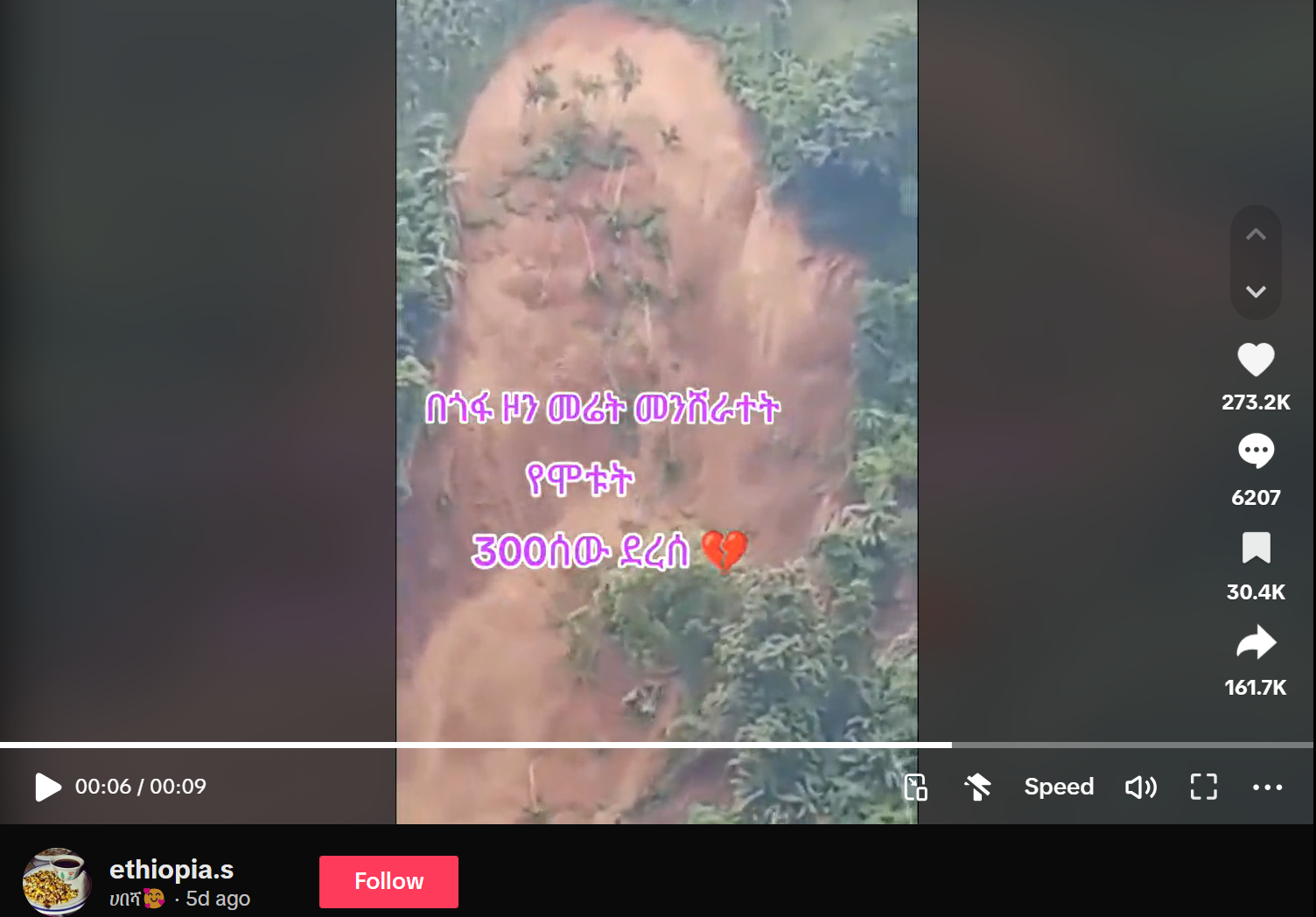
A recent TikTok video claiming to show the devastating landslide in Gofa, Ethiopia, went viral, garnering more than three millions of views and sparking widespread concern.

The video, which surfaced on TikTok in late July 2024, depicted a massive landslide engulfing a hillside, with debris and dust billowing into the air. The caption accompanying the video explicitly stated it was from Gofa, Ethiopia, where a devastating landslide had recently occurred.

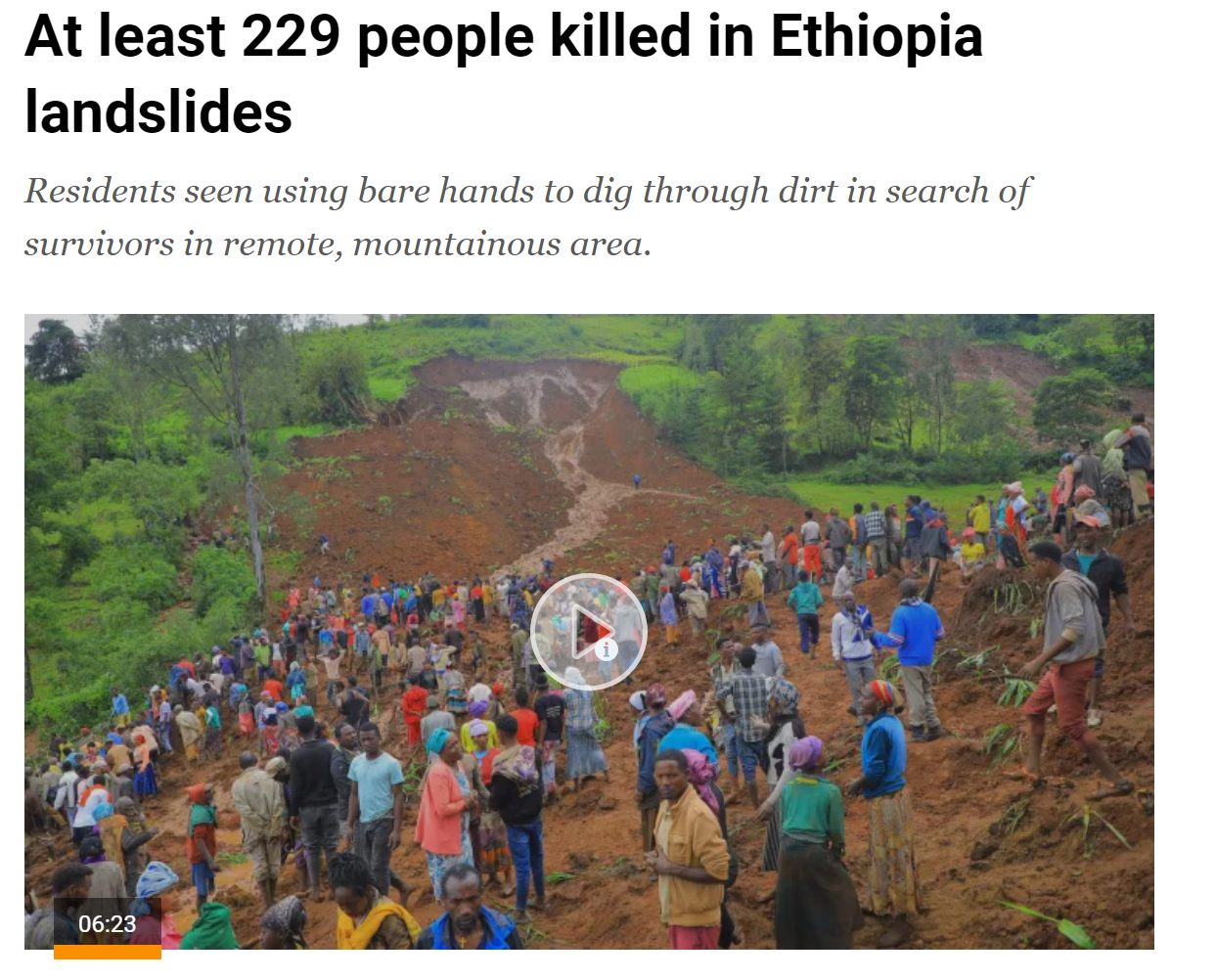
The landslide in Gofa, Ethiopia, which occurred on July 22nd, tragically claimed hundreds of lives, including those of security officers and rescue team members. In the aftermath, a multitude of reports, images, and videos have emerged. Haqcheck has thoroughly examined the incident and compiled comprehensive reports, ultimately debunking the authenticity of the above video.

Video

Footage showed hundreds of people gathered at the scene and others digging in the dirt in search of people trapped underneath.

In the background, a hillside can be seen partially collapsed and a large patch of red earth has been exposed. Heavy rains caused a landslide on Sunday, and as police officers, teachers and residents from nearby villages frantically continued with search-and-rescue operations on Monday, a second landslide occurred, burying them too under the mud.

The death toll from the landslide has risen to 257 and could reach up to 500. More than 15,500 people were affected by the landslides, including at least 1,320 children under the age of five and 5,293 pregnant and nursing mothers, according to the latest situation update by the United Nations Office for the Coordination of Humanitarian Affairs (UNOCHA).

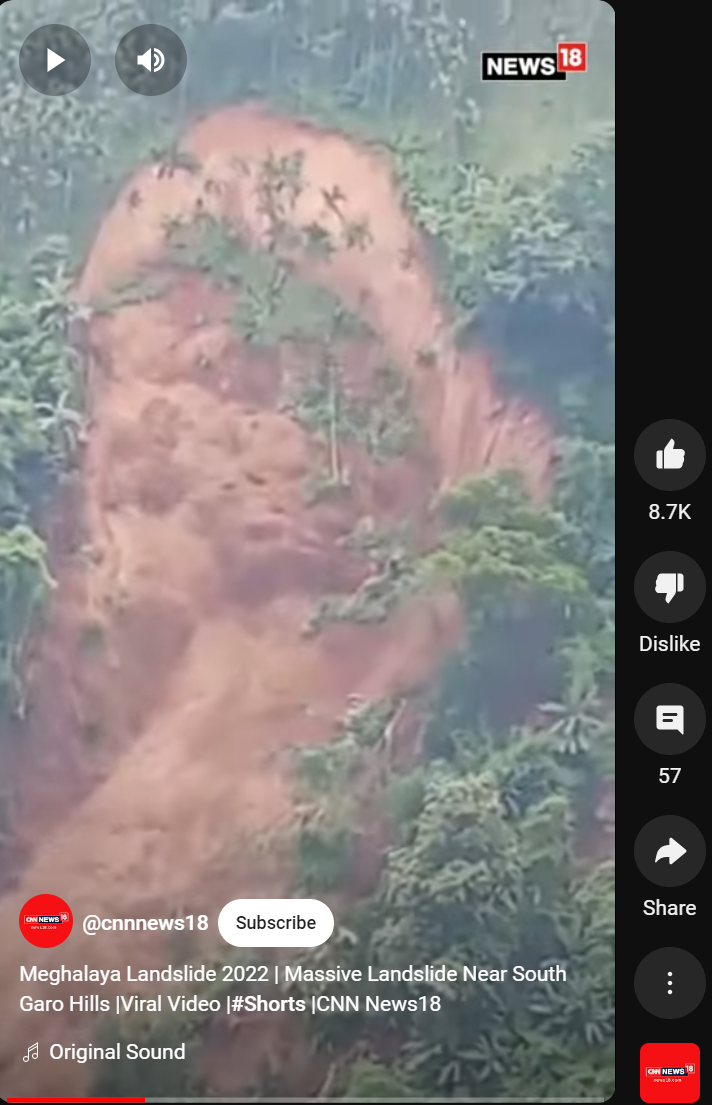
A closer look revealed the video shared on the TikTok account was actually footage of a landslide disaster in Meghalaya, India, that occurred in 2022.

Video link

This claim quickly gained traction, with users expressing shock and sharing the video widely. Through an investigation similar video was primarily reported by CNN-News18, an Indian news outlet, as a landslide disaster in Meghalaya, India, that happened in June 2022.

In this case, the false claim about the Gofa landslide could have potentially caused unnecessary distress and fear among viewers.

Even Though, the claim was shared at the backdrop of this situation HaqCheck examined the video and rendered it false.

False: the video doesn’t show a recent protest in Gondar against Fano

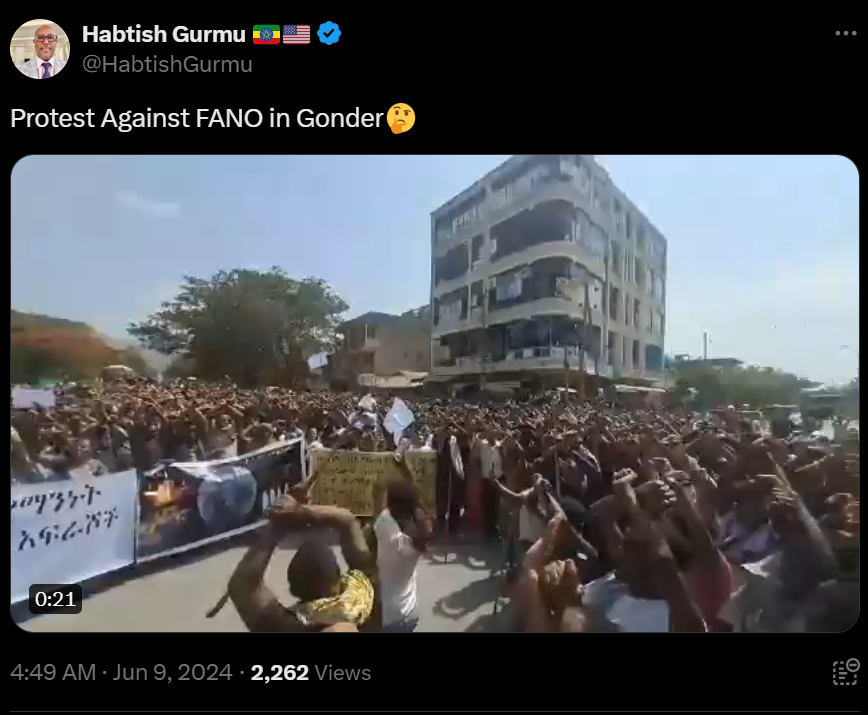
A Twitter (X) account that has more than six thousand followers shared a short clip on June 4, 2024, claiming that the video shows a protest against Fano in Gondar. The video has got more than two thousand views.

However, HaqCheck inspected the post and proved that the caption accompanying the clip was used to suggest the protest was against Fano militants misleadingly.


Post link

The ongoing conflict across Amahara between the Fano militia and the FDRE indeed brings much related information across different social media.

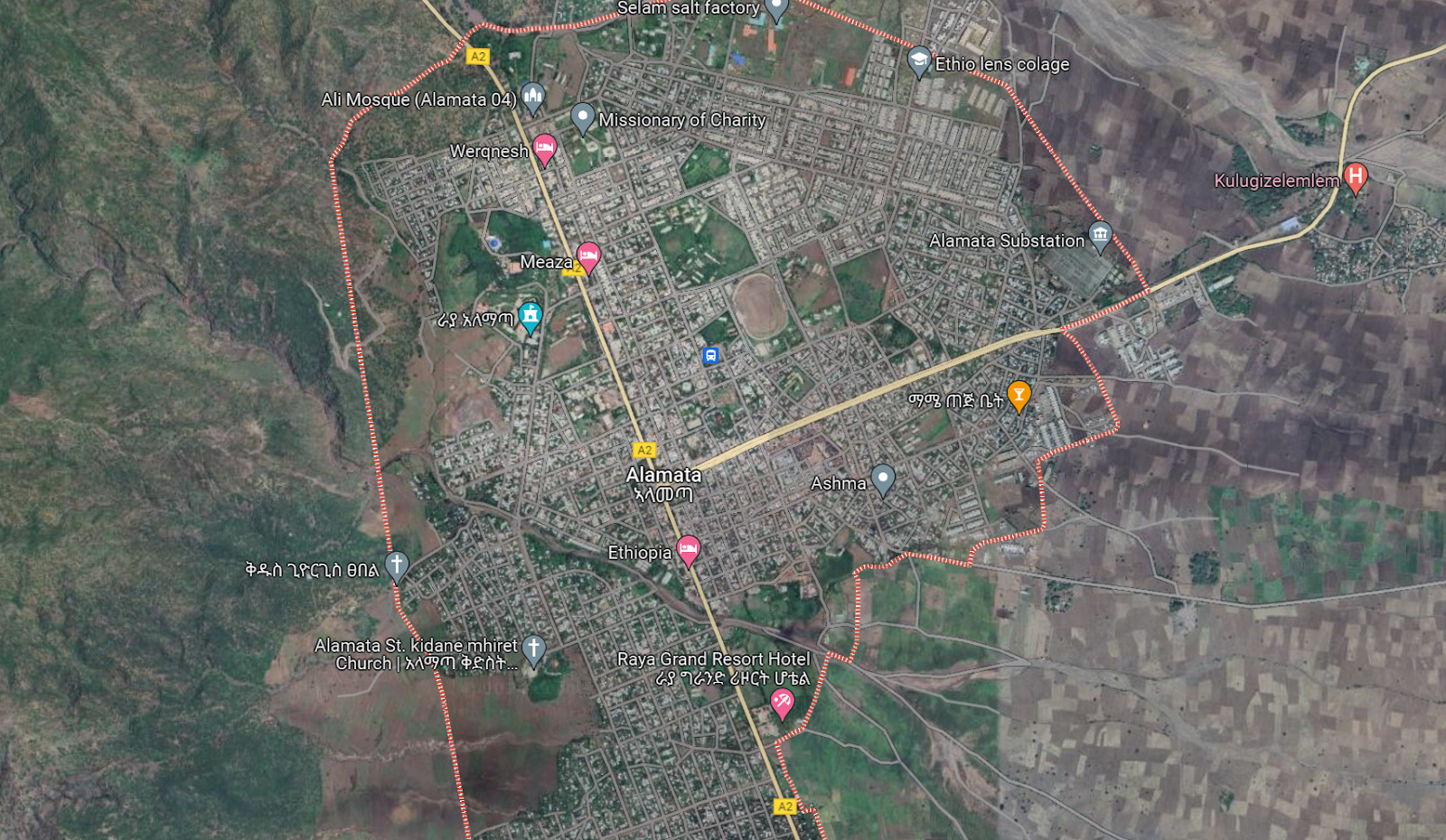
In April 2024, many reports said that Tigray People’s Liberation Front (TPLF) fighters controlled the Alamata area.  According to a report by the United Nations Office for the Coordination of Humanitarian Affairs (OCHA), the number of people displaced by violent confrontations in Alamata Town, Raya Alamata, Zata, and Ofla woredas surpassed 50,000.  

During the conflict, different reports claimed that TPLF fighters were robbing healthcare facilities and transporting them back to Tigray.


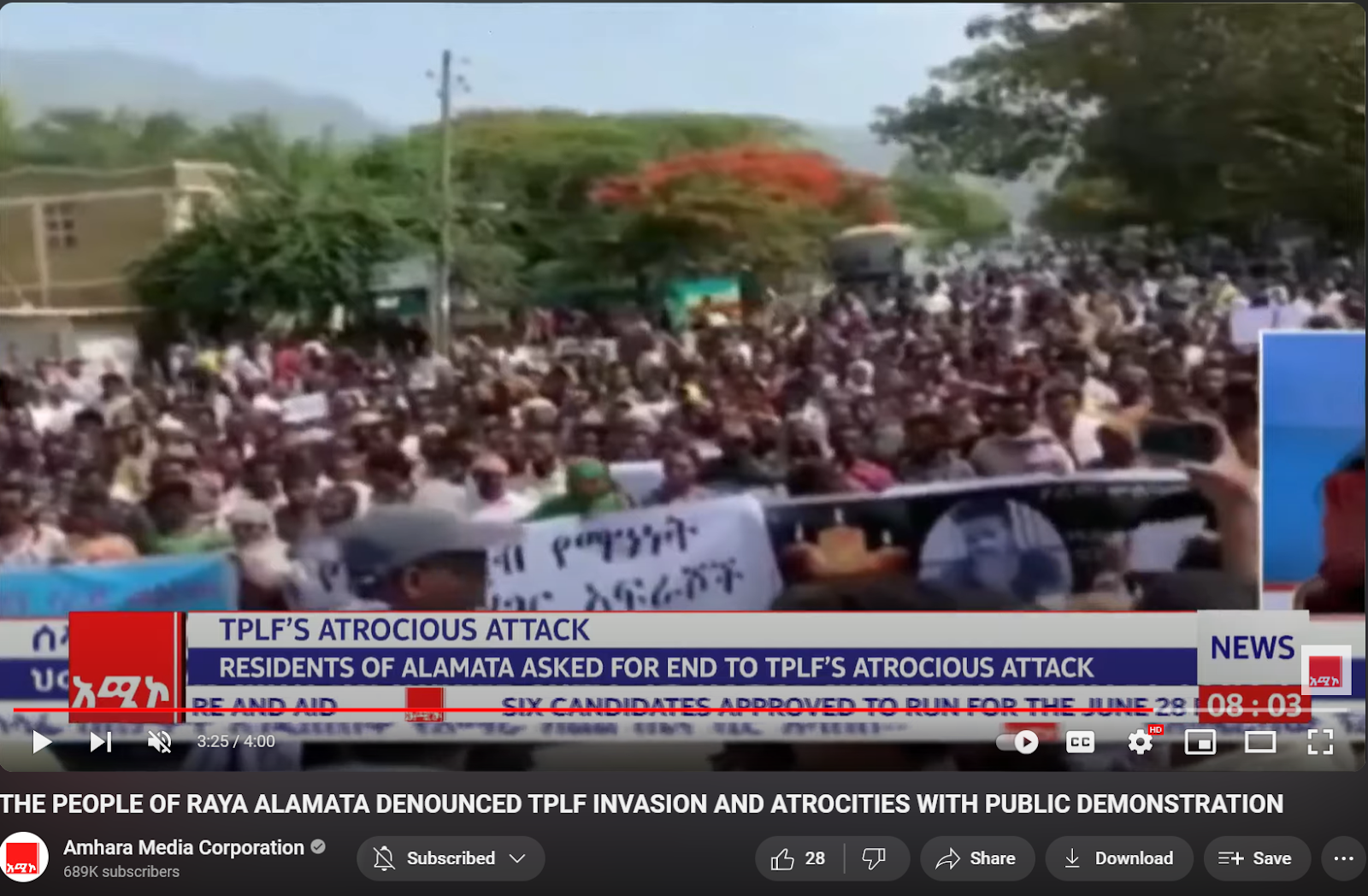
Haqcheck inspected the video and found that the video was shared in Mainstream media like Amhara Media Corporation. As of the videos we can see that the demonstrations were not a protest against Fano militants. 

We can learn from the demonstration itself being about Raya, as we can also see from the banners they held as proof that it was in Raya not in Gondar.

Haqcheck investigated the video and found that it was shared in mainstream media outlets such as Amhara Media Corporation, and the video shows that the demonstrations were not a protest against Fano. The demonstration takes place in Raya, not Gondar, as stated in the tweet. We can learn this from the demonstration itself, as well as the banners they held, which prove that it was in Raya rather than Gondar.

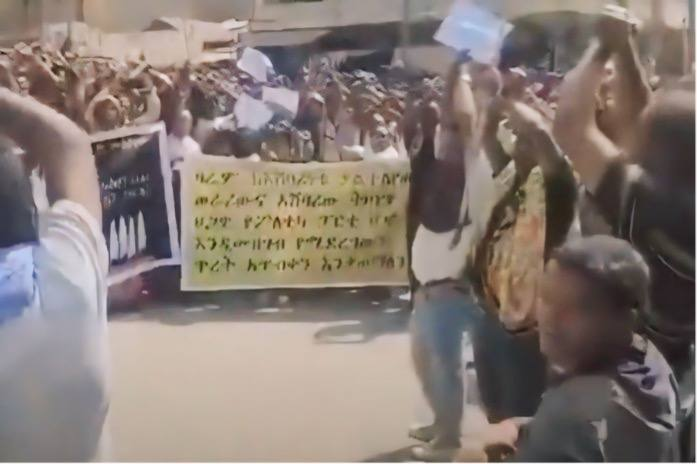
The banners in the clip mainly convey ideas that oppose the re-registration of TPLF as a party after being designated as a terrorist organization during the Tigray war in 2021, The Ethiopian parliament passed legislation allowing the Tigray People’s Liberation on June 4.2024.

This is one of the banners seen in the demonstration (readers can see in full clips) that protested against the re-registration of TPLF as a party again in 2024. This disagrees with the claim made by the tweet alongside the clip. We can clearly see the claim does indeed not accurately define the reason for the demonstration, the context tweeted by the user is solely direct as if the demonstration is a protest against Fano.

We can also clearly see a banner held by the protesters a guy named Yared Melkamu who was claimed to be killed by the TPLF forces in Raya. In Addition to all that the Amhara media corporation reported the demonstration from this, we can see it is not Gondar but Raya, even if the headline of the report which was “THE PEOPLE OF RAYA ALAMATA DENOUNCED TPLF INVASION AND ATROCITIES WITH PUBLIC DEMONSTRATION”.


Video link

Because of these reasons, we can conclude that the video doesn’t show a protest against Fano as claimed by the Twitter account. Users must share accurate information responsibly since social media pots can address many people, anyone who comes across with this kind of information must be alert before sharing it with others.

Exposed: The Deceptive Tactics of a Scam TikTok Account Promising Immigration to Canada

In the age of social media, misinformation, and scams can easily spread like wildfire. Recently, a TikTok account shared a video claiming that Canada is offering free job opportunities to individuals from various countries. The video gained significant attention and went viral.

However, HaqCheck implemented an investigation that revealed the video is nothing more than a constructed scam. Not only does it present false information about job opportunities, but it also deceptively showcases locations that are not in Canada but rather in Zanzibar, Tanzania.


Post link

Scammers often use a variety of ways to trick innocent individuals into accepting deceptive job offers abroad. A common technique is to promise lucrative jobs with minimum qualifications or expertise. These scammers advertise positions that seem too good to be true, such as work-from-home possibilities with large-scale payment. They rely on people who are desperate for work or want to get money quickly.

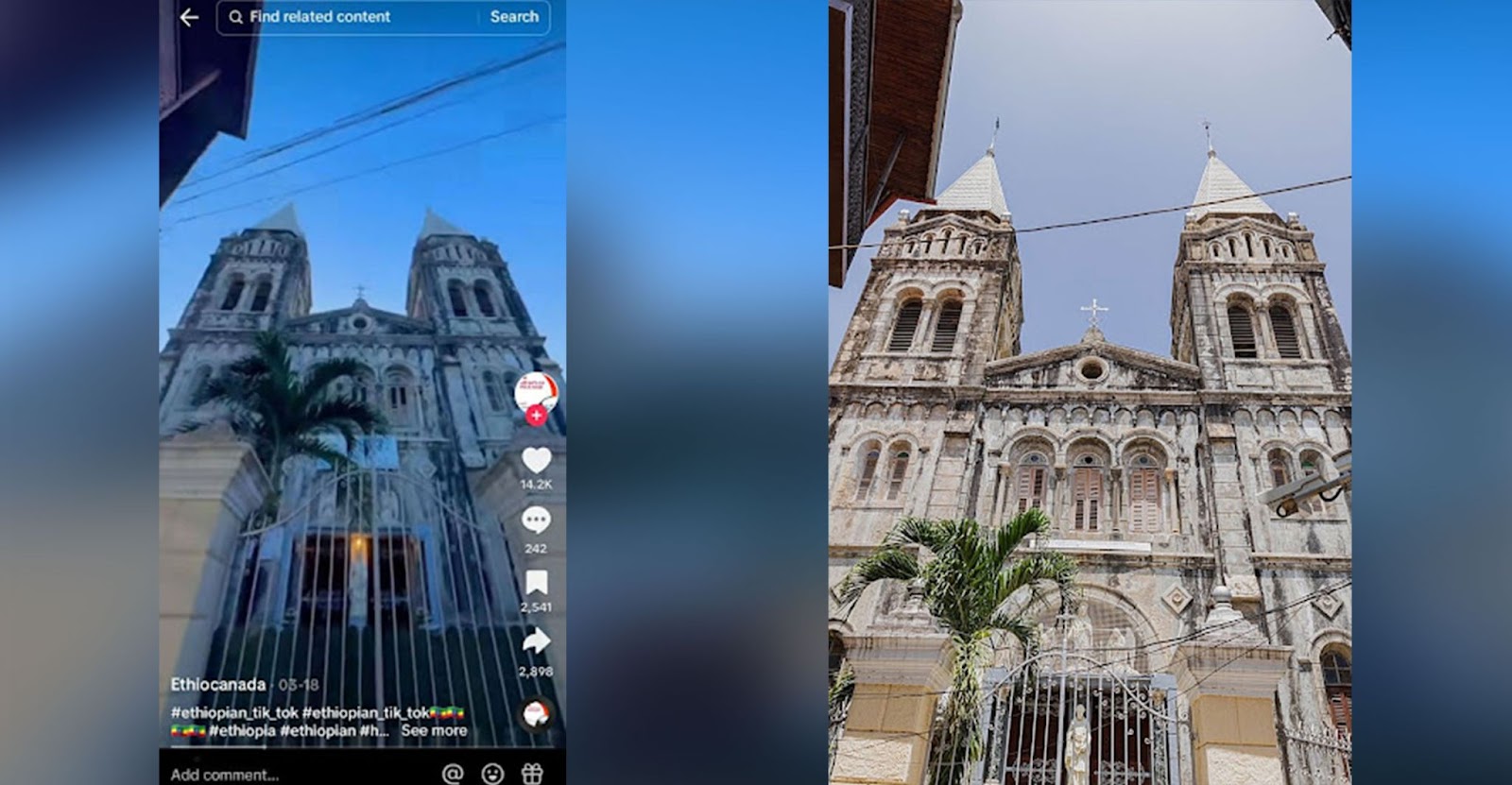
The TikTok video in question opens with a captivating tale, promising individuals the opportunity to work in Canada without any cost. It showcases picturesque locations, creating an illusion of Canada’s beauty and prosperity. However, closer investigation reveals that the areas represented are not in Canada, but in Zanzibar, Tanzania.

The footage below was discovered in Zanzibar together with claimed by the video as being from Canada. 

   
TikTok footage | Footage from Zanzibar  


TikTok footage | Footage from Zanzibar 

The video’s sole purpose is to captivate viewers and redirect them to websites for monetization through Google ads.

The scammers behind the video not only manipulate images and locations but also misuse the reputation of famous TikTokers, including Bereket Tesfaye, an Ethiopian TikToker who is currently residing in Ethiopia. By featuring Bereket Tesfaye and portraying him as someone enjoying the benefits of the scam, they aim to lend credibility and authenticity to their false claims. This exploitation of influencers’ images and narratives further deceives viewers and increases the trust factor associated with the video.


Fake | Original 

The TikTok account responsible for the video goes by the name “Ethiocanada“. This account showcases a range of videos, including online job opportunities, immigration ideas for free, and even fake gifts from official organizations like Ethio Telecom. By combining various deceptive tactics, such as falsely associating with official entities and presenting enticing offers, the scammers aim to attract a larger audience and exploit their aspirations for a better life.
The primary motive behind such scams is financial gain. The scammers intend to attract a large number of viewers to their websites, where they can generate revenue through Google ads. By presenting false information and exploiting people’s aspirations for better opportunities, they capitalize on the trust placed in social media platforms.

It is crucial to verify the credibility of sources and cross-reference information from a reliable platform. The deceptive TikTok video claiming free employment opportunities in Canada, while showcasing locations in Zanzibar, Tanzania, serves as a stark reminder of the prevalence of scams and misinformation in the digital age. By understanding the motives behind such scams, recognizing the misuse of influencers, and equipping ourselves with knowledge and critical thinking skills, we can protect ourselves and others from falling victim to deceptive practices.

Challenging EBC’s Facts: The Tizita Geremew Controversy

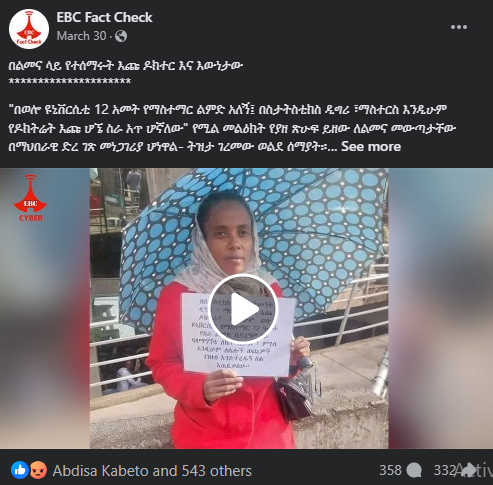
A Facebook post by EBC fact-check, a fact-checking unit of Ethiopian Broadcast Corporation, regarding Tizita Geremew, a PhD student and former lecturer at Wollo University, garnered significant attention on social media. EBC fact-check explored the story of Tizita, formerly a statistics teacher at Wollo University, with the headline “The Beggar Candidate Doctor And The Truth.” The post asserts Tizita’s situation based on an interview with Wollo University’s human resource director, Bedimariam Akalu. Bedimariam explained to EBC fact-check that Tizita Geremew used to teach at the university but faced challenges in attending classes consistently and struggled to teach effectively due to mental health issues and other difficulties. He further stated that despite Wollo University’s recommendation for her to remain, Tizita resigned due to her ongoing health concerns.

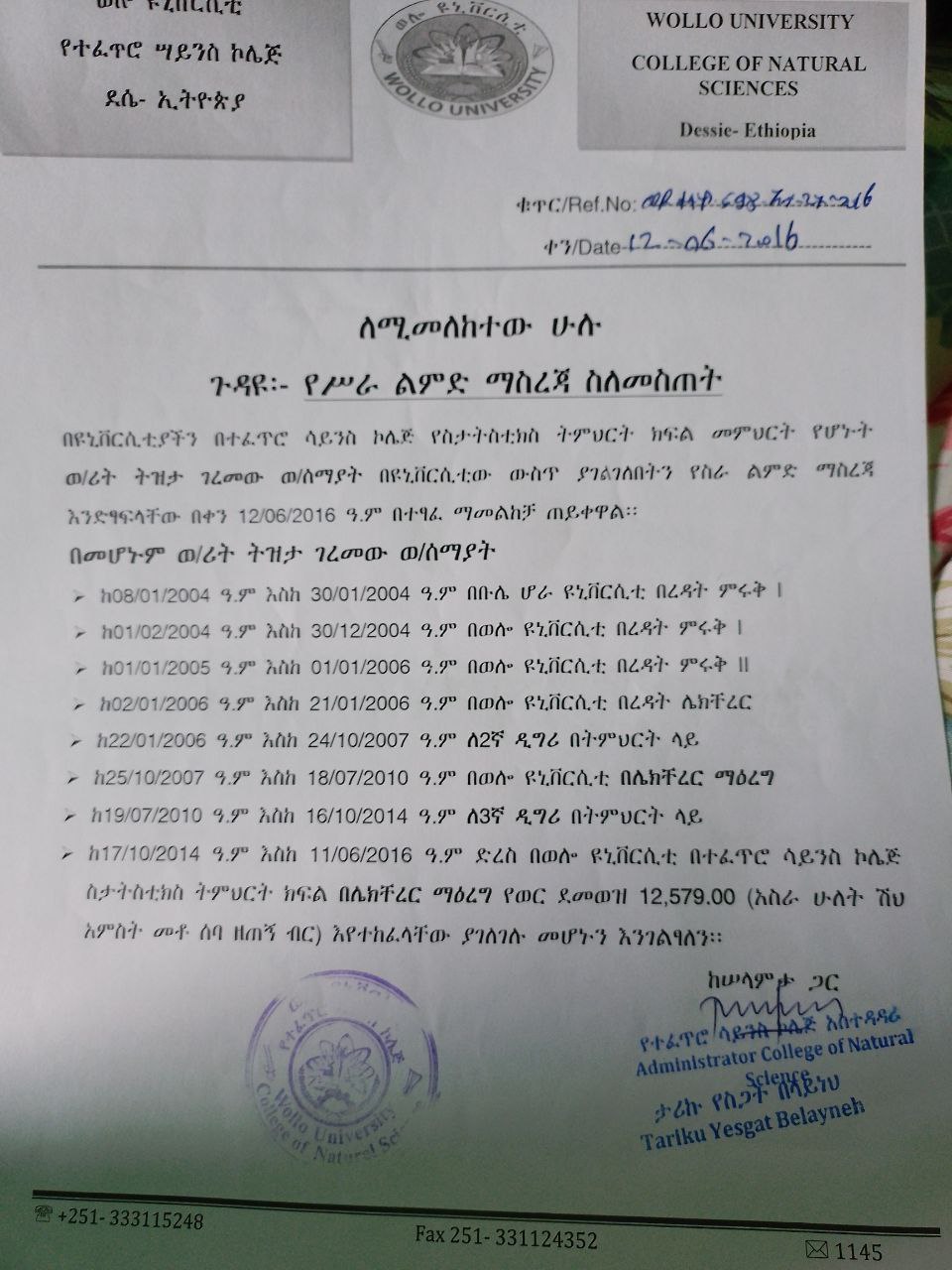
Tizita Geremew has been teaching statistics at Wollo University from 2012 to 2024. As HaqCheck can see in the service certificate she acquired, she moved to Addis after she quit her teaching job at the university after asking for her work experience letter from the university in August 2023 and left on February 20, 2024, she quit mainly because of her current health issue and the economic barriers she faced there. The question of survival didn’t get an answer when she moved to the capital, Addis Ababa, forcing her to go out to the streets and ask for help. 

EBC fact check refers to Tizitas’s situation after claiming to check the truth behind her, which includes only one phone call to Wollo University’s human resource director. The article, which tends to bring the truth to the audience, uses one phone call to conclude Tizitas’s financial situation and current struggle to live. EBC posted the conversation they had with the HR director of Wollo University, who referred to Tizita as a mentally ill person and then added that she didn’t accept the offer made by Wollo University not to quit her job.

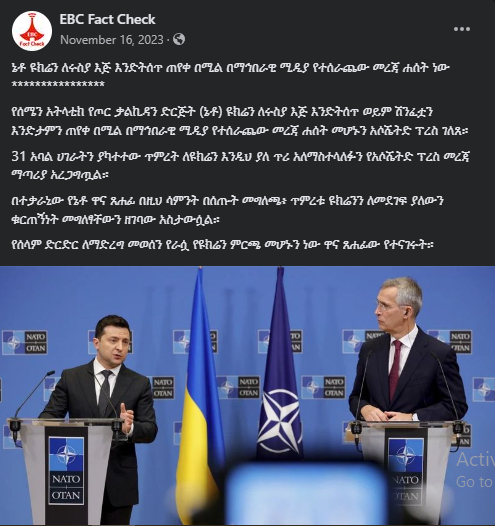
As HaqCheck investigated the previous posts, EBC Fact Check most likely seemed interested in sharing details on claims it had found to be misleading regarding government-affiliated entities. As is evident, the fact-checking page contains quite a few non-governmental and foreign incidents; instead, announcements taken from institutions of government such as the Commercial Bank of Ethiopia, Ethiopian Airlines, Government Communication Service, Information Network Security Administration, City and Federal security forces, and others make up over 90% of its content. Instead of being a fact checker, the website might be imagined as a reporter. Sometimes, it simply shares information without providing any evidence of its own or by using other fact-checking organizations like AFP as a source.


EBC fact-check failed to follow the basic fact-checking process that can lead to the truth; from the above article and clip, any third party dare say that EBC didn’t conduct and deliver a shred of evidence proving the claim that the HR director has made of Wollo University. The fact-checking process did not evaluate the information they got from the story’s owner, which will make it be presented unfairly. The claim made by the HR manager and then by EBC presumed Tizita’s mental health without any proof. EBC fact-check is needed to fully understand the content of their fact-checking, leading to misuse of the contexts in Tizitas’ situation. Tizita was seeking only financial support, whereas EBC fact-check tried to contact Wollo University as if she was trying to defame the institution. 

In our investigation into the EBC fact check’s coverage of the woman formerly employed at Wolo University, we conducted a phone interview with Tizita Geremew. This interview provided valuable insights into the circumstances surrounding her departure from the university and challenged some of the claims made by EBC. Former statistics teacher Tizita spent twelve years teaching with additional community work. She was also a dedicated and respected member of the faculty, and her decision to leave was influenced by external factors unrelated to her mental health. Tizita believes that the claim made by the university will make her struggle to get a job and it also has the potential to cause discrimination against her. Tizta underlines that she doesn’t have any mental health issues. She added that she was teaching there and studying while the director worked in the human resource department. The Director mentioned that she had a mental illness without any medical proof. From her words, she only met the HR Director twice, making the individual unfit to assume Tizita’s health situation. 

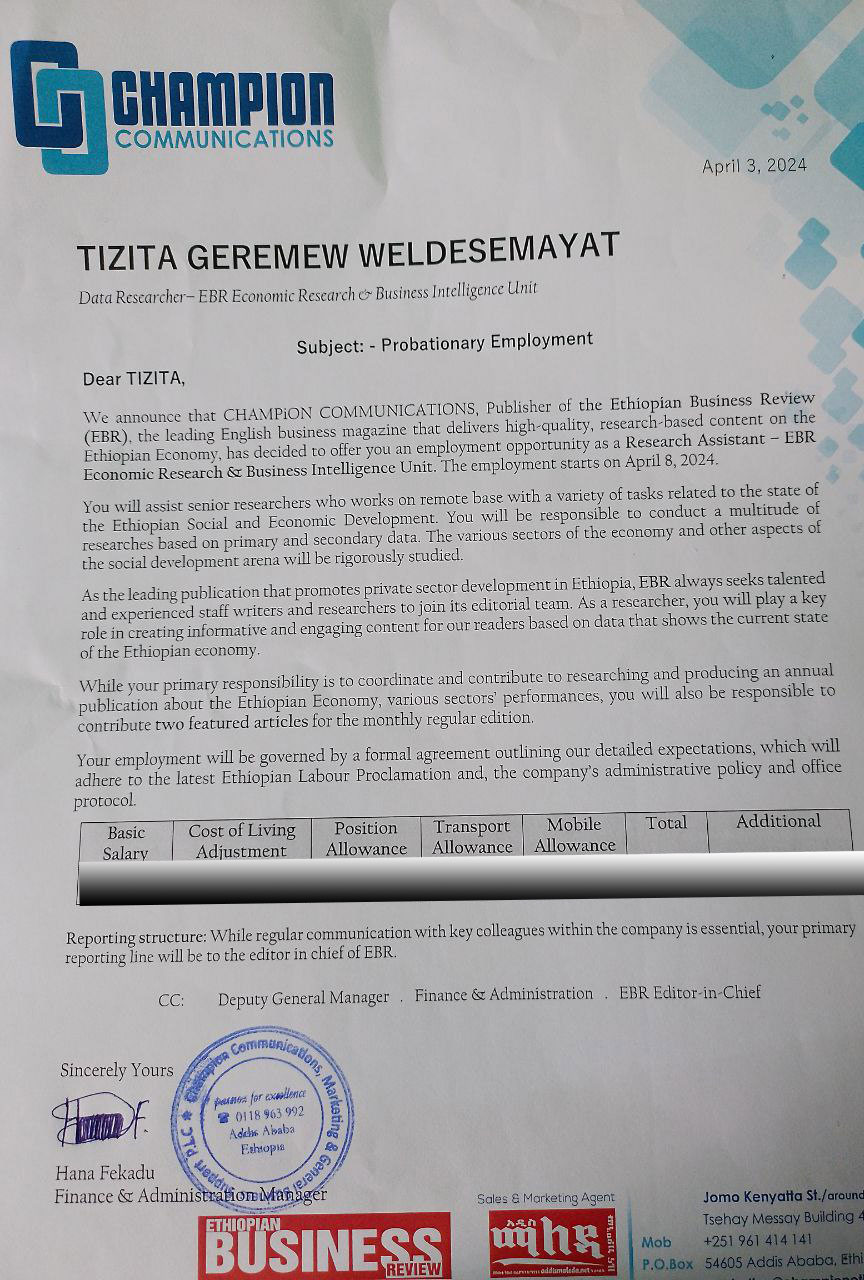
We have also received documents from Tizita Geremew proving her significant employment history at the university. The letter from the college administrator, combined with her experience letter and other credentials, demonstrates her active involvement in statistics and related subjects. These documents are essential for validating Tizita Geremew’s professional background and expertise. The experience letter will likely explain her duties, responsibilities, and accomplishments at the university. Furthermore, her diplomas confirm her qualifications and expertise in statistics and related fields. These materials provide a detailed picture of Tizita Geremew’s academic career path, highlighting her dedication and expertise in her subject.


In examining EBC’s coverage of Tizita’s situation, it becomes evident that their fact-checking process exhibits several noticeable lapses; on April 23, 2024, a journalist at EBC who wanted to stay anonymous stated that “it was necessary to verify the information from multiple sources instead of relying only on one.”, He then added, “Tizita needed to deliver documents.”, but as we can see from their report, they didn’t ask her or try to involve her in the checking process before publishing the post. One of the primary shortcomings of the EBC fact-checking process is its reliance on a single source of information, which was only the university’s human resources. They only depend on the perspective of one individual. EBC fact checks may have overlooked alternative viewpoints but failed to comprehensively understand the situation.

Furthermore, EBC’s coverage appears to lack cross-checking of the claims made by the university regarding Tizita’s mental health to ensure accuracy. The absence of cross-checking raises concern about the ”EBC fact check” fact-checking process. Lastly, EBC didn’t follow up with deceptions to ensure the accuracy and completeness of their fact-checking, even if the aim was to reveal the truth. From our interview with Tizita and the documents she shared, Tizita started working at “Champion Communication” as a data researcher in the EBR Economic Research and Business Intelligence unit on April 3, 2024.

Journalism has its ethical principles that journalists must follow. Privacy is one consideration that journalists need to be responsible for. EBC Fact Check coverage of Tizita’s situation raises concern about the invasion of Tizita’s privacy rights. Hailegiorgis Mamo(PhD), media ethics lecturer at the School of Journalism at Addis Ababa University, argues that since the Tizita story involves private health details it must not be displayed by EBC also Wollo University since it is confidential, in the sense of journalism this kind of personal details need to be safeguarded by media. “Regretfully, both parties divulged delicate personal information that might hurt her future professional and interpersonal relationships.” There are some ethical considerations during any kind of fact-checking. The claim made by the university HR head on the mental health of Tizita must have been kept and protected by the university and EBC. Publicly disclosing sensitive information about her mental health without her consent or proper verification, EBC may have infringed upon Tizit’s right to privacy.

In conclusion, the post made by EBC that covers Tizita’s situation reveals significant ethical concerns of journalism regarding accuracy, transparency, and privacy rights. Only relies on a single source and tends not to cross-check, potentially violating Tizita’s privacy and implicating Tizita’s well-being. The EBC Fact Check report raises questions about the standards of a responsible journalist and the fact-checking process. Moving forward, media organizations like EBC must do their journalistic work reasonably and prioritize thoughtful reporting. This can be achieved by adhering to all guidelines, consulting, legal expertise, and reporting for accurate outcomes only.

October monthly disinformation trend analysis

Disinformation in Ethiopia in October 2023 was driven by the conflict between Fano militias and Ethiopian government forces. Disinformation was spread through a variety of tactics, including altered and old videos, recycled claims, and false images.

The armed conflict involving Fano militias and Ethiopian government forces significantly contributed to the dissemination of disinformation last month.

Below are some of the disinformation themes tracked across the Ethiopian social media landscape during October.

Violence against civilians by ENDF soldiers

Social media in Ethiopia has been circulating false claims about violence by the Ethiopian government against civilians in the Amhara region.

A user on An X (formerly known as Twitter) shared a video claiming that it showed Ethiopian National Defense Force (ENDF) soldiers recently beating up civilians in the Amhara region.

HaqCheck investigated the claim and found that the video was old and had been posted on Twitter on May 13, 2021, with a description that it showed Ethiopian army soldiers beating up and terrorizing Tigrayan civilians during the armed conflict between the Ethiopian government and the Tigray People’s Liberation Front (TPLF).

Afar militants joined Fano in opposition to the Ethiopian government

False information was being circulated on the Ethiopian social media landscape claiming that Afar ethnic militants were teaming up with Fano militants in opposition to the Ethiopian government.

One example of this disinformation campaign was a Facebook post that shared an image claiming that Afar militants were fighting the Ethiopian military supporting Fano militants.

However, the post used an old image from May 2021 to support their claim that the Afar and Fano militias were fighting together. The original description of the image said that it showed armed conflict between Afar and Somali militants.

Government looted and smuggled artifacts

Another theme of disinformation in October revolved around a claim that the Ethiopian government looted and smuggled precious artifacts.

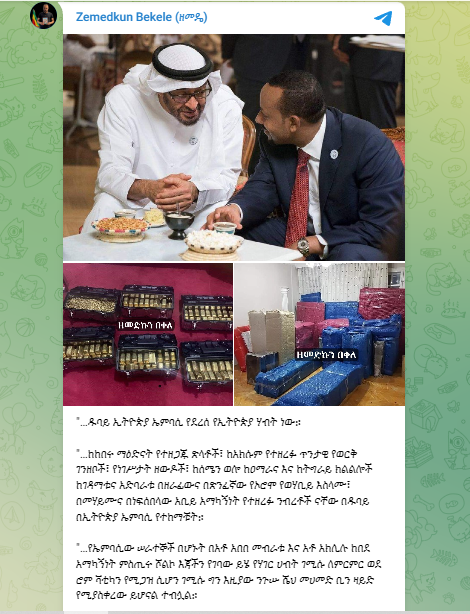
A Telegram channel with over 334,000 members shared two images on October 4, 2023, claiming that the Ethiopian government had stolen artifacts, replicas of the Tablets of Stone, ancient gold coins, and crowns of kings from the Amhara and Tigray regions and smuggled them to the United Arab Emirates (UAE).

However, the images were old and had been previously published on websites. One image, showing gold bars, was published on a website called PicLoc and is for sale. The second image, showing household items, was published on a Turkish website and is used to describe a house-to-house transportation service company.

The Ethiopian government bombed residential areas

One of the themes of disinformation in October was that the Ethiopian government was indiscriminately bombing the Amhara region, including civilian and densely populated residential areas.

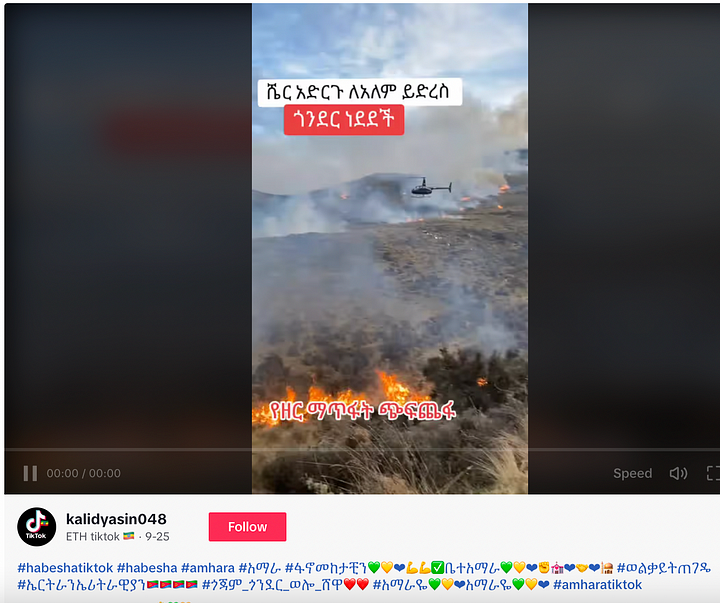
For example, a TikTok video shared a video of burning buildings and claimed it showed the city of Gondar being bombed by the Ethiopian government.

However, the video was previously published on social media in August 2023 by Way To Go Heliservices, a company in New Zealand that provides helicopter services. The video shows a helicopter burning weeds.

Recommendations

HaqCheck advises social media users to exercise critical thinking when evaluating information encountered online and to verify claims from unknown or unverified sources before sharing them.

Social media content creators should be responsible and avoid disseminating false or misleading information.

We urge public institutions and other relevant entities to provide regular and timely updates.

Access to information is essential to reduce the widespread circulation of disinformation. The government should ensure the public and media’s right to access information.

Exit mobile version