A Facebook page with more than 184 thousand followers posted an image with the caption “After Comrade Marro gave orders to Oromo Liberation Army to control Finfine, Oromo Liberation Army has started its journey to Finfine.” The post has more than 1000 reactions and by the time this article is published, the post had been shared more than 100 times.
However, HaqCheck looked into the images and rendered the post as FALSE.
The Oromo Liberation Army (OLA) was a military wing of the Oromo Liberation Front (OLF), which was founded in the 1970’s to fight for the self-determination of ethnic Oromo groups. In 2018, following promises of political reform by the newly appointed Prime Minister Abiy Ahmed, the OLF was decriminalized and permitted to participate in the country’s political landscape.
As the government ushered OLF into the political space OLA’s name had begun to be heard on the scene when OLA started to kidnap, assassinate officials and commit other crimes across the Oromia region. Later on, may 1, 2021, the FDRE House of Peoples Representatives officially designated the Tigray People Liberation Front (TPLF) and the Oromo Liberation Army (OLA) as terrorist organizations.
On August 11, 2021, the OLA leader Kumsa Diriba also known as Jaal Marroo has told Associated Press (AP) that the group has formed an alliance with (TPLF) and there were plans among other opposition groups to establish a “grand coalition” against Abiy Ahmed’s Government. On November 1, 2021, BBC’s African correspondent Catherine Byaruhanga made a video report entitled “Ethiopia’s secretive armed group” in which the group’s operations and training are shown along with interviews of top leaders. In the report, Jaal Merroo told BBC that OLA had taken control of several towns in southern, western, and central Oromia.
The Facebook post is published in this narrative framework. However, HaqCheck has probed the post’s images using Google reverse image search to learn that they don’t really support the claim. The original image was first posted On July 13, 2021, by a non-profit journalistic website platform genevasolutions.news with the title “UN rights body passes resolution on Ethiopia’s Tigray region.” The post raises issues about the United Nations Human Rights Council adoption of a resolution calling for the withdrawal of Eritrean troops from Tigray and expressing its deep concern over the human rights abuses in the region since the conflict began. However, the image in the post is ‘photoshopped’ into the original picture, by adding a photo of a group of soldiers.
Even Though there are several claims of OLA’s expansion in some areas, the image is vividly manipulated to be photoshopped and doesn’t actually show OLA’s journey to Addis Ababa. Therefore the post is rendered as FALSE.
A Facebook page with more than 180,000 followers posted an image with a caption saying that the Oromo Liberation Army (OLA) had captured different weapons from the government forces. The post that was shared on November 1 received more than 1,900 reactions in under 24 hours and, by the time this article was published, had been shared more than 310 times.
HaqCheck looked into the post and rendered it as False.
The Ethiopian government designated the Oromo Liberation Army (aka OLF Shene) as a terrorist group along with the Tigray People Liberation Front (TPLF) on May 1, 2021. The two groups announced their alliance on August 11. After the war in Tigray spread to the neighboring regions Afar and Amhara, TPLF started marching to different cities and towns including Dessie and Kombolcha. On November 1 OLA said they had seized the town of Kemissie, around 335 km from Addis Ababa. It was in this context that the Facebook claim appeared.
However, a reverse image search shows that the original image only shows a vehicle with 2 passengers. The image can be found in different Facebook posts, from August 6, 2021. Most of the images are posted by TPLF affiliated pages, along with other photos claiming to show captured weapons around Woldiya. However, the image in the post is ‘photoshopped’ into the original picture, by adding a photo of a group of soldiers.
One of the ways to spot a photoshopped image is to take a closer look at the image. Red flags such as pixel differences, color variations, blurry edges, shadows, size relativity are tell-tale signs to give away an edited picture. In this particular case, seeing the way the soldiers are standing on the ground and how it doesn’t match with the size of the vehicle is one thing. The other thing is the shadow under the car which is a natural case that should also apply to people.
Therefore, due to the above reasons, the Facebook post claiming to show that OLA had captured weapons from the government is rated as False.
A Facebook Account published a video on October 28, 2021. The Video’s Amharic description reads, “Abiy Ahmed and Daniel Kibret cannonading in Wollo and Dessie using city residents as a shield with an intention of causing civilian massacre…”.
Until this article was published, the post had been shared more than 99 times and with 3000 views. However, the video in the Facebook post doesn’t show the claimed cannonade in Dessie, and the post is rendered False.
Tigray People Liberation Front (TPLF) forces and the Federal Government of Ethiopia have been an inactive war in Northern Ethiopia Since November 2020.
At the end of June 2021, the federal government declared a sudden unilateral ceasefire and pulled out its troops from Tigray after a request from the provisional government of the region.
Reports of fresh military offensives and counter-offensives have reportedly aggravated recently. The Federal government has launched airstrikes repeatedly since mid-October.
Recently the war has widened its scope. It is being reported that the TPLF is still continuing its expansion towards the neighboring Amhara Regional State, and particularly to the Southern parts of Wollo province. Dessie is a metropolitan city located in the South Wollo Zone.
Given its political and strategic importance, the City is eyed by the TPLF as a key target through its expansion in Wollo, which would give it a significant stronghold. Media outlets reported that there is still an active war around Dessie.
The Facebook post was circulating amid this situation.
However, a reverse image search of screenshots from the video revealed that the video is neither from Ethiopia nor shows a recent incident in the country. The footage found shows a “Rehearsal for the victory parade 2016” in Novosibirsk, a city in Siberia, southern Russia, on May 9, 2016, dated even before the war began. Therefore, the post is confirmed to be False.
Media and information literacy is the ability to access, create, evaluate, interpret and share media content or information. It is crucial particularly to a society with lower literacy, especially for those with a less developed media and information ecosystem.
With the ongoing armed conflict and disinformation being rife, media and information literacy become even more important for those in Ethiopia.
Last week HaqCheck was engaged in a number of media literacy campaigns and activities to mark the tenth annual Global Media and Information Literacy (MIL) week. The annual global media and information literacy event was designated by UNESCO in cooperation with the UNESCO MIL Alliance, the UNESCO-UNAOC MIL and Intercultural Dialogue (MILID) University Network, and other partners in 2012.
This year’s gathering was held in South Africa from 24 to 31 October 2021, with the slogan “Media and Information Literacy for The Public Good”.
The concept of media and information literacy was coined by UNESCO in 2007. It includes all competencies regarding information and media literacy that also include digital or technological literacy. According to UNESCO, it focuses on different and intersecting competencies to transform people’s interaction with information and learning environments online and offline.
As media and information literacy is one of the areas that we focus on, HaqCheck organized a media and information literacy campaign throughout the week.
Across popular social media platforms such as Facebook, Twitter, Telegram, and YouTube, it seems that the major forces that help disinformation dissemination are social media users that have lower media and information literacy. Most of the users that share false and fabricated social media posts don’t seem to have knowledge regarding the issue. They just believe it and share it with others.
The actors who intentionally fabricate and post false disinformation are few in number while the amount of social media users who consume and share the information unknowingly are large. This implies a wider gap in media and information literacy among Ethiopian social media users.
HaqCheck committed resources to organize activities in order to raise awareness of media and information literacy during the week.
HaqCheck had used different ways for media and information literacy awareness creation, including mainstream media, social media, and awareness creation outreaches.
Outreaches and Brochures
HaqCheck prepared brochures and distributed them to raise awareness on information disorder types. We highlighted the types of false information which are disseminated in Ethiopia, and how they massively circulate, as well as underlining the skills required to identify and prevent false information.
We brief and counsel people across some of the streets of Addis, to raise their awareness and skills regarding identifying and avoiding disinformation trolls.
Online Training: The Basics of Fact-checking
HaqCheck gave a training session for social media users on how to identify and check false information during a conflict. The training was held on Facebook. We gave tips to social media users on how to spot false information before they consume or share it, and show skills to identify which information is ‘fact checkable and which is not. This was in addition to practical steps to help with fact-checking and verifying information.
Many social media claims use false images in their posts to deceive users into believing the claim. HaqCheck provided training on how to fact-check images and undertake reverse image searches which are embedded in claims.
Clubhouse Discussion
HaqCheck hosted a discussion on Clubhouse, a trending audio communication social networking site, about disinformation and the lack of media literacy during the conflict in Ethiopia. The discussion included guests with different skills and backgrounds where communication experts and media literacy advocates – as well as fact-checkers – shared their points to address the issue.
Broadcasting Outlets
HaqCheck also organized a media and information literacy campaign by collaborating with TV channels and radio broadcasters to raise awareness during the week. Fact-checkers at HaqCheck gave interviews regarding the matter for TV stations such as Walta TV, Prime Media, VOA Amharic and radio stations like Ethio-FM and Ethiopian Broadcasting Corporation (EBC)-radio.
Our fact-checkers explained the nature and metamorphosis of disinformation trends and their impacts in Ethiopia. They elaborate on the challenges of information disorder going forward.
The overall activities were a starting point to raise the conversation and to create awareness. However, HaqCheck believes that the issue is not talked about enough and plans to do larger campaigns in the future to raise the public’s media and information literacy. To do that, we believe dedication to the issue and collaboration between stakeholders is needed.
—————————————————————————————————————————————————
HaqCheck is a local multilingual fact-checking project based in Ethiopia, formed inside Addis Zeybe’s newsroom, now Inform Africa’s Counter Disinformation Project – a board-led Civil Society Organization (CSO) – dedicated to verifying media contents from social to the mainstream. HaqCheck works in collaboration with media outlets to monitor media contents in English and four local languages (Amharic, Afaan Oromo, Tigrigna, and Somali).
This report is produced with the support of UNESCO under the #CoronavirusFacts: Addressing the ‘Disinfodemic’ on COVID-19 in conflict-prone Environments that the UNESCO Addis Ababa Office is implementing in Ethiopia with financial support from the European Union (EU). The designations employed and the presentation of material throughout this publication do not imply the expression of any opinion whatsoever on the part of UNESCO or the EU concerning the legal status of any country, territory, city, or area or of its authorities, or concerning the delimitation of its frontiers or boundaries. The ideas and opinions expressed in this publication are those of the authors and do not necessarily reflect the views of UNESCO or The European Union and do not commit these organizations in any way.
A Facebook page with more than 240 thousand followers shared a post reporting that “18 trucks that were transporting thousands of TPLF forces heading to Afar were destroyed by the Ethiopian Air Forces.” Until this article was published The post had been shared more than 90 times and obtained more than 1,600 reactions.
However, the post is rated as False due to its inexact use of images to support the claim.
Reports of fresh military offensives have come out recently. The Ethiopian Federal Government has been conducting airstrikes there have been more than four Airstrikes since October 18. The airstrikes have grabbed the attention of major global news and social media outlets. After the attack, the two belligerent parties have come up with their own reports about the strike. Soon after the airstrikes, TPLF has accused the Ethiopian Government of targeting civilians and personal properties in the airstrike. On the contrary, the Ethiopian federal government spokesman Leggesse Tulu has told Associated Press that the airstrikes in Mekele targeted a former military training center which was being used as a “battle network hub” by rival TPLF forces.
Haqcheck has used a google reverse image search to validate whether the image shows an attack by the Ethiopian Air Force or not, and the search led us to a 30-second short video released by the Newyork Times in February 13, 2021.
The video shows an exploded fuel tanker at a crowded border post in western Afghanistan, Kabul. The tanker exploded on Saturday afternoon which set off an enormous fire that spread to more than 100 other tankers as intense flames. The catastrophe claimed the lives of 17 people.
Even though there are different wrecking claims regarding the airstrikes in the north, the image doesn’t actually show an airstrike bombardment by the Ethiopian Air Force. Therefore due to the wrong usage of an image to support the claim the post is rendered as FALSE.
The Ethiopian government conducted airstrikes in Tigray. The first one was carried out on Monday last week and a fourth strike was conducted on Friday. It signals an escalation of the 12-month armed conflict between belligerent parties led by the Tigray People’s Liberation Front (TPLF) on one side and the federal government on the other side.
The airstrikes have grabbed the attention of major global news outlets. Instantly, the belligerents rushed to give their own version of reports on the airstrikes.
Soon after the airstrikes, TPLF and its affiliated regional state media reported the airstrike and accused the federal government of intentionally targeting civilians and private properties. They claimed that the airstrikes were meant to deliberately massacre civilians, destroy public and private properties, and to terrorise the people.
The federal government on the other hand stated that the air attacks were targeted on TPLF’s armament maintenance buildings, military training centers, and bases previously belonging to the Ethiopian army and currently being used by TPLF.
Irrelevant Images
A tendency of using images that are irrelevant to a particular reporting has been trending even by renowned global news outlets. Using irrelevant pictures without the appropriate description contributes to information disorder. The impact may also be bigger in contrast with the level of media illiteracy of the Ethiopian public.
For instance, Reuters, France24, and Egypt Independent used irrelevant images and some of them without description in their reports about the recent airstrikes by the federal government in Tigray. Three of them used different images that depict damaged military tanks. They might have used such images to show ongoing active war, but it contributes to information disorder or even misinformation.
Another reporting by Daily News Egypt on Facebook also used an image from November 16, 2020, without any description. The image was also previously fact checked by HaqCheck as a subject of another claim.
Even though there is a description and caption embedded under the images, using images unrelated to an issue might still mislead and misinform the public. The reporting of Aljazeera titled “Air raids target capital of Ethiopia’s Tigray; 3 civilians dead” used an image from June, showing an injured woman being hospitalized, as its cover. Even though the caption of the image clarifies when it was taken, it still potentially misleads the audience and creates controversy about whether civilians were attacked or not by the airstrike.
Misquotation of the Prime Minister’s speech
The Telegraph, a UK based news outlet reported that Ethiopian Prime Minister Abiy Ahmed (Ph.D.) threatened to stop food aid from entering the country.
The newspaper stated that Abiy indicated in his speech that he may stop international food aid from entering into Tigray to diminish diplomatic pressure on the country.
The PM made the speech during a visit to Oromia Regional State with regional and federal government officials.
In a statement issued on October 20, 2021, the Ethiopian government stated that the PM said, “if we make sure that this thing called wheat [food aid] does not enter Ethiopia, 70 percent of Ethiopia’s problems will be solved” indicating his desire to see the country food self-sufficient.
Ethiopia Current Issues Fact Check-governmental public relation or fact checking initiative?
While the initiative of fact-checking by the government regarding ongoing issues is appreciated and is important at this time, the platform’s name ( fact check) and actions are often contrasting.
Even Though updating the public with timely information plays a great role in countering disinformation, the role of fact checking is different from news reporting. Fact checking needs monitoring controversies, claims and false information and giving the factual information based on solid evidence.
Instead of using the available information and evidence as an advantage to fact check the false information that has engulfed social media and the international media, the platform is observed playing governmental role in public relations and communication.
This undertaking is far from the standard of fact checking and may create confusion and misunderstanding of the public’s perspective of what fact checking is.
Wrong Images for Borana Drought
Recently reports have been coming out that the Borana zone, a southern zone in the Oromia Regional State, has been hit by drought. According to a report by Addis Standard, a local news outlet, thousands of people have been suffering from malnutrition and 7,540 cattle are dead due to the drought.
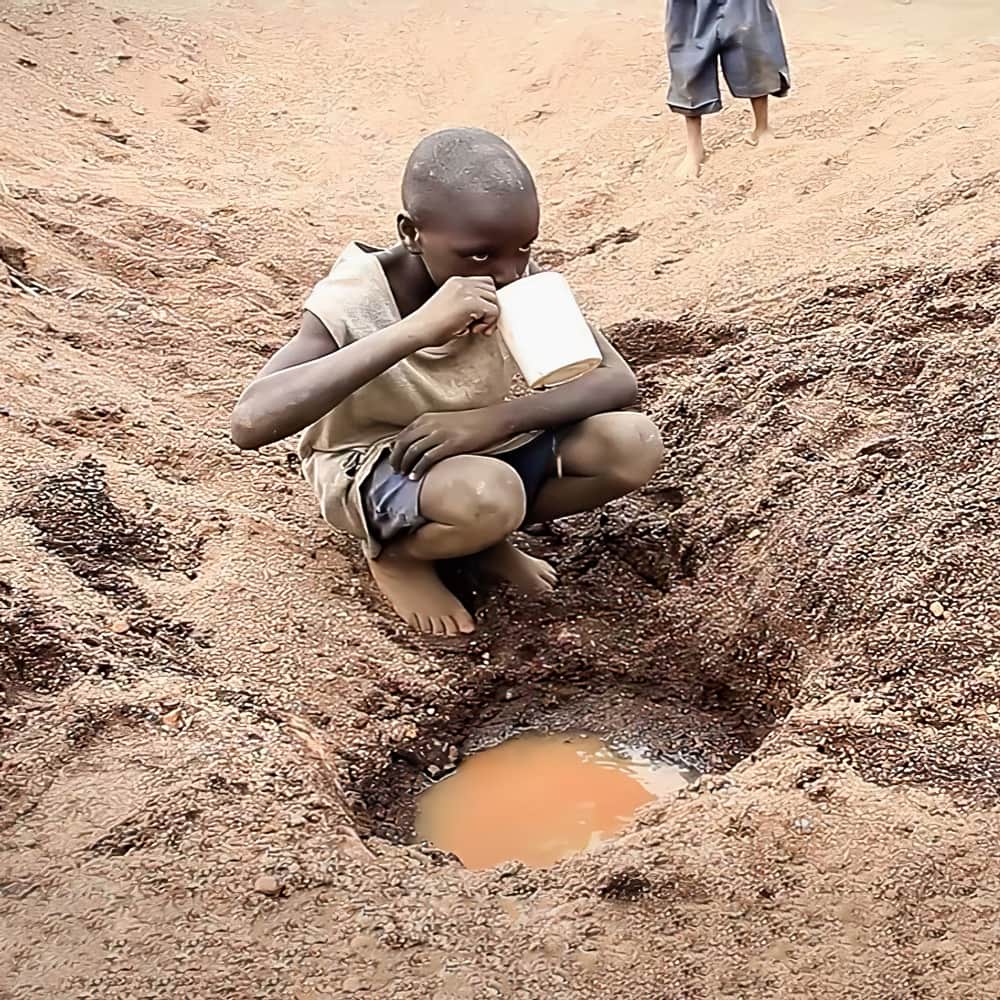
There were campaigns and reports on social media regarding the drought in Borana. Images that don’t actually show the reality in the zone were used mainly on Facebook. For instance, the image below was widely circulating on social media landscapes. While HaqCheck understands and shares the concerns over the matter, it has confirmed that false images were utilized and this image, however, is from another publication issued in March 2021 on a trending global safe water crisis. Here is an instant link to the original image.
Kombolcha Industrial Park used as a weapon depot
Another claim that proliferated in the social media landscape, particularly Twitter, was a claim that the Ethiopian army is using the Kombolcha Industrial Park as a military depot for storing weapons.
The tweets on the issue were disseminated with a hashtag campaign. The claim followed after allegations that the TPLF is using the premises of Mesfin Industrial Engineering, a large industrial complex in Mekelle, for military purposes. According to Reuters, the industrial complex was one of the targets during the recent airstrikes. The tweets had been circulating in many accounts.
Ceres Juice controversy
On October 14 the Ethiopian Food and Drug Authority (EFDA) announced that a toxin is found in a juice and the public should refrain from using it. The headline of the announcement originally written in Amharic reads, “The Authority advises the public not to use Cerece apple juice as it contains a 100% harmful toxin caused by mold.“
However, the manufacturing company and the importer blamed the EFDA for exaggerating the issue and misinforming the public. The matter is the report of the EFDA and other media outlets saying “100% harmful toxic elements found…” is a wrong way of addressing the issue. As the authority explained for EBS news the mistake happened during translation and what the statement should have said is “harmful toxic element found in Ceres 100% apple juice..” Due to negligent reporting the pub;ic was misinformed.
Norway offering visa lottery
Another misinformative content during the past week was a message on a Telegram channel that claims Norway is offering a visa lottery to foreigners. The link attached in the message refers to an application form requesting personal information. HaqCheck has contacted the Royal Norwegian Embassy in Addis Ababa and confirmed that Norway doesn’t offer a visa lottery opportunity, therefore the message is rated as False.
Recommendations
HaqCheck recommends news outlets use relevant images and/or put a proper description of the images used in their reports. As visual elements have very strong power in imparting particular information effectively, using unrelated and inaccurate images during reporting plays a prominent role in deceiving and misinforming the audience.
Government institutions should give accurate and timely information regarding ongoing issues. This also applies to the Ethiopia Current Issues Fact Check.
Media organizations should maintain professional accuracy during reporting and must depend on verified firsthand information. They have to avoid elements of ping-pong reporting that echo the claims of the two sides without independent inquiries.
Journalists and reporters should be careful in their reporting when translating, quoting and framing any information. Mistakes made due to poor journalism could become catastrophic and challenging to control. These kinds of mistakes may also misinform and mislead the public and result in urging people towards a wrong decision based on the information they got.
HaqCheck is a local multilingual fact-checking project based in Ethiopia, formed inside Addis Zeybe’s newsroom, now Inform Africa’s Counter Disinformation Project – a board-led Civil Society Organization (CSO) – dedicated to verifying media contents from social to the mainstream. HaqCheck works in collaboration with media outlets to monitor media contents in English and four local languages (Amharic, Afaan Oromo, Tigrigna, and Somali).
This report is produced with the support of UNESCO under the #CoronavirusFacts: Addressing the ‘Disinfodemic’ on COVID-19 in conflict-prone Environments that the UNESCO Addis Ababa Office is implementing in Ethiopia with financial support from the European Union (EU). The designations employed and the presentation of material throughout this publication do not imply the expression of any opinion whatsoever on the part of UNESCO or the EU concerning the legal status of any country, territory, city, or area or of its authorities, or concerning the delimitation of its frontiers or boundaries. The ideas and opinions expressed in this publication are those of the authors and do not necessarily reflect the views of UNESCO or The European Union and do not commit these organizations in any way.
A Facebook Account that has more than 119,424 followers published a photo on October 22. The photo’s Amharic description reads “Dessie Now.” In consideration of the identity of the owner of the post and the reaction comments, it is implied in the message that TPLF has controlled the city.
Until this article was published the post had been shared more than 55 times and with 700 reactions. However, the image is found not to be timely as claimed and is rated False.
Tigray People Liberation Front (TPLF) forces and the Federal Government of Ethiopia have been an inactive war in northern Ethiopia Since November 2020.
At the end of June 2021, the federal government declared a sudden unilateral ceasefire and pulled out its troops from Tigray after a request from the provisional government of the region.
Reports of fresh military offensives and counter-offensives have come out recently. The Federal government has launched airstrikes repeatedly since the beginning of this week.
Getachew Reda, the spokesperson of the TPLF said residential quarters were targeted by the airstrike. On the other hand, the Government announced that a former military base occupied by TPLF fighters was targeted, and denied the TPLF’s allegation.
In the context of this scenario, it is being reported that the TPLF is still continuing its expansion towards the neighboring Amhara Regional State, and particularly to the Wollo province.
Dessie is a metropolitan city located in the South Wollo Zone. It is 400 km from the capital Addis Ababa. It has a population of more than 200,000 people.
Given its political and strategic importance, the City is eyed by the TPLF as a key target through its expansion in Wollo that would give it a significant stronghold.
The Facebook post had been published amid this situation. However, a reverse image search of the picture shows that the photo was posted before, three years ago, on Jan 11, 2019. Even before the war began. Therefore, the post is confirmed to be False.
A link that has been circulating on Telegram claiming to be a “Norway Visa Lottery Application Form”, an opportunity facilitated for 45,000 people from all over the world, came to our attention. The message has been seen with more than 300 readers as of the time this article is written.
The link leads to a page that is alleged to be from “The Norwegian Directorate of Immigration”. The referred web page has an application form that collects personal information such as including address, email, password, and others.
The US Diversity Visa Lottery (DV), which started in 1955, avails 55,000 immigrant visas in an annual lottery. The 2023 Diversity Visa program (DV-2023) is announced to be open on October 6, 2021. The lottery application, which is available only online, will stay open until November 9, 2021.
On October 14, 2021, the Royal Norwegian Embassy in Accra, Ghana announced a scam alert saying “Please be aware of a scam text message that is currently being spread pointing to a website. The text message refers to a Norwegian Visa Lottery online Application Form and asks you to apply by referring to a linked web page. This text message and web page for application is a scam and has nothing to do with any official visa application system or procedure.” The statement warns, “No such lottery exists.”
HaqCheck has also contacted The Royal Norwegian Embassy in Addis to clarify the issue. The Embassy’s consular section confirmed to us, via email, that “Norway doesn’t have a visa lottery.” Besides, since the visa (residence/work permit) section of the Royal Norwegian Embassy in Addis Ababa is closed from August 1, 2019, requests are being sent to the visa section of the Norwegian Embassy in Nairobi.
Even though there are countries like the United States that have a visa lottery creating legal immigration opportunities, Norway is not officially offering a visa lottery.
Thus, the Telegram message is rendered False along with its suspicious deceitful intent of collecting personal information.
Reports over Facebook’s role in the dissemination of hateful content, misinformation and political unrest have emerged this week. A whistleblower called Frances Haugen, former employee of Facebook, accused the company of intentionally amplifying hateful and disinformation content in countries like Ethiopia.
She alleged that Facebook has a role in fanning ethnic violence in Ethiopia by amplifying hateful and divisive content.
Facebook has been one of the largest platforms where disinformation and other ill contents have been disseminated during the ongoing armed conflict in Ethiopia. HaqCheck has debunked multiple false claims with intentions of hate and disinformation for the last 11 months.
“One in five people have mental health problem in Ethiopia”
As World Mental Health Day was celebrated on October 10, mental well-being has been one of the major topics of discussion in the past week. While different reports were circulating to create awareness about mental health, one that caught the attention of many was the claim that “one in five people have a mental health problem in Ethiopia.”
Mental health problem is often associated with the condition most commonly known as Schizophrenia. However according to WHO, mental health problem includes depression, bipolar disorder, schizophrenia and other psychoses, dementia, and developmental disorders including autism. In this regard the issue that raised controversy – “one in five people suffers from mental health problems’ – refers to collective disorders in the category of mental illness, not only one specific disorder as explained by professionals.
This week, social media information disorder was higher than the previous one , among which reports of fresh offensives and counter-offensives had been the most highlighted topic . The belligerents have accused each other of launching offensives and of resorting to a violent means to the resolution of the armed conflict. Both issued statements trying to influence the local and international communities.
As such reports reached a crescendo, social media disinformation campaigns and controversies began to emanate from the social media. Images and posts on social media emerged claiming that the ‘enemy side’ was being destroyed and taken advantage of.
HaqCheck fact-checked an image posted earlier last week on Facebook with a claim that the federal-government-led forces already started an offensive using drones, air, and infantry. The image attached to the post to prove the claim shows a burning and destroyed vehicle. The Facebook post has earned more than 55 shares on the platform.
The image actually shows a vehicle set on fire by protesters in the Oromia Regional State in 2016. The incident happened during the Irreecha celebration in which many Oromo youths died in a stampede during a crackdown to suppress an ongoing protest. Consequently, a string of violent responses blazed all over Oromia triggered by the saddening casualties. In one of such incidents protesters destroyed public and private properties belonging to the Nigerian investor Aliko Dangote. This included his cement factory in the town of Ada Berga was attacked and trucks were destroyed. The burning vehicle in the image was one of the vehicles of the tycoon’s cement factory that were smashed by the protesters.
As the armed conflict in the northern part of the country has persisted, the Ethiopian National Defense Force has been engaged in a concerted effort of recruiting new members and conducting training of cadets in various training camps.
People of fame, riches, and higher government authorities have attended graduation ceremonies in different military training camps.
Relevant to the matter, a video was published on a YouTube channel, website, and Facebook page with more than 484,277 followers claiming that Tewodros Kasahun, aka Teddy Afro, a popular singer, surprisingly arrived in Tolay Military Training Center and entertained the recruits.
The video clip has got more than 20,900 and 1,108 views respectively on the website and YouTube, and more than 60 shares and 1,700 reactions on Facebook.
The video is found to be manipulated and fake. HaqCheck looked into the thumbnail of the video and confirmed that it is photoshopped. The thumbnail of the clip was manipulatively arranged by cutting an image of the singer’s head into another man among a crowd of recruits. Moreover, the video is made up of a slideshow of various pictures of the vocalist and the army troops.
In our overview of disinformation trends through the week, we came across a social media content considered to potentially fuel the information disorder in Ethiopia.
We could learn that this YouTube video has the power to incite violence and promote hate speech. The video featuring an interview with a “Fano” militia trainer circulating on social media had raised controversies. The interviewee in the video was heard saying that they will kill hundreds of others for the killing of one of their own people.
Recommendations
HaqCheck recommends that media outlets should refrain from echoing hateful and misinformative content that potentially incites violence.
We would like to appeal to large international social media companies such as Facebook, Twitter, YouTube and Telegram to commit the due effort to prevent disinformation campaigns. We also urge that they should consider collaborating with local fact-checking initiatives in order to effectively verify claims before reaching many and incite violences.
HaqCheck calls upon government authorities to permit full access to information to media organizations and journalists so that the public can obtain sufficient information regarding matters that affect their lives.
Social media users are also advised to be conscious of the origin and intention of the unverified information they read and share with others. They should identify trustable pages and sources to understand the intention and credibility of the posts and claims.
—————————————————————————————————————————————————
HaqCheck is a local multilingual fact-checking project based in Ethiopia, formed inside Addis Zeybe’s newsroom, now Inform Africa’s Counter Disinformation Project – a board-led Civil Society Organization (CSO) – dedicated to verifying media contents from social to the mainstream. HaqCheck works in collaboration with media outlets to monitor media contents in English and four local languages (Amharic, Afaan Oromo, Tigrigna, and Somali).
This report is produced with the support of UNESCO under the #CoronavirusFacts: Addressing the ‘Disinfodemic’ on COVID-19 in conflict-prone Environments that the UNESCO Addis Ababa Office is implementing in Ethiopia with financial support from the European Union (EU). The designations employed and the presentation of material throughout this publication do not imply the expression of any opinion whatsoever on the part of UNESCO or the EU concerning the legal status of any country, territory, city, or area or of its authorities, or concerning the delimitation of its frontiers or boundaries. The ideas and opinions expressed in this publication are those of the authors and do not necessarily reflect the views of UNESCO or The European Union and do not commit these organizations in any way.
A Facebook page with more than 140,000 followers shared a post saying that “… the Ethiopian forces started the new incursion using drones, air, and infantry…”. An image attached to the post shows a burning and destroyed vehicle to support the claim. Until this article was published the post had been shared more than 55 times. However, the image doesn’t show a vehicle destroyed due to the recent offensive and it is presented in a False context.
Since November 4, 2020, there has been an ongoing armed conflict between the Ethiopian Federal Government and the TPLF forces. The conflict started after the TPLF forces attacked the army base of the Northern Command. The federal government launched a military operation which has been dragged to this time.
Despite the fact that the federal-led forces took control of major areas of the regional state and killed and arrested senior TPLF military and civil leaders, security and humanitarian crisis happened to loom over the region. TPLF resorted to a hit and run military strategy which worsened the situation.
At the end of June 2021, the federal government declared a sudden unilateral ceasefire and pulled out its troops from Tigray after a request from the provisional government of the region. As the federal forces left the region, the TPLF regional forces rebranded themselves as Tigray Defense Forces (TDF) and advanced to the neighboring regions of Afar and Amhara.
Reports of fresh military offensives and counter-offensives have come out recently. Getachew Reda, TPLF spokesperson has confirmed that an air and ground offensive by the Ethiopian military troops and Amhara and Afar allies was launched.
Haqcheck has used a reverse image search to validate whether the image shows material losses in the current war. It is found out that a regional and international news media called Africanews.com shared a news report entitled “Dangote’s factory attacked by protesters in Ethiopia’s restive region”.
The Nigerian businessman Aliko Dangote is popular for his investment in the cement industry. Dangote Cement is Africa’s largest cement company with plants in Nigeria, Senegal, Ghana, Cameroon, Ethiopia, Zambia, Tanzania & South Africa. Dangote is the largest cement plant in Ethiopia capable of producing high-quality 32.5 and 42.5-grade cement to meet market needs and at competitive costs.
On October 4, 2016, there was a life loss and property damage, due to a violent outbreak in some parts of the Oromia region
Following the stampede that occurred during the Irreecha celebration, trucks and machinery that belonged to the Dangote’s group were attacked by the Oromo protesters. The attack that took place in the town of Ada Berga targeted the cement factory owned by Africa’s richest man Nigerian Aliko Dangote.
Even though there are several wrecking claims related to the conflict in Tigray, the image attached doesn’t actually show a burning truck or any material loss during the recent offensive in the north making the post be rated as False.