August monthly analysis

HaqCheck looked into the disinformation circulation trend during the month of August.

The trend was almost the same for the past few months. However, during the month of August, the trend followed a different path around the end of the month. August was characterized by more false posts and controversies than in the preceding months.

The major factor that caused many false posts and controversies was the resumption of war between the TPLF and the Ethiopian federal government.

The resumption of war

The war between the government of Ethiopia and the Tigray People’s Liberation Front (TPLF) resumed at the end of the month. On Aug 16, 2022, the TPLF announced that the federal government violated the cessation of hostilities declared and jointly adopted at the end of March.

The war erupted again after the TPLF stated that the federal government had launched attacks against its armed forces in the southern Tigray areas on the early morning of Aug 24, 2022.

Thereafter, many false image-backed posts emerged. HaqCheck fact-checked many claims that are related to the recently resumed war.

Some of the claims related to the war and debunked by HaqCheck are reviewed in this monthly summary.

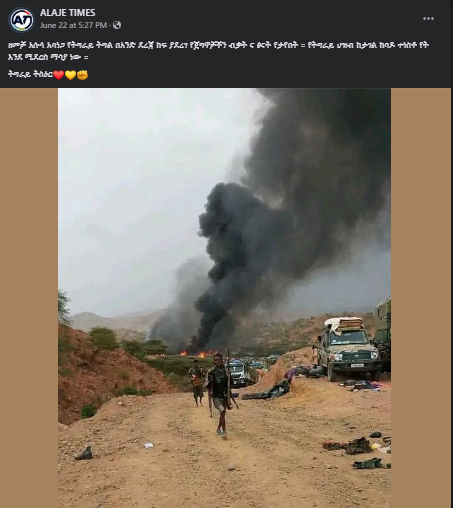
False images of a plane allegedly shot down by Ethiopia while transporting weapons for the TPLF

The Ethiopian government claimed that it shot down a plane that entered the Ethiopian airspace carrying weapons to TPLF via Sudan. Instantly, Multiple images with the claim that a plane was shot down by Ethiopia when transporting weapons to the TPLF via Sudan were shared on social media.

These images were shared on social media platforms mainly on Facebook. They were shared by many accounts and pages.

HaqCheck cross-checked three images and confirmed that they don’t show a plane shot down by the Ethiopian Air Force when transporting weapons to the TPLF from Sudan trespassing the country’s airspace.

The first image was shared by a Facebook page with a Tigrinya and English caption stating the Ethiopian Air Force shot down an airplane entering the Ethiopian airspace from Sudan loaded with arms for TPLF. The image was found in a news story that reported a plane crashed in the Amra Valley of the state of Arizona in the US in March 2021. The image was published on the website with a description that the image shows the crushed plane and the picture was taken by the Pima County law enforcement agency.

The second was shared on a Facebook account with a claim that Ethiopia downed a place that belonged to the country’s historical enemies transporting weapons to the TPLF through Sudan. The image was shared on Twitter on May 4, 2020, with a claim that the image shows an Uzbekistan Mig-29 aircraft.

The third and the fourth images were also taken from other old publications and HaqCheck confirmed that they don’t show the alleged incident.

A false video of recently surrendered TPLF POWs

As the fighting between the TPLF and the federal government resumed, a number of claims emerged reporting that each side was capturing many prisoners of war. Among these is a video shared on social media that is claimed to show TPLF prisoners of war who surrendered recently.

The video was viral and was shared close to one thousand times.

However, the video is found to be old and doesn’t show TPLF prisoners of war who surrendered during the resumed fighting. The video was from months ago in Dec 2021 captured during the fighting between TPLF regional forces and federal government-led allied forces.

Incident-driven social information dissemination trend

Incidents continue to influence the trend of information circulation on social media. HaqCheck observed that disinformation in the Ethiopian media landscape is highly susceptible to events. The trend of disinformation and controversy swings according to incidents. Events such as war, conflict, violence, drought, and election highly influence the trend of false information dissemination, particularly on social media.

Some of the incidents that influenced social media information dissemination during the month of August were the following:

Famine and drought

The is an ongoing drought in the countries of the Horn of Africa especially in Ethiopia, Somalia, and Kenya. The drought and other crises such as conflict have caused a dire shortage of food in the region.

International organizations have been warning of possible famine in the region due to the current periodical drought, conflict, and pandemic.

In this context, many social media false images were shared to allegedly show starved people or people dying out of hunger. HaqCheck debunked many such image-backed posts.

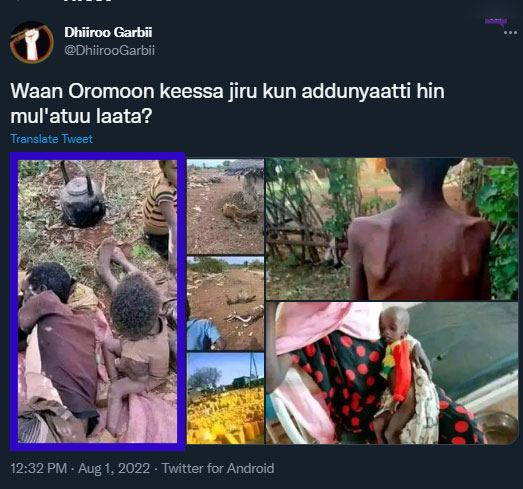
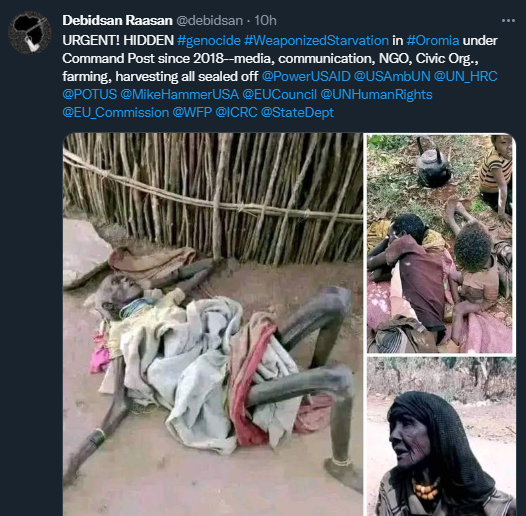
One of these claims was a Twitter post that shared three images claiming that the pictures show starved people in Oromia.

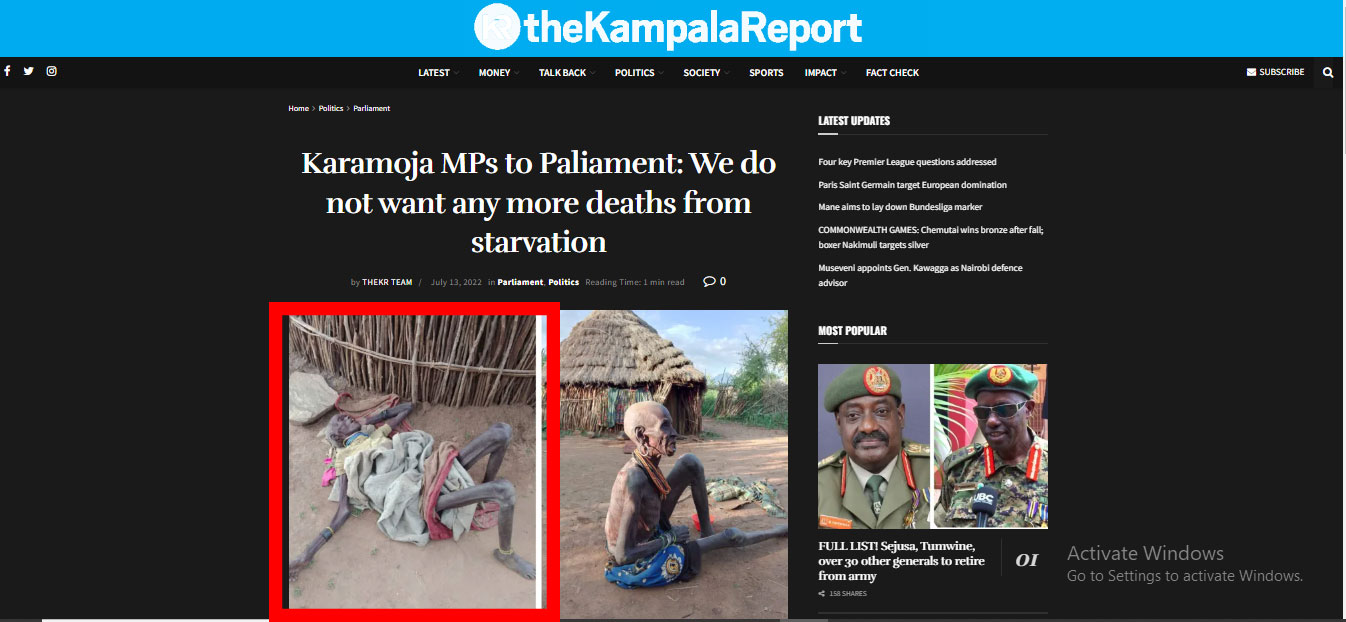
An image out of the three pictures is found to be old and doesn’t show the ongoing reality in the country. The image was taken from Uganda and was published to show starvation in that country. It was shared on a website in Jul 2022.

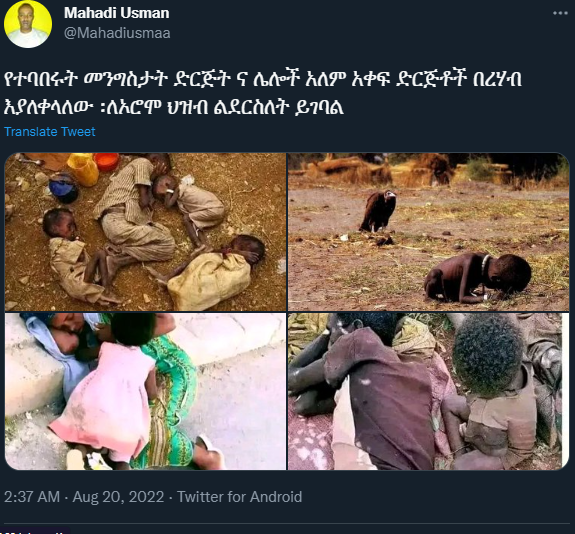
Another post that was debunked was an image-supported tweet sharing four pictures to support its claim that many Oromos are dying out of starvation.

However, three of the images were fetched from other sources and don’t depict the current drought and starvation in Ethiopia.

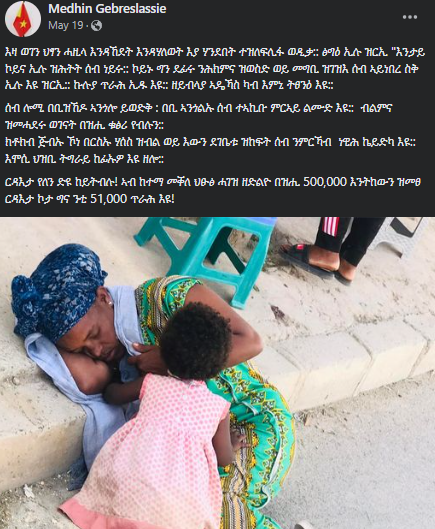
The first image was first shared on Facebook in May 2022 and the post stated that the image was taken in Mekelle.

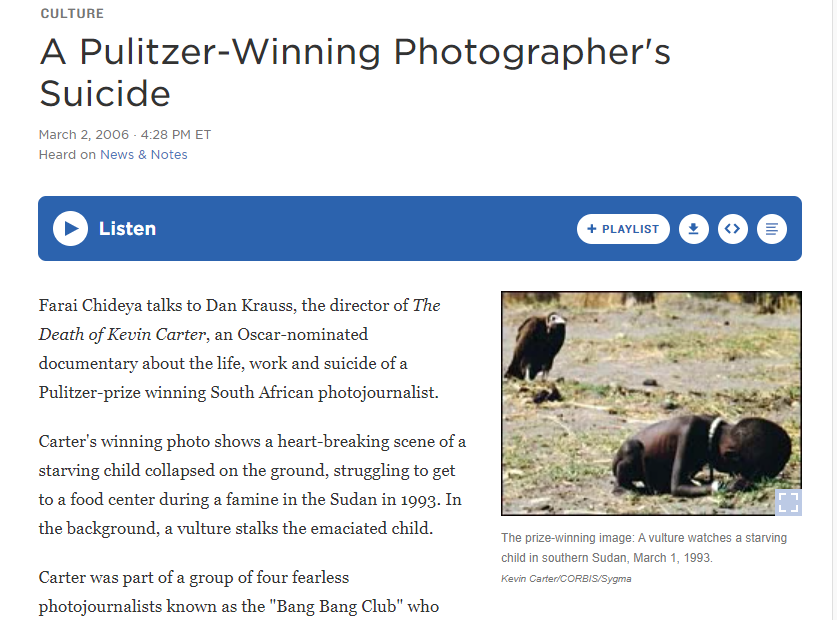
The second image was taken from other old publications made in 2017 and 2018. The remaining image shows a famine in Sudan in 1993.

Elements of propaganda

As the war between the TPLF and the federal government of Ethiopia is ongoing, propaganda warfare had continued by the belligerents. Thus posts with elements of propaganda appeared in the past month.

One of the false claims that were disseminated as propaganda by the TPLF was that Ethiopia’s external debt stock skyrocketed since Prime Minister Abiy Ahmed came to power. The claim was made by the Dimtsi Weyane and Tigrai TV stations and on social media.

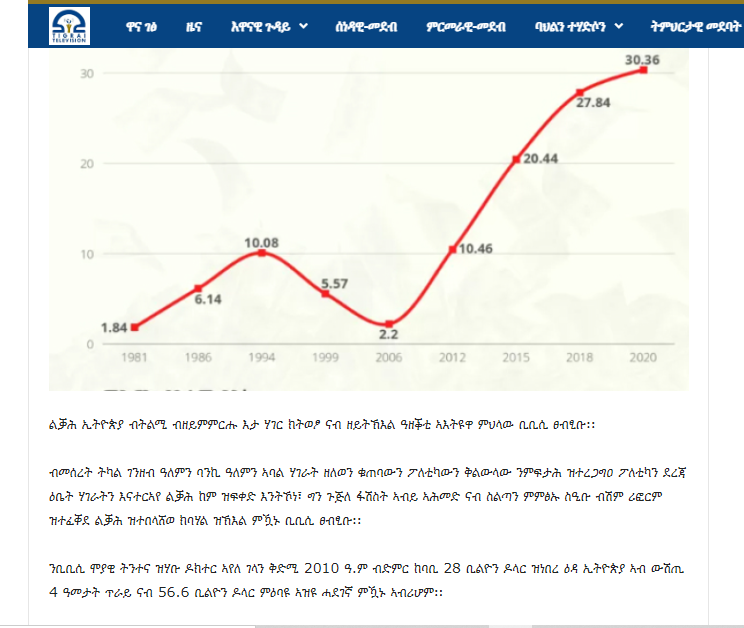
The information was presented in video and written content reporting that Ethiopia’s external debt dramatically increased from 28 billion dollars a few years ago to 56.6 billion dollars at the time being.

However, the claim was proven false by HaqCheck. According to the data analyzed by HaqCheck, Ethiopia’s external debt numerically stayed almost the same or with some fluctuation.

Diversified disinformation platforms

The major platforms for false information dissemination had been relatively diversified in August. For a long time, Facebook dominated being the fertile ground of false information circulation. It was the substantial landscape of disinformation particularly those of image-supported ones.

In the month, however, many other social media platforms have also become major fields for false information disseminators.

Telegram has become the major platform for circulating sensitive images and video-backed content. It is partly because there is little restriction on posting sensitive and graphic images and videos on Telegram. Many social media content creators were observed to invite their followers on their platforms such as Facebook and Twitter to go visit their Telegram channels for additional information, i.e., sensitive images and videos.

Twitter has also become a major platform for image-backed claims. HaqCheck found and debunked many false claims supported by false images that appeared on Twitter. As a showcase, a viral post published on Twitter shared an image alleged to show a plane that was recently shot down by the Ethiopian army while encroaching into the Ethiopian airspace to transport weapons for the TPLF.

The website was also somewhat one of the landscapes that enabled the dissemination of false information during the last month.

Recommendations

HaqCheck recommends the belligerents in the Tigray war be responsible and refrain from damaging propaganda content. They should respect the public and refrain from chronically disinforming the people on both sides.

We urge social media users to be skeptical and look for additional sources for controversial information they encounter. They should also look for fact-checks if already there regarding the issue at hand.

The government and other entities are urged to open up wider and secure access to information for the media and the public. They should avail timely and sufficing updates for the public.

Weekly summary: August week three

Claim of Ethiopia’s debt mounting from 28 to 56 billion USD

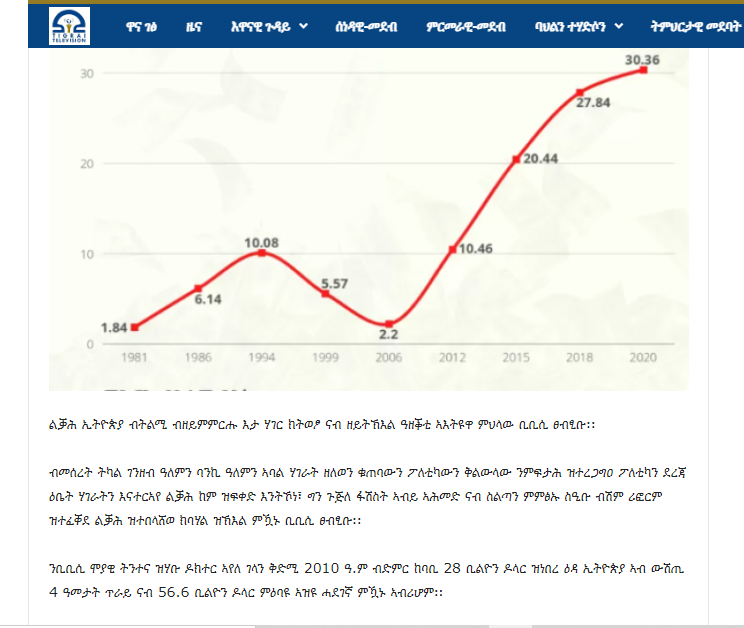
Tigrai Television, on July 22, 2022, claimed in a report published on its website that Ethiopia’s debt has dramatically increased since the coming of PM Abiy Ahmed to power in 2018. Citing a report by BBC Amharic on July 22, 2022, the media outlet claimed that Ethiopia’s total debt was 28 billion dollars in 2018 and now after four years, it has amounted to 56.6 billion dollars.

Dimtsi Weyane Television on Jul 26, 2022, claimed that Ethiopia’s debt stock has skyrocketed since PM Abiy came to power.

Tigrai Television again reported the same claim that Ethiopia’s debt soared from 28 billion dollars four years ago to 56 billion dollars in a video report made and released on YouTube on August 11, 2022.

The claim by Tigray Television and Dimtsi Weyane Television was based on a report published by the BBC Amharic on July 22, 2022. BBC Amharic in its article misleadingly said “according to the World Bank in 2020, Ethiopia’s debt was 30.36 billion dollars. But after two years now, Ethiopia’s external and domestic debt is 56.6 billion dollars.”

The statement by BBC Amharic is misleading because the figure “30.36 billion dollars” was only Ethiopia’s external debt stock.

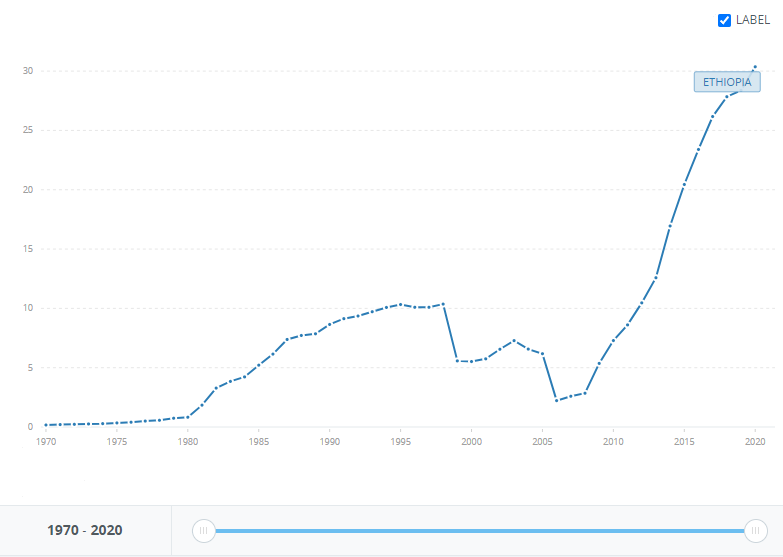
The World Bank on its website has data regarding Ethiopia’s external debt stock from 1970 to 2020. The World Bank data indicates that Ethiopia’s debt in 2020 was 30.36 billion dollars.

According to the annual report for the 2020/21 fiscal year issued by the National Bank of Ethiopia, the country’s external debt was 29.5 billion dollars in July 2021.

As of March 31, 2022, Ethiopia’s total (external and domestic) debt was 56.5 billion dollars, according to a statistical bulletin issued by the Ethiopian Ministry of Finance in May 2022. Out of that, external debt amounts to 28.5 billion dollars.

Despite Ethiopia’s external debt has been increasing, the claim that it expanded from 28 billion dollars four years ago to 56 billion dollars currently is false.

False images of famine

Images were shared on Twitter along with a claim that the image shows victims of famine in Oromia currently.

However, most of the images were found not to be of an ongoing drought or famine in Oromia.

One of the images was shared on different Social media platforms to show the drought in the Oromia West Guji zone. 

The other image was posted on May 19, 2022, on a Facebook page with more than 57 thousand followers. The post claimed the image is from Mekele, Tigray. 

The third image was also shared on social media and websites in different descriptions at different times. 

The Fourth image was taken by a South African photojournalist in which he wins the Pulitzer award. The photo shows a starving child who collapsed on the ground and was struggling to get to a food center in Sudan in 1993.

HaqCheck rated the post Partly False due to its use of inaccurate images.

A false image of Getachew Reda

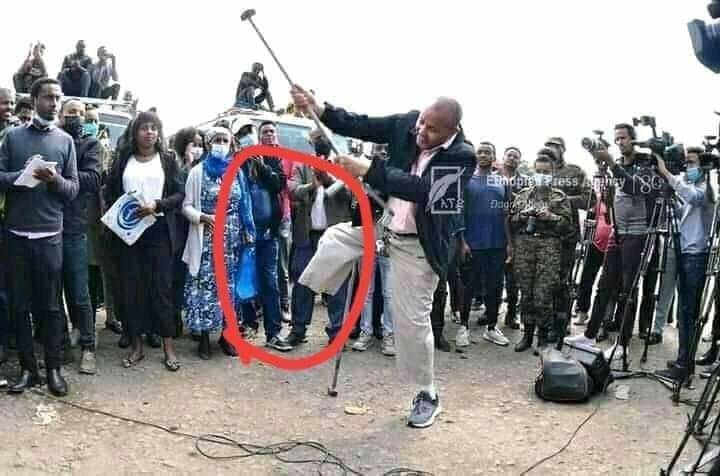
A viral image was circulating on social media with claims that the picture shows Getachew Reda, a senior TPLF member with an amputated leg.

However, the image is found to be false and was shared along with six other images on Facebook in August 2021 by the Ethiopian Press Agency. The image was shared by the news agency in a news reporting residents of the Kolfe Karanyo district contributed 75 million Birr to the Ethiopian army. HaqCheck rated the image FALSE.

Recommendations

HaqCheck recommends the government and other agencies provide timely information regarding any allegations. The government should ensure access to information.

We urge social media users to be skeptical and avoid misleading information. They should crosscheck unconfirmed claims and look for original sources of the information.

Media outlets should be ethical and refrain from making false claims and figures in their reportage.

Weekly summary: August week two

A person healed with traditional medicine

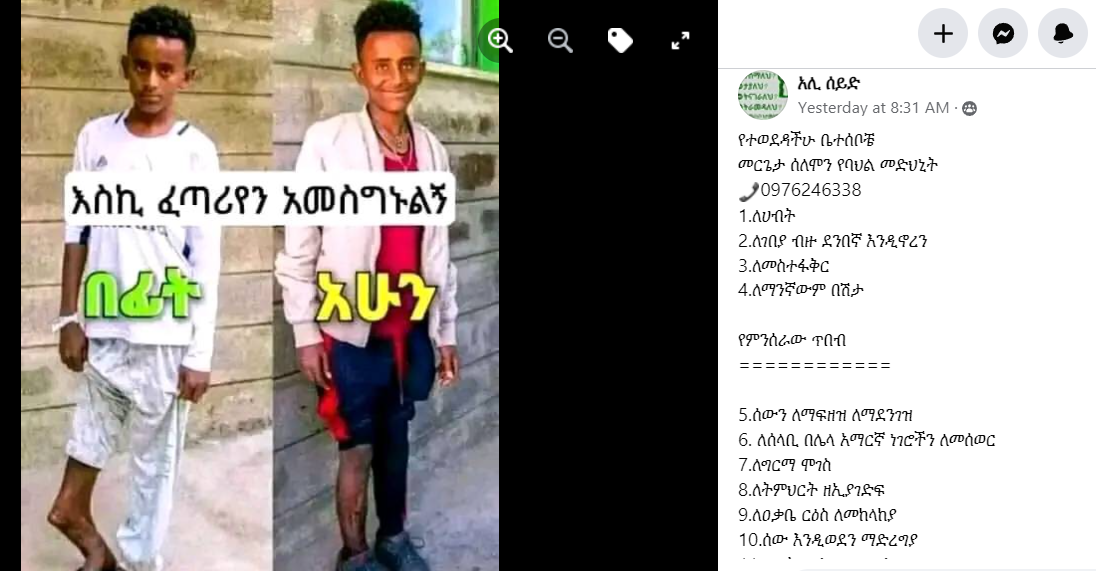
One of the false image-backed claims appeared last week was a claim that a person who had a serious leg injury was recently healed with traditional medicine. 

However, HaqCheck confirmed that the image doesn’t show a person healed with traditional medicine and urges social media users not to be victims of fraud.

HaqCheck inspected the image and found out that the young man in the image is named Yetbarek who is surgically treated at CURE Ethiopia Children’s Hospital, Addis Ababa branch of Cure International, a network of many pediatric hospitals throughout the globe.

According to the information on the hospital website, Yetbarek had a bad fracture on his right leg under his knee after his tibia broke while playing football. He received surgical treatment from the hospital starting in June 2019. The hospital said that Yetbarek was successfully healed and shared many pictures of him.

The image was first posted on the hospital’s website in Feb 2020. Therefore, HaqCheck rated the post false.

False images of flooding in Sudan

HaqCheck observed false images being circulating across Facebook claiming that there was catastrophic flooding in Sudan recently. One Facebook post made on Aug 9, 2022 sharing images claimed that Sudan was experiencing an ongoing flooding and the construction of the Great Ethiopian Renaissance Dam (GERD) will help it reducing the risk of flooding.

However, the images were false that dont show ongoing flooding in Sudan.

It was reported that the eastern and western parts of Sudan particularly the Darfur region have been struck with flooding.

However, the images that were shared by the Facebook page dont represent ongoing floding in Sudan.

For instance, one of the images put above shows flooding due to heavy rain in Turkey in 2018.

False numbers of a Red Cross fertilizer donation in Tigray

On Aug 8, 2022, the International Committee of the Red Cross (ICRC) donated fertilizers to conflict-affected farmers in the Tigray regional state.

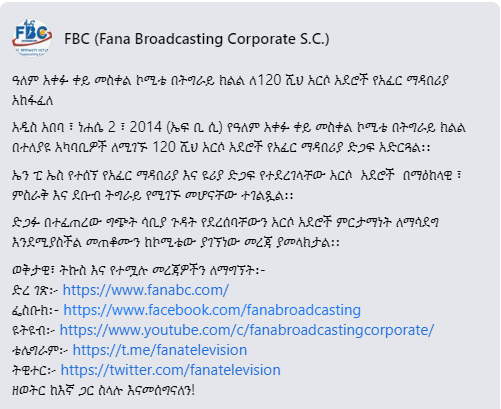
Thenafter, false information regarding the amount of the fertlizers the Red Cross distributed to farmers came out. FBC (Fana Broadcasting Corporate) reported on its Facebook page that Red Cross distributed fertlizers to 120 thousand farmers in Tigray.

However, HaqCheck confirmed that the Red Cross society itself stated that it donated fertlizers to 20 thousand households which are amounted to120 thousand persons in total.

Hours later, the media outlet edited the post making it to 120 thousand individuals.

Recommendations

HaqCheck urges social media users to be skeptical of such posts and be careful of scams.

We recommend media outlets to be heedful of the figures they report. They should also make quick edits and notify their audience that the information given was inaccurate.

Socil media users are always urged to be careful of false and malicies information and claims across offline and online networking sites.

Weekly summary: August week one

The week was relatively calm compared to previous weeks. However, there was a circulation of false information on social media platforms.

Here are some of the false claims debunked by HaqCheck during the first week of August.

A false image of drought in Oromia

False images were circulating on social media in the week with a claim that many people have died of starvation in Oromia due to an ongoing lockdown by the government.

These three images were also used as a thumbnail of a video on a Youtube channel with more than 900 subscribers with a title that tells aid delivery to Borranna stopped despite an ongoing drought. However, HaqCheck learned that it was taken from  a video shared by EBC (Ethiopian Broadcasting Corporation) on Jul 6, 2022, titled “the drought in Borena zone requires an immediate response by the Gov’t.”

One of the three images was found to be false and taken from an old publication. The first image that shows a dead body of an elderly woman was previously published on a website named The Kampala Report.

The article stated that the image shows people who died of starvation in the Karamoja region of Uganda.

Famine in the Horn of Africa

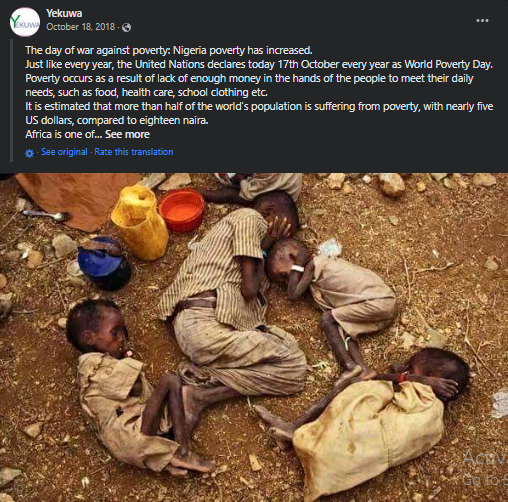
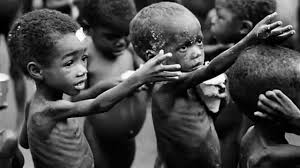
An article about ongoing extreme food shortages and famine in the Horn of African countries such as  South Sudan, Somalia, and Ethiopia was published on a website. An image that shows famine-stricken infants was published along with the article.

The article on the website indicates that Vicky Ford, Minister for Africa, Latin America, and the Caribbean wrote a letter responding to the correspondence of David Alton, a member of the House of the Lords of the United Kingdom, to the Foreign, Commonwealth, and Development Office highlighting the current food shortages in the Horn of Africa.

The response letter from the State Minister to Lord David Alton was then published on a website that claims to belong to the latter. An image that shows starved infants seemingly stretching their hands for food was attached along with the letter on the website.

In spite of the ongoing drought in the Horn of Africa, the image doesn’t actually show the situation in the region. The image was found published on Flicker, an American image and video sharing online platform, on 3 June 2009.

Recommendations

HaqCheck recommends social media users cross-check information and look for the original sources of controversial claims. They should also look for fact-checks if the claim at hand is already debunked by fact-checkers.

We urge social media content creators to be responsible and avoid disinforming the populace on the platforms. They should be careful of giving unconfirmed and potentially misleading information.

Concerned authorities should avail information to both the public and the media on timely matters. Full access to information should also be secured as a basic right.

July monthly disinformation trend analysis

HaqCheck observed that disinformation and the circulation of false information followed incidents.

There were major incidents that happened in the month of July and at the end of the month of June that triggered disinformation during the given month. False information circulated in the background of these events.

The major events that were followed by disinformation were; the massacre in Wollega in the month of June, the condominium lottery draw cancellation, the Al Shabaab attacks, the rumors on the whereabouts and safety of PM PM Abiy, and the academic dress worn by Tedros Adhanom.

haqCheck intercepted many false social media posts that were made in the context of these occurrences or just followed the incidents.

Some of the posts circulated amid such events and debunked by HaqCheck are presented in this summary.

Massacre in Wollega in the month of June

The massacre in the Wellega zone of Oromia  regiona was reported in the previous month of June. However, the event was one of the main factors for the disinformation trend that surfaced during the month of July. Many related social media posts emerged in this framework. False information and images circulated on social media platforms falsely claiming old images to depict the massacre.

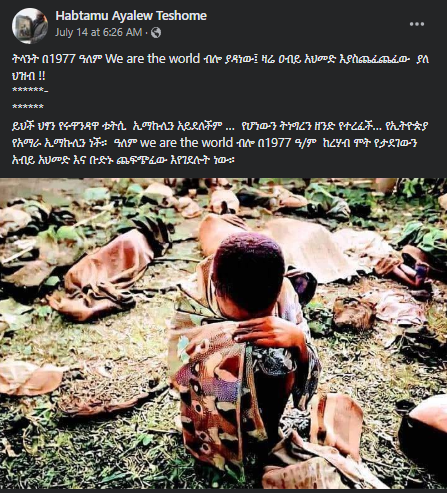
For instance, a Facebook page shared an image on Jul 14, captioned, “This baby is not the Rwandan Tutsi Immaculée [Immaculée Ilibagiza] … She is the Ethiopian Amhara Immaculée who survived to tell us what really happened. Abiy Ahmed and his group are killing people whom the world saved in the ‘We are the World’ campaign in 1985.”

Actually, the image is found out to be old and is of the Rwandan Tutsi genocide that happened in 1994. The image doesn’t show victims of the massacre in Wellega.

Condominium lottery draw results cancelation

The condominium lottery draw that was conducted on July 8, 2022 was later canceled due to alleged tech tampering issue. The event was followed by widespread controversies.

False claims emerged immediately after the draw. Among the viral controversies was that Muluken Haftu, former head of the City Administration’s Innovation and Technology Bureau, and Yasmin Wohabrebbi, head of the Housing Development Bureau were arrested in relation to the lottery draw fraud. The claim was later proven false.

Muluken Haftu was not arrested at the time. But on July 15, the Addis Ababa City Council revoked the immunity of its member, Mulukun Haftu in connection with alleged links with tech tampering by the city administration officials. He was taken into custody after the meeting on the same day.

Related to the incident, a false claim that Yonas Zewde, the head of the Communications Office of the Addis Ababa City Administration, resigned from his position because of widespread corruption within the current government followed.

However, the former communications head didn’t resign from his previous post and was just appointed to another position by the administration.

Al Shabaab attack on Ethiopian forces

At the end of the month of July, Al Shabaab opened attack on the security forces of the Ethiopian Somali region both in Somalian and in Ethiopian territories along the border of the two countries. Fighting then erupted between Al Shabaab militants and Somali regional special police forces.

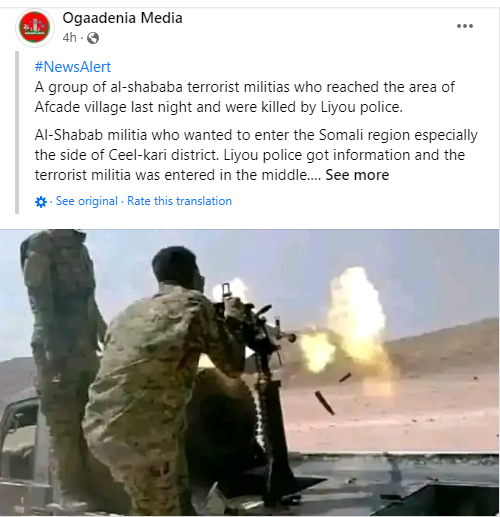
The event was then accompanied by various false images claimed to be of the recent skirmishes between Somali regional forces and Al Shabaab militants.

One instance of these was an image-backed social media claim that Somali regional forces recently killed militants of AlShabaab in the Elekere woreda of the Somali Regional State.

Nevertheless, the image was taken from an old publication. It was first published on May 24, 2018, on a self-described independent news outlet in a short news story that heavy fighting erupted between Puntland and Somaliland forces in the Sool region of Somaliland.

Rumors on the whereabouts and safety of PM Abiy

There were various rumors circulating regarding the whereabouts and safety of Prime Minister Abiy Ahmed during the month. These rumors fueled disinformation all over social media landscapes.

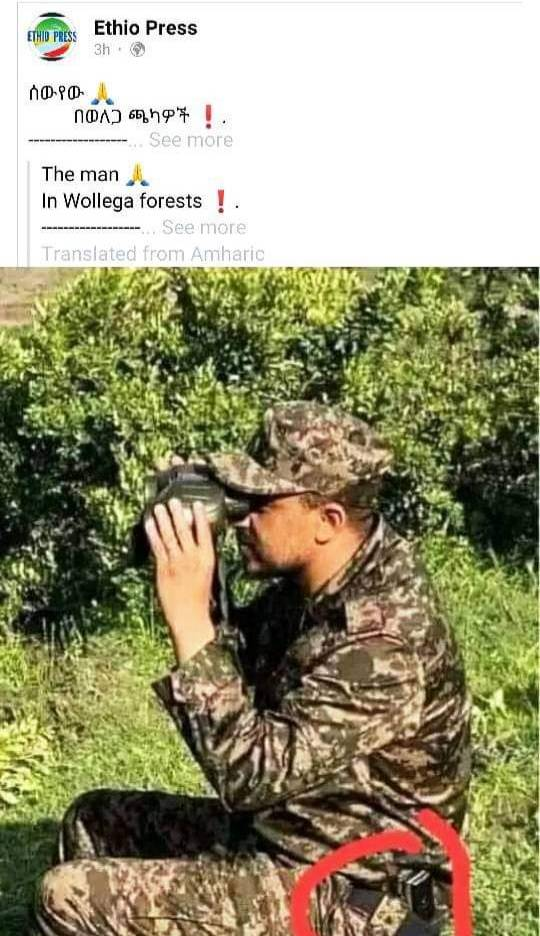
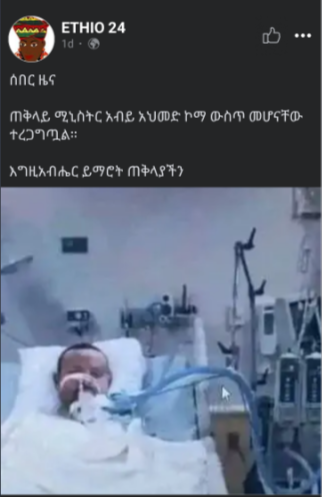
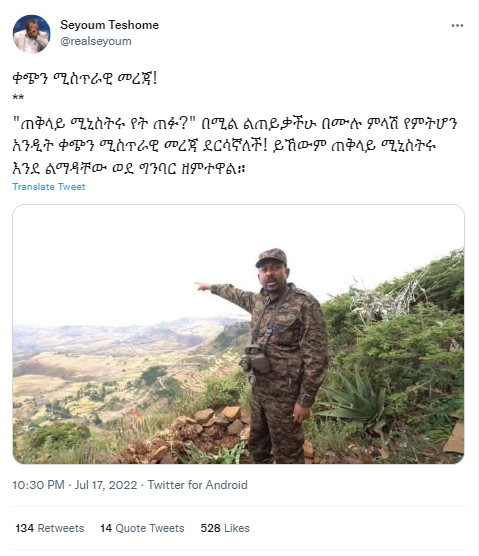
Many false and old images were shared with different claims. Some claimed that the Prime Minister is leading a military operation against insurgents in the southwestern parts of the country. Others claimed that he was ill and was being treated in a hospital.

The allegation was one of the major factors for massive social media disinformation.

Academic dress worn by Tedros Adhanom

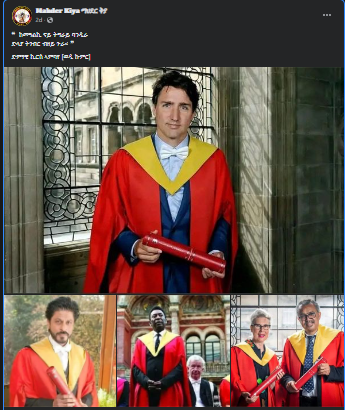
There were false claims that the academic dress that was worn by Tedros Adhanom, Director of the World Health Organization when he received an honorary degree from Edinburg University represents the flag of Tigray Regional State.

Others shared images of Canadian Prime Minister Justin Trudeau, Indian movie actor Sha Rukh Khan, and the football legend Pele all wearing the same academic dress claiming that it represents the Tigray regional flag. Such claims were viral across social media platforms.

However, the claims were false and honorary degree recipients of the University of Edinburgh wear the scarlet gown with a yellow velvet hood according to the university’s code of gown dressing. 

Hashtag Campaign and Disinformation

HaqCheck observed hashtag posts sharing false images. Employing false images in hashtag campaigns trended during the month. Hashtag themes and phrases were accompanied by false and emotionally appealing images.

For example, a Twitter account shared two images with a text that the Amhara people had been targeted by the Ethiopian government. The tweet shared graphic images that show human dead bodies laid on the ground.

It was shared with a hashtag text #AmharaGenocide. But, one of the images was from Nigeria.

Faking Twitter handles

Another disinformation technique that was pointed out by HaqCheck in the month of July is faking Twitter handles. A Twitter handle was learned to be faked using deceptive methods.

Two twitter accounts seemingly with the same handles appeared. Having or sharing the same Twitter handle with others is never allowed on the platform and thus people may be misled and challenged to identify which one is the authentic account if the two have the same handles.

The two accounts seemingly have a handle @martinplaut. However, the other one was faked to look like the authentic account. The faked handle used the capital letter of ‘i’ that looked like the small letter of ‘L’.

This was a new trend observed just recently.

Recommendations

The government should not be the main agent of disinformation and controversy. The rumors regarding the whereabouts and safety of the Prime Minister caused massive disinformation.

The government should have given timely information regarding the allegations. Government bodies should offer the public timely and sufficient updates on state affairs.

Social media users are urged to be skeptical and should avoid conceiving and sharing unconfirmed claims.

People should pay critical attention to Twitter accounts and handles. They should cross check the authenticity of the handles too.

July week four disinformation trend summary

Faked Twitter handles

One of the disinformation techniques is circulating false information with social media accounts that impersonate celebrities and popular personalities.

HaqCheck came across a faked Twitter handle creating controversies as people can easily be misled due to the similarity of the handles.

The Twitter accounts presented in the screenshots below may seem similar because they appear to have the same Twitter handle. The difference people can easily identify between these accounts is only the verification tag and the number of followers.

Twitter handles can not be the same or duplicated and every Twitter account has to be unique, according to Twitter. However, these two Twitter accounts seem to have the same handle which is @martinplaut.

The first Twitter account is created in 2010 and the second one in 2020. The second Twitter account created in 2020 faked the Twitter handle of the real and verified one.

The second Twitter account faked the handle which is @martinlaut by replacing the small letter ‘l’ in the handle with a capital letter ‘I’. This way, the two accounts resemble to have the same handle. These two letters seem the same and can only be identified by changing them into small or capital letters. They can also be identified by size. The small letter of ‘L’ is larger than the capital letter of ‘i’. When we copy-paste the two letters from the two handles and have a thorough look magnifying them,  the letter ‘l’ which is ‘L’ is visibly taller than the second letter which is ‘I’.

Thus, people should pay attention to such imitation and false information circulated by accounts faked to appear as authentic ones.

A claimed public protest which occurred in Mekelle and its vicinities

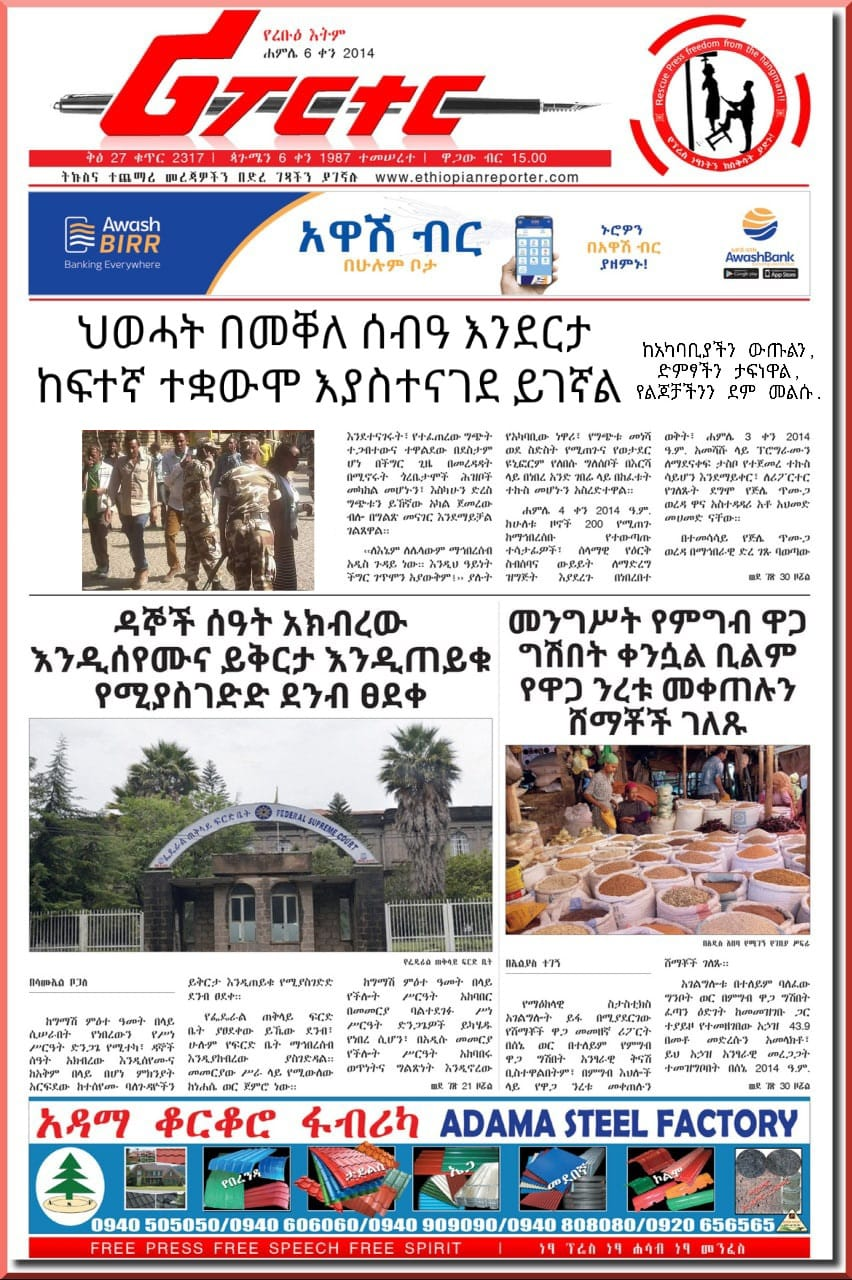
HaqCheck came across a circulating image of the front page of the Reporter newspaper with a bold headline that reads that people in Mekelle are revolting against TPLF. Facebook posts shared the image across the platform.

Manipulated front-page

The image of the front page of the newspaper is learned to be manipulated from the original front page of the newspaper by giving it a fake story headline. The headline from the original front page reads, “People Were Killed due to a Conflict in Two Neighboring Zones in Amhara region”. This headline was erased and replaced by the faked headline that reads, “TPLF is Facing a Fierce Opposition in Mekelle of Sebaa Enderta”.

Original front-page

The front page image is taken from the July 13 publication of the biweekly Amharic Reporter newspaper. The original article on the top front page of the publication is titled, “People Were Killed due to a Conflict in Two Neighboring Zones in Amhara region” and there is no picture on the page accompanying that particular news article. The original front page of the publication can be found here. Accordingly, HaqCheck rated the claim False.

Old images claimed to show recent massacres

A Twitter account shared two pictures on Jul 26, 2022, captioned “Amhara people in Ethiopia every place been targeted by their identity by the genocidal government of Ethiopia.”

However, the first image in the tweet is found to be old and doesn’t show a recent massacre in Ethiopia. HaqCheck discovered one of the images published on Mar 12, 2018, on a website called BIAtimes.org under the heading “Nigeria: Fulani Herdsmen Invade Primary School in Ogun State Killing Children.”

The post was therefore rated Party-False.

Recommendations

Regarding twitter handles, HaqCheck recommends social media users look into the handles to check their authenticity. They have to search the handles on Twitter with the same letters and prove if they really exist on the platform. Some lowercase letters may look similar to other uppercase letters or vice versa.

We urge social media users to be skeptical and cross-check information as it may be false or manipulated. They should not be misled by similar accounts or manipulated images.

HaqCheck urges the government and other relevant bodies to guarantee full access to information to the public and to the media. They should avail information on timely issues.

July week three disinformation summary

Tedros Adhanom’s academic dress claimed to represent the Tigray flag

There were controversial and false claims all over social media platforms that the academic dress worn by Tedros Adhanom when he received an honorary degree from Edinburg University represents the flag of Tigray Regional State.

HaqCheck fact-checked the claim whether the academic dress represents the regional flag of Tigray. A Facebook page with more than 54 thousand followers on July shared a collection of images featuring Canadian Prime Minister Justin Trudeau, Director of the World Health Organization Tedros Adhanom (Ph.D.), Indian movie actor Sha Rukh Khan, and the football legend Pele all wearing a similar academic dress of red gown and yellow velvet hood, implicitly telling that the red and yellow robe represents the Tigray regional flag.

The post was published after Tedros Adhanom, Director of WHO, received an Honorary Degree from the University of Edinburgh clad in a similar academic dress on Jul 14, 2022. Different social media pages have shared an image of different celebrities and influencers wearing red and yellow Gown claiming it to be the Flag of Tigray. 

Many social media posts also appeared sharing images of various politicians and celebrities wearing the same academic dress in a bid to show that these renowned personalities followed Tedros’ lead of honoring Tigray by wearing the same dress. 

A Facebook page with more than 138 thousand followers shared a post on Jul 16, captioned, “Indian Movie Actor Sha Rukh Khan has joined ‘The Tigray Prevails Movement’.”  by the time this article is posted the post had more than 300 reactions.

Honorary degree recipients of the University of Edinburgh wear the scarlet gown with a yellow velvet hood according to the university’s code of gown dressing and has no connection with the Flag of Tigray or any movement. And the referred recipients of the University’s honorary degree, Justin Trudeau, Sha Rukh Khan, and Pele received their degrees in Jul 2017, Oct 2015, and Aug 2012 respectively, which shows they were not part of a claimed Tedros-led pro-Tigray campaign. 

Therefore HaqCheck interrogated the Claim and rendered it False.

False images regarding the whereabouts of Prime Minister Abiy Ahmed

False and old images were circulating during the week regarding the whereabouts of Prime Minister Abiy Ahmed. There were image-backed false claims. Some of the image-supported social media posts claimed that PM Abiy Ahmed went to a war front in southwestern Ethiopia to lead a military operation against insurgents.

Others claimed that the Prime Minister is ill and receiving medical treatment in a hospital. Old images had been circulating to support the claim.

However, the above image is found to be old and was even previously fact-checked by HaqCheck in January 2020. The original image can be accessed with the following link.

Somali regional forces killing Al Shabaab militants

As reports that fighting erupted between Somali regional forces and Al Shabaab militias emerged, false images started to circulate making the same claim. One of these image-backed claims was inquired by HaqCheck. A viral Facebook post appeared on June 21 sharing an image with a claim that Somali regional forces recently killed militants of AlShabaab in the Elekere woreda of the Somali Regional State. The claim stated that the Al Shabaab militias entered the Somali regional state in 14 vehicles and withdrew to the Bakool region of Somalia after they suffered a major defeat by the Somali regional special police force.

VOA reported on July 20, 2022, that fighting erupted between Al Shabaab militants and Somali regional special police forces, in areas along the Ethio-Somalia border, in the northwestern region of Bakool, within the territory of Somalia.

It is in this situational backdrop the viral report emerged claiming that military engagement recently erupted in the Somali region of Ethiopia between Al Shabaab militants and regional Somali special police force and Somali regional forces killed militants of Al Shabaab in the Elekere woreda of Somali regional state.

However, HaqCheck found out that the image used in the report was old and doesn’t show a recent military engagement between Al Shabaab militants and the Somali regional forces. The image was taken from an old publication.

The image was first published on May 24, 2018, on a site named Puntland Mirror, a self-described independent news outlet based in the city of Garowe, Puntland’s capital. It was published in a short news story that heavy fighting erupted between Puntland and Somaliland forces in the Sool region of Somaliland.

Therefore, HaqCheck rated the post False due to its use of an inaccurate image that doesn’t prove the claim.

A false image of an alleged massacre

False images had also been circulating with claims that they show victims of the massacres in different parts of the country. A Facebook page shared an image on Jul 14, claiming that the baby in the image is an Amhara who survived a recent massacre.

However, HaqCheck confirmed that the image is from Rwanda and shows a baby sitting among dead bodies during the Tutsi genocide. HaqCheck found the images in different posts at different times. 

Therefore, HaqCheck has rendered it False.

Recommendations

We recommend social media users be cautious and cross-check information before they share it with others. They should look for sources of the issues to confirm the authenticity of that information.

HaqCheck urges social media content creators to avoid fabricating and circulating false information.

The government and other concerned authorities are urged to ensure full access to information to the media and the wider public and to offer timely briefings regarding controversial matters.

Did Ethiopia’s total debt mount from 28 to 56 billion dollars?

Tigrai Television on July 22, 2022, published a website article claiming that Ethiopia’s debt has dramatically increased since the coming of PM Abiy Ahmed to power in 2018. Citing a report by BBC Amharic on July 22, 2022, the media outlet stated that Ethiopia’s total debt was 28 billion dollars in 2018 and now after four years has amounted to 56.6 billion dollars.

Dimtsi Weyane Television on Jul 26, 2022, claimed that Ethiopia’s debt stock has skyrocketed since PM Abiy came to power.

Tigrai Television again reported the same claim that Ethiopia’s debt soured from 28 billion dollars four years ago to 56 billion dollars in a video report made and released on YouTube on August 11, 2022.

The claim by Tigray Television and Dimtsi Weyane Television was based on a report published by the BBC Amharic on July 22, 2022. BBC Amharic in its article misleadingly said “according to the World Bank in 2020, Ethiopia’s debt was 30.36 billion dollars. But after two years now, Ethiopia’s external and domestic debt is 56.6 billion dollars.”

The statement by BBC Amharic is misleading because the figure ‘30.36 billion dollars’ was only Ethiopia’s external debt stock.

The World Bank on its website has data regarding Ethiopia’s external debt stock from 1970 to 2020. The World Bank data indicates that Ethiopia’s debt in 2020 was 30.36 billion dollars.

A country’s total debt is a combination of external and domestic debts. The World Bank defines external debt as “the outstanding amount of actual current, and not contingent, liabilities that require payment(s) of interest and/or principal by the debtor at some point(s) in the future and that are owed to nonresidents by residents of an economy.” It is owed to sources that are external or non-residents and is repayable in currency, goods, or services. It is obtained from outside sources or lenders such as multilateral financial institutions, foreign governments, foreign commercial banks, external corporations, private households, etc.

On the contrary, domestic or internal debt is all liabilities owed to internal or residential lenders within the country.

Ethiopia’s external creditors are generally categorized into three; multilateral, bilateral, and commercial. Multilateral creditors are international financial organizations such as the World Bank, IMF, and other multilateral development banks.

Bilateral lenders are foreign governments and commercial creditors are external commercial banks or private financial organizations.

According to the annual report of the 2020/21 fiscal year issued by the National Bank of Ethiopia, the country’s external debt was 29.5 billion dollars in July 2021.

As of March 31, 2022, Ethiopia’s total (external and domestic) debt was 56.5 billion dollars, according to a statistical bulletin issued by the Ethiopian Ministry of Finance in May 2022. Out of that, external debt amounts to 28.5 billion dollars. The remaining 28 billion dollars was owed to domestic creditors (internal debt). Accordingly, external debt accounts for 50.4 percent and domestic debt for 49.6 percent of the overall debt Ethiopia owed.

Most of the loans Ethiopia borrows have been gained from multilateral financial institutions. As of the 2020/21 fiscal year, Ethiopia owed 19.5 billion dollars to multilateral lenders, 6.7 billion dollars to bilateral creditors, and the remaining 3.3 billion dollars out of the total 29.5 billion dollars in external debt were obtained from commercial lenders.

Out of the 28.5 billion dollars, 14.9 billion dollars, or 52 percent of the total external debt of Ethiopia as of March 31, 2022, was owed to multilateral creditors such as the International Development Association (a subsidiary of World Bank), the African Development Fund (a subsidiary of African Development Bank), IMF, and the International Fund for Agricultural Development (an agency of the UN).

Loans from multilateral development banks such as the World Bank, IMF, and the African Development Bank are usually cheap and accessible. Additionally, poorer countries tend to these development banks for loans because their creditworthiness is low and commercial lenders cant lend to them fearing the risk of default.

Ethiopia’s creditworthiness has been decreasing from to time. That means that external lenders are not confident enough to extend loans to Ethiopia. Last year, Standard & Poor’s (S&P), a top global credit rating organization, downgraded Ethiopia’s creditworthiness to “junk”. In addition to that, Moody’s Investors Service downgraded Ethiopia’s credit rating from B2 to Caa1 indicating Ethiopia’s higher susceptibility to defaulting on its debts.

Ethiopia’s external debt has been steadily increasing since 2007. According to the World Bank, the country’s external debt stock was 2.59 billion dollars in 2007. It has since then enormously expanded to reach 30.36 billion dollars in 2020.

In 2006 Ethiopia’s external debt stock significantly decreased and was the lowest since the year 1982. It was 3.28 billion dollars in 1982 and 2.22 billion dollars in 2006.

In 2006, the external debt of Ethiopia fell to 2.22 billion dollars from 6.18 billion dollars in the previous year and from 10.36 billion dollars in 1998.

Ethiopia benefited from the Heavily Indebted Poor Countries (HIPC) and the Multilateral Debt Relief Initiative (MDRI), both debt relief initiatives targeting poor countries. The prominent multilateral financial institutions, the World Bank and IMF together with the governments of developed countries, particularly the G8 countries started the debt relief to poor and indebted countries initiatives.

The HIPC Initiative was launched in 1996 by the IMF and World Bank to help poor countries struggling with debt burdens. The MDRI initiative was approved in June 2005, by the G8 countries.

Countries should meet the requirements set in order to obtain debt relief under these two initiatives.Ethiopia completed the preconditions of the Heavily Indebted Poor Countries (HIPC) initiative in 2004, and the Multilateral Debt Relief Initiative in 2005. Thus, the country managed to get its 1.3 billion dollars debt canceled under the HIPC initiative and obtained 2.3 billion dollars of debt relief under the MDRI program.

July week two disinformation and controversy summary

A false image of the alleged attack in Ataye

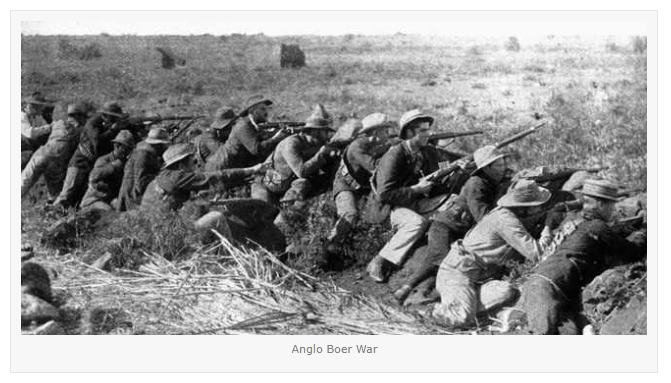
An image-backed claim appeared on Facebook last week that armed Amhara militias assaulted Oromos in Ataye. A Facebook page shared the post on Jul 12, captioned “Amhara extremists have turned back to Ataye because their deadliest massacre plan in Wollega has not worked out.”

The Page uses the map of the Amhara region and from the map points to an image claiming to show Amhara militias in the fortress.

The claim followed reports of a fresh conflict in Ataye, a town in the northern Shewa Zone of the Amhara region. There were different reports of gunfire in Ataye.

HaqCheck inspected the image used to support the claim that Amhara armed militias opened an attack on Ataye. It is found that the image was published on May 12, 2015, on a website called intriguing history.com under the title “New Data Register of the Anglo Boer War 1899-1902”.

HaqCheck rendered the image-accompanied claim False as the image used by the post was inaccurate.

Yonas Zewde’s claimed resignation due to rampant government corruption

A viral claim appeared on Facebook on July 14 reporting that Yonas Zewde, the head of the Communications Office of the Addis Ababa City Administration, resigned from his position. The post further explained that the communications head resigned because of widespread corruption within the current government and that the administration doesn’t care about the future of the country.

The claim that Yonas Zewde recently resigned from his post followed the controversy over the condo houses lottery draw.

Yonas Zewde was appointed by the Mayor to be the head of the City Administration’s communication head last year.

Al Ain Amharic reported quoting him a few days ago that the former communications head Yonas Zewde is just assigned to another post. Yonas’ transfer to another position is also confirmed in the report by Abdi Tsegaye, the current head of the Communications Office who succeeded Yonas. 

HaqCheck however confirmed that the former Addis Ababa City Administration communications head did not resign from his position. Yonas Zewde was just assigned to another position by the administration.

Controversy over a recent condominium lottery draw

A condominium lottery draw was conducted by Addis Ababa City Administration on July 8, 2022. The draw was followed by widespread controversies.

Addis Ababa city administration dismissed the recent condominium lottery draw due to a claimed tech tampering by officials within the city administration.

False claims emerged immediately after the draw. Among the viral controversies was that Muluken Haftu, former head of the City Administration’s Innovation and Technology Bureau, and Yasmin Wohabrebbi, head of the Housing Development Bureau were arrested in relation to the lottery drawing fraud.

Many, from Facebook users to political parties circulated the information. However, the claim was later proven false.

Muluken Haftu was not arrested at the time. But on July 15, the Addis Ababa City Council revoked the immunity of its member, Mulukun Habtu in connection with alleged links with tech tampering by the city administration officials. He was taken into custody after the meeting on the same day.

Yasmin Wohabrebbi, head of the Housing Development Bureau also has not yet been detained or accused in relation to the public houses lottery draw controversy. She said on July 16, that her office apologizes to the residents of the city. Yasmin stated that her office will cooperate with [the police] to hold those who are responsible for the problem accountable.

Recommendations

HaqCheck urges social media users to be skeptical and crosscheck information including the authenticity and source. They should look for additional information and credible sources.

It is also recommended that social media content creators refrain from being agents of disinformation.

We urge the government to guarantee full access to information to the media and the wider public. Government offices should provide the public with timely and sufficient information on ongoing matters as one way of tackling disinformation.

HaqCheck also urges political parties, media outlets, government offices, and other entities to avoid disinformative statements.

Weekly social media disinformation and controversy summary: July week one

Engagement between OLA/GLF and government forces

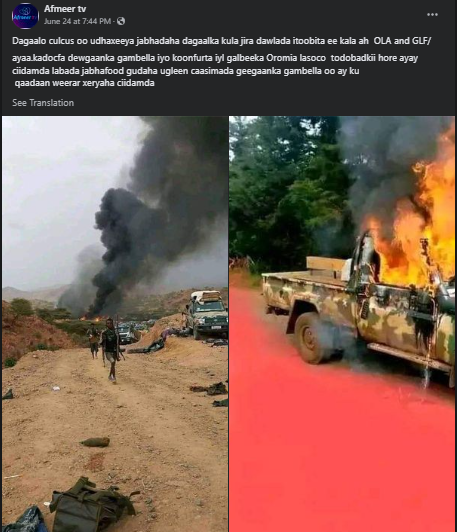
One of the claims that appeared during the week and were debunked by HaqCheck was an image-related claim that contends the image showed a military engagement between the government and rebel forces. A Facebook page shared the post on June 24, 2022, captioned, “OLA [Oromo Liberation Army] and GLF [Gambella Liberation Front], two militant groups fighting the Ethiopian government, have engaged in fierce combat. The two military forces have entered the capital of the Gambella region.”

The post attracted many audiences and received hundreds of shares and reactions.

The post presented two images in a bid to prove the claim. HaqCheck looked into the claim and found out that one of the two images was shared previously on Facebook. The original post stated that the image shows a military attack by the TPLF forces on the Ethiopian government-allied forces a year ago.

The second image is published on a website called OLAcommunique.com on Oct 20, 2021, detailing updates on OLA’s operation. The article relates the claimed victory OLA achieved in the Bule Hora, Gumi Eldalo, and Saba Boru districts. HaqCheck spotted the image in the article with the caption, “destroyed patrol vehicle in Bule Hora”.

Therefore, HaqCheck rated the image-backed claim False.

Sudan opening a fresh military attack on Ethiopia

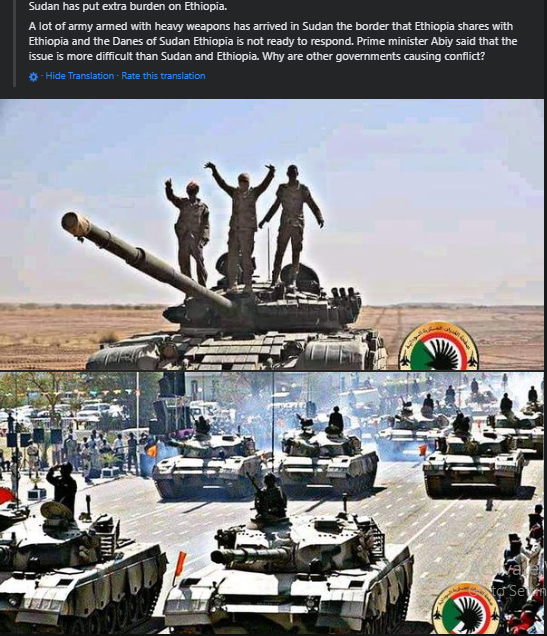
Another claim was that Sudan had been opening a fresh military attack on Ethiopian forces along the Ethiopia-Sudanese border. A Facebook page published a post with two images on July 03, 2022, claiming that Sudan has pressurized Ethiopia by employing military incursions. The post managed to get hundreds of reactions and shares on the same platform.

HaqCheck looked into the images and confirmed that one out of the two images was old. The second image was taken from an old publication and didn’t show Sudan’s heavy weapons that arrived at the Ethiopian border.

The image was previously published in June 2011 on a news site along with an article that military engagement between Sudanese and South Sudanese forces on contested territories seemed imminent at the moment.

Thus, the post was rendered Partly False by HaqCheck due to the lack of relevance between the image and the claim.

Monkeypox outbreak in Ethiopia

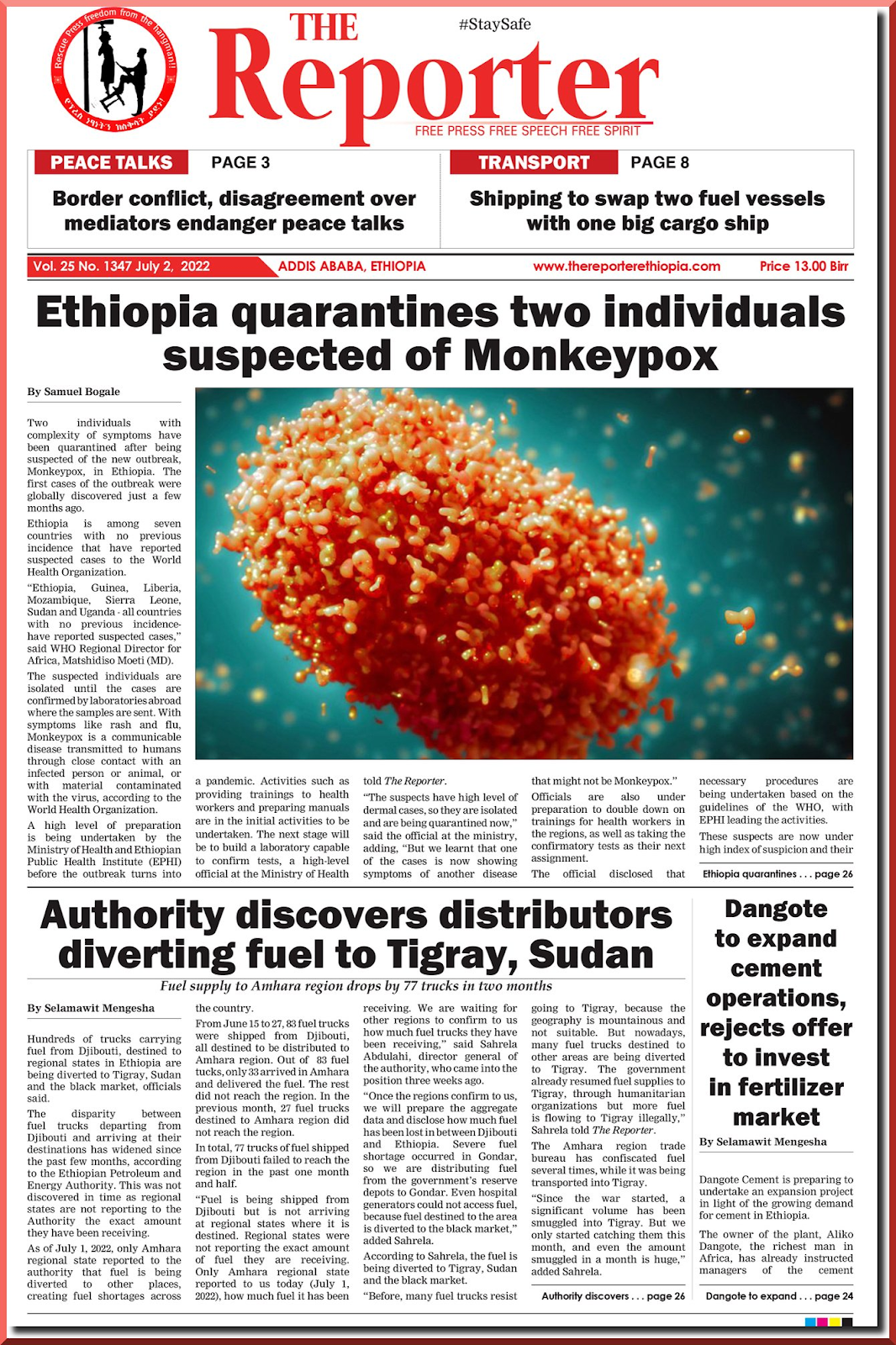
There was a controversy regarding a monkeypox outbreak in Ethiopia during the week. The Ethiopian Reporter newspaper said that two people had been quarantined after being suspected of monkeypox.

The quarantined people, according to the newspaper, were isolated until the cases are confirmed by laboratories abroad where the samples are sent.

However, the Ministry of Health of Ethiopia denied the claim and announced that the information by the newspaper that two people had been isolated after being suspected of acquiring monkeypox was false.

The Ministry said that no suspect had been identified or caught the virus so far.

Recommendations

HaqCheck urges social media content creators to be responsible and avoid fabricating false and misleading information across social media platforms.

Media organizations and news outlets are recommended that they should avail accurate and sufficient reporting on matters of interest to the public.
We urge the government and public authorities to offer the media and public timely and sufficient information. Open access to information should be guaranteed.
HaqCheck recommends social media users be skeptical of controversial information and look for other trustable sources to cross-check the information at hand.

Exit mobile version